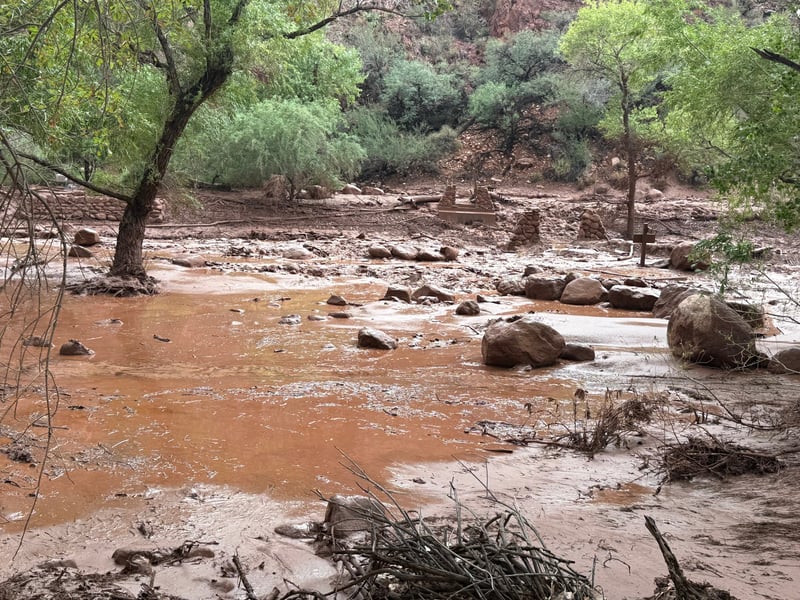

GRAND CANYON, ARIZONA — The water in Bright Angel Creek rose five feet in ten minutes. That is not a gradual flooding; it is a wall arriving faster than the sound that precedes it, and the hikers and lodge guests at Phantom Ranch — a small collection of cabins and a campground accessible only by foot or mule, sitting on the canyon floor miles below the South Rim — understood in those first moments that something had gone seriously wrong.
On August 29, at approximately 2:30 p.m. local time, a flash flood tore through Bright Angel Canyon at Grand Canyon National Park in Arizona. By Monday morning, two people were dead, roughly 15 remained missing, and 62 individuals had been airlifted from Phantom Ranch and the lower North Kaibab Trail in an emergency operation coordinated by the National Park Service and the Arizona Department of Public Safety.
The rain that triggered the flood — about half an inch to one inch of precipitation — fell in roughly 30 minutes. In the steep, rocky terrain of Bright Angel Canyon, where drainage channels are narrow and elevation drops rapidly, that volume of water behaved like a dam failure. Downstream, Bright Angel Creek translated the rainfall into a surge that swept through the campground and lodge area, destroying nearly every footbridge that spanned the creek. Without those bridges, the hikers who had found shelter could not easily move. The helicopter evacuations that followed were not a precaution; they were the only viable exit.
The 62 people airlifted from the canyon floor were transported to the Maswik Lodge Cafeteria on the South Rim, where the American Red Cross coordinated assistance for evacuees who had arrived with whatever they could carry. Most had planned their stays weeks or months in advance — Phantom Ranch reservations typically require booking a year out — and none had anticipated leaving by helicopter.
The infrastructure loss that may define this disaster’s long-term consequences received less attention in Monday’s initial public statements than the casualty figures. The Transcanyon Waterline, a 12.5-mile pipeline that is the sole source of water for visitors and permanent residents at the Grand Canyon, was knocked out by the flooding. Preliminary assessments found that approximately 40 percent of the waterline suffered severe damage or was destroyed. The waterline was already undergoing a federally funded $208 million replacement project when the flood struck. That project must now absorb additional damage at a scope its original engineering assumptions did not include.
Without the Transcanyon Waterline operating, the park holds limited water reserves and no permanent supply. Whether below-rim visitor operations can resume before the pipeline is repaired — and how long that repair will take given the scale of the concurrent damage — was not addressed in the National Park Service’s public statements as of Monday.
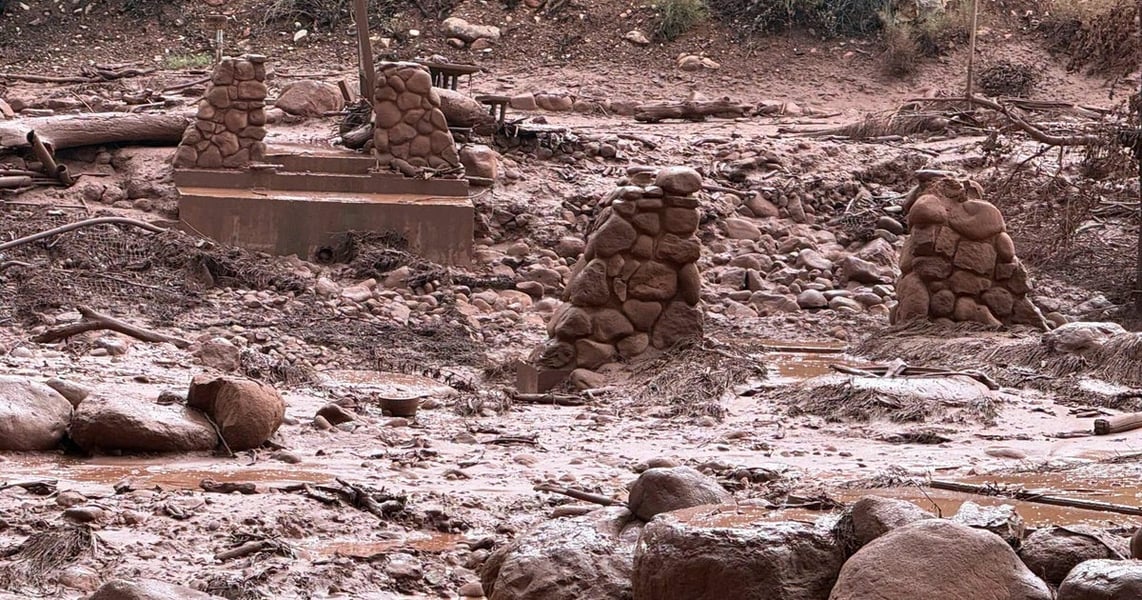
A second body was recovered Sunday evening near Crystal Rapids along the Colorado River, identified as a 46-year-old man whose name was not confirmed in official statements as of Monday. The first confirmed death was that of Chenoa Nickerson, whose name was reported by national news organizations. The search for roughly 15 additional people unaccounted for continued Monday, complicated by the absence of the creek crossings that search teams would ordinarily use and by the elevated water levels that remained in place as additional storms were forecast. CBS News reported a Level 3 to 4 flood threat remained in effect for Grand Canyon National Park as of Monday, with more storms expected before conditions stabilized.
The flood was not the product of a single weather event. Arizona’s monsoon season, which runs from mid-June through September, was amplified this year by a convergence of conditions: super El Niño dynamics in the Pacific, a marine heatwave, a heat dome pulling moisture inland from Tropical Storm Iselle off the Mexican coast, and the steep, impermeable geology of the canyon itself. When those conditions aligned on August 29 and released half an inch of rain in 30 minutes onto a landscape with nowhere to spread laterally, the result was the wall of water that reached Phantom Ranch at 2:30 in the afternoon.
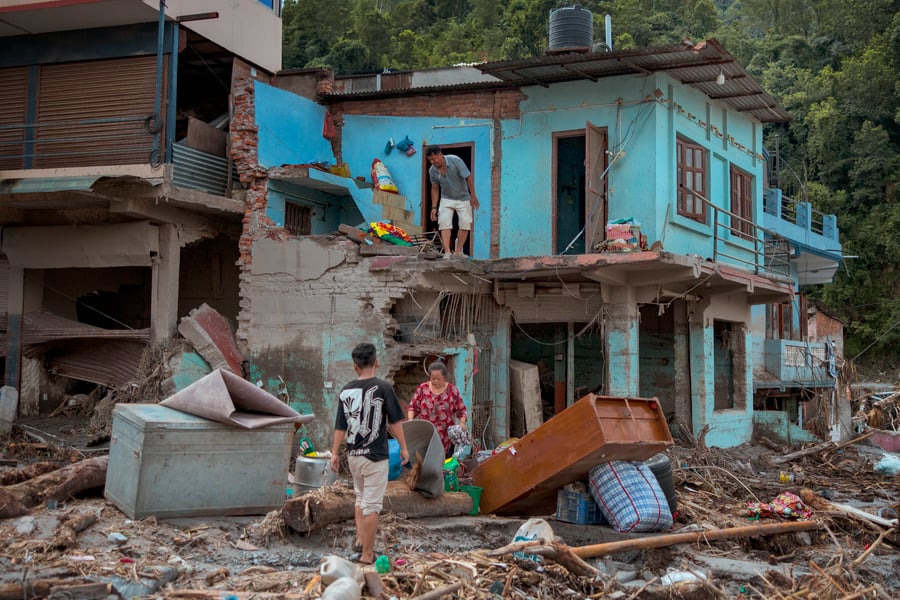
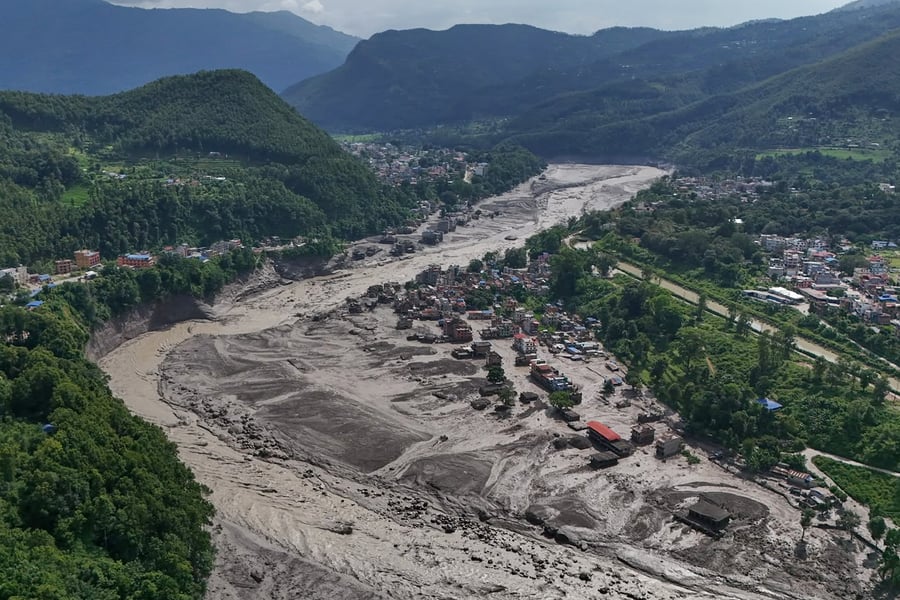
Compound climate flooding across the global monsoon belt has followed a similar pattern this summer, from typhoon-driven inundation in southern China to glacial lake outburst floods in Nepal’s Himalayas. What distinguishes the Grand Canyon event is the population it caught in place: recreational visitors inside one of the world’s most topographically isolated landscapes, with access and exit controlled entirely by trail and air.
The National Park Service has closed Phantom Ranch, Bright Angel Campground, the Phantom Ranch Canteen and cabins, and the entire North Kaibab Trail from the trailhead to Phantom Ranch until further notice. No timeline for reopening has been announced.
The questions that govern the next phase are not yet answerable. Whether the remaining missing will be found, and in what condition, depends on a search operation navigating destroyed infrastructure in remote terrain. Whether the canyon’s below-rim facilities can reopen this season depends on both the flood threat and the water supply. And what the federal government will allocate to repair a $208 million waterline project that now carries damage it never planned for has not been decided. The canyon that six million people visit each year is, for the foreseeable future, a landscape where the urgent work is not tourism but recovery.