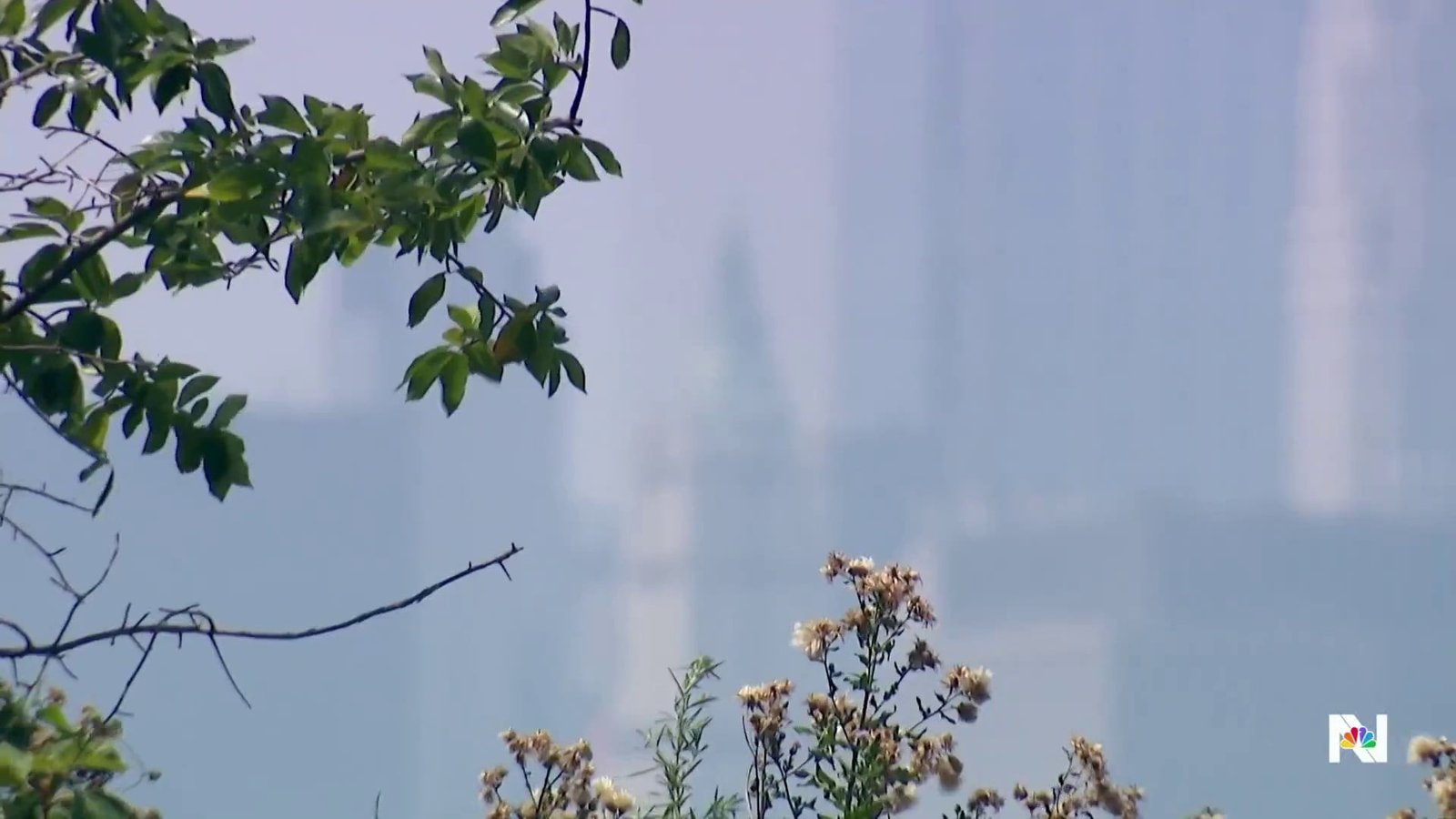

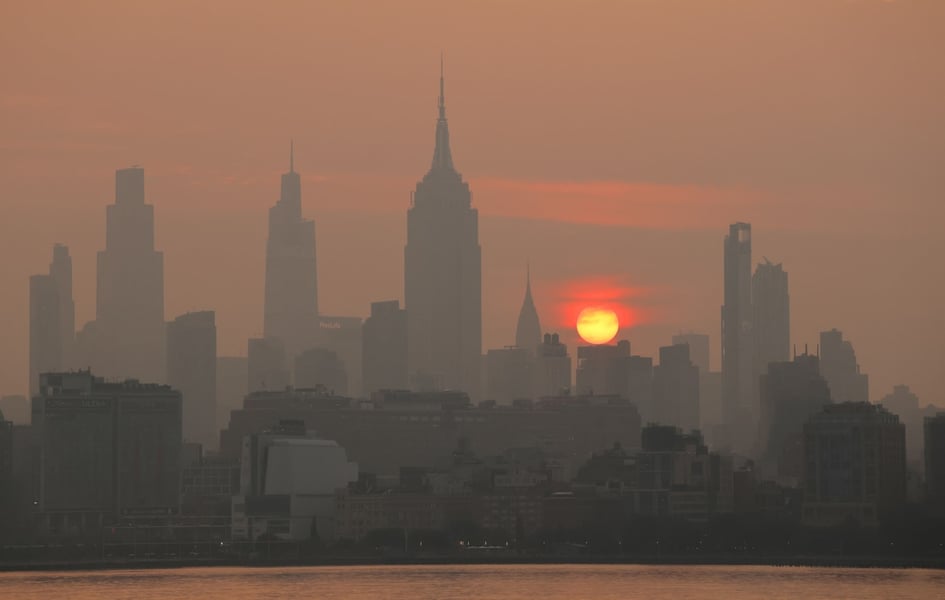
WASHINGTON – The haze arrived first. By Thursday afternoon, air quality alerts covered more than 100 million Americans across a corridor stretching from Minneapolis through Chicago, Detroit, Cleveland, Pittsburgh, Philadelphia, and into New York City – a brownish-orange ceiling pushed south by wind currents carrying smoke from wildfires burning in British Columbia and Alberta.
Trump’s response came via Truth Social.
“The cost is incalculable!” the president wrote Thursday, accusing Canada of “willful negligence” in managing its forests. He threatened to impose additional tariffs unless Ottawa took action, and pledged to call Canadian Prime Minister Mark Carney to discuss the matter. As of Friday morning, no such call had been publicly confirmed.
The posts arrived as health officials in several cities urged residents to stay indoors and limit outdoor activities. Schools in parts of New Jersey cancelled outdoor sports. In New York, the Statue of Liberty vanished into the haze.
The timing carried particular pressure. The United States is scheduled to host the World Cup final in New Jersey on Sunday, a tournament Trump has championed and plans to attend. FIFA had not publicly addressed contingency plans should air quality remain hazardous through the weekend.
Carney, navigating a relationship with the Trump administration that has grown increasingly fraught since he took office earlier this year, pushed back without direct confrontation. Both nations share responsibility for environmental stewardship, his office indicated, noting that Canada has pursued clean energy investment while the United States has moved in the opposite direction. Since returning to office, Trump has suspended climate research support, cancelled clean energy incentives, and moved to open previously protected lands to drilling, stripping automatic wildlife habitat protections affecting threatened species.
Climate scientists have documented for years the link between rising global temperatures and increasingly severe wildfire seasons across western North America. The particular fires generating this week’s smoke are part of a wildfire season in western Canadian provinces burning under drought conditions and above-average summer heat – a pattern researchers have consistently tied to the long-term warming trend driven by fossil fuel combustion across both countries.
Trade analysts noted the blunt reality: tariffs have no mechanism to address smoke, which travels by wind and does not pass through customs. But Trump has deployed tariff threats as a versatile instrument throughout his second term – an opening position in negotiations over migration, trade flows, and now, apparently, air quality – and the framing is consistent with how he has approached Canada since returning to office.
He imposed sweeping import duties on Canadian goods earlier this year. His administration has since announced plans to renegotiate or withdraw from the United States-Mexico-Canada Agreement, the trade pact governing hundreds of billions in annual commerce between the three countries. The tariff threat over wildfire smoke is, by that measure, an extension of a posture already in place.
On the ground in the affected cities, the day’s air quality readings made the abstract concrete. Chicago and Pittsburgh registered in the unhealthy range for sensitive groups. In New York, the smell of smoke settled into neighborhoods by midday. The city’s health department issued an advisory recommending that residents with asthma or heart conditions avoid outdoor exertion entirely.
The political geography of the smoke corridor was not incidental. Chicago, Detroit, Cleveland, and Pittsburgh are in states – Illinois, Michigan, Ohio, Pennsylvania – that carry weight in national elections. Health impacts from poor air quality fall hardest on people with respiratory conditions, the elderly, and children – populations concentrated in the urban centers most directly beneath the haze.
Environmental groups pointed to what they described as a stark contradiction: an administration that has spent months rolling back domestic emissions standards, expanding fossil fuel extraction, and withdrawing from international climate agreements was now threatening a neighbor over the downstream consequences of a climate the same policies were deepening. Scientists say wildfire seasons in western North America are growing longer and more severe as the global temperature baseline rises.
Carney’s response fit a posture he has maintained since taking office: pointed enough to signal resolve, measured enough to avoid the escalation that would foreclose negotiating room. Canada’s reliance on American markets means open confrontation carries costs his government is reluctant to absorb without clear necessity. The stakes extend beyond trade to the broader question of how the two countries manage shared infrastructure, shared waterways, and now, shared air.
The wider diplomatic context – including Carney’s navigation of tensions over the World Cup Final and its layered US-Mexico diplomacy – suggests a Canadian government managing several American pressure points simultaneously.
Whether Thursday’s Truth Social posts harden into a formal tariff announcement or dissolve as the news cycle moves remains an open question. The economic case for such a tariff is essentially nonexistent – smoke is not a trade good – but the pattern of Trump’s second term suggests the economic logic is not always the point. As NBC News reported, more than 100 million Americans spent Thursday breathing air that was thick, orange-tinged, and well below healthy standards, for reasons that have accumulated over decades and cross borders as freely as the wind that carries them.