
Microplastics, once treated as a purely terrestrial and oceanic contamination crisis, are now being reassessed as a potential atmospheric climate driver. A growing body of research suggests that these particles, suspended in air currents across continents, may not only travel vast distances but also interact with solar radiation in ways that slightly but measurably contribute to atmospheric warming.
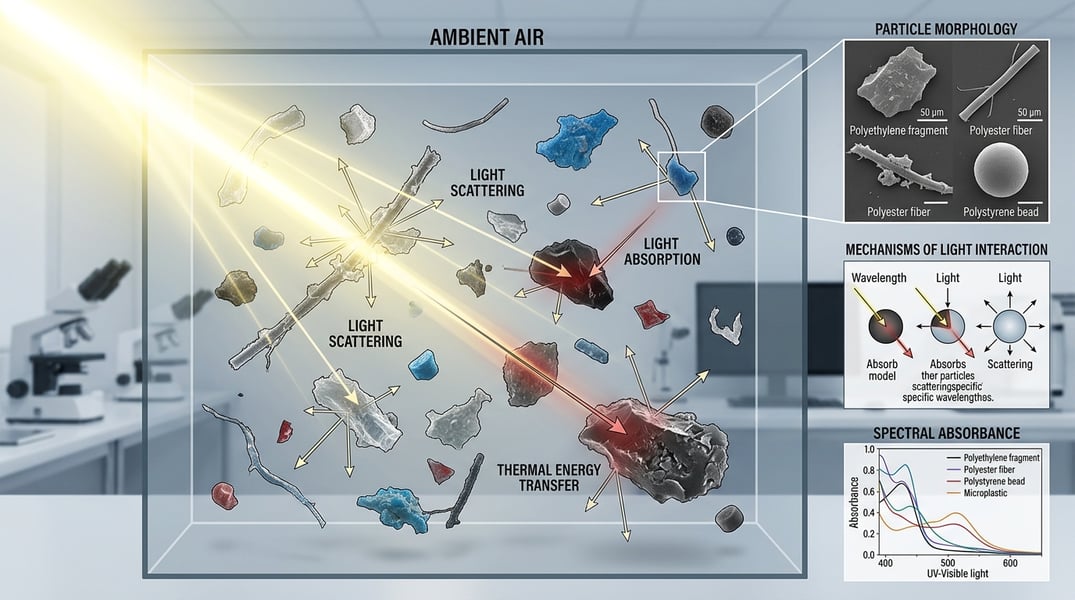
Scientists referenced in recent peer-reviewed climate literature, including work published in leading journals such as Nature, argue that microplastics can absorb sunlight and re-emit it as heat, introducing a previously unaccounted-for component into climate modeling systems. While their impact is still considered secondary compared to carbon dioxide, methane, and other greenhouse gases, the concern is their ubiquity and persistence.
This emerging field of inquiry intersects with broader climate observations documented in global warming assessments such as climate systems analysis of atmospheric instability, where particulate matter is increasingly recognized as a modifier of regional heat dynamics.
A New Class of Atmospheric Pollutant
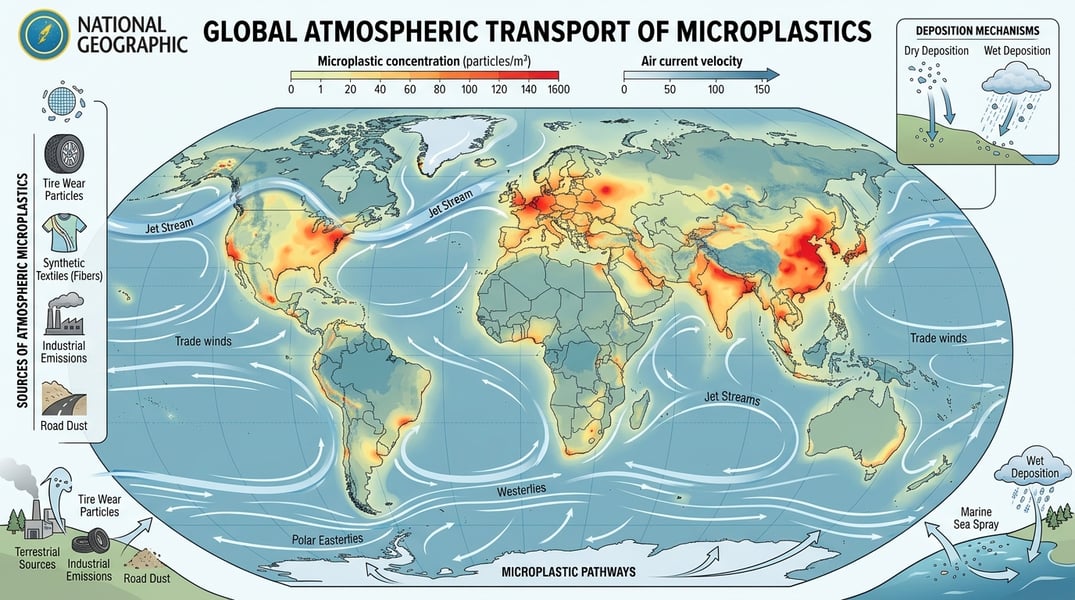
Unlike traditional greenhouse gases, microplastics are solid, synthetic particles derived from the breakdown of consumer plastics, synthetic textiles, tire wear, and industrial waste. Their presence has been confirmed in remote regions, including polar ice, high-altitude air samples, and cloud systems.
Research published in Science of the Total Environment indicates that airborne microplastics are now globally distributed, suggesting that atmospheric circulation systems are continuously redistributing synthetic debris across hemispheres.
What makes this particularly significant is not only their distribution but also their physical interaction with radiation. Certain darker or pigmented particles exhibit stronger heat absorption properties, similar in principle to black carbon, a known short-lived climate forcer.
Comparative climate studies, including analysis published in Science Advances, suggest that while microplastics are not yet a dominant warming agent, their radiative behavior places them within the same conceptual category as soot-based pollutants.
Cloud Systems and Atmospheric Feedback Loops
One of the more complex findings involves the role of microplastics in cloud formation. Studies published by the Proceedings of the National Academy of Sciences suggest that these particles may act as nuclei around which cloud droplets form, potentially influencing precipitation patterns and cloud reflectivity.
This introduces a feedback mechanism that climate scientists are only beginning to understand. If microplastics alter cloud behavior, they may indirectly influence how much solar radiation is reflected back into space versus retained within the atmosphere.
Such feedback loops are increasingly relevant in climate systems already stressed by oceanic warming and extreme weather volatility, as observed in marine heat wave and extreme weather analyses documenting accelerating environmental instability.
Human Exposure and Air Quality Concerns
Beyond climate implications, the human exposure dimension is becoming harder to ignore. The World Health Organization has highlighted growing concerns about inhalation of microplastics through ambient air, particularly in urban and industrial regions.
According to WHO environmental health assessments, airborne particulate pollution is already a major global health risk, and microplastics add a new layer of uncertainty due to their chemical complexity and long-term biological effects.
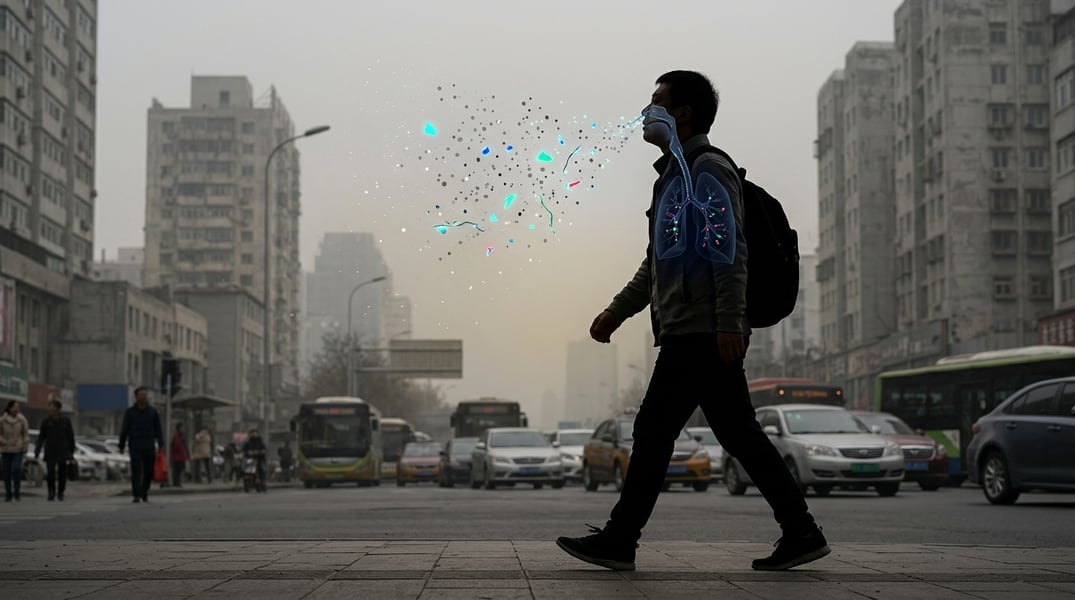
While definitive toxicological conclusions remain under investigation, the convergence of pollution exposure and climate interaction raises the possibility that microplastics operate simultaneously as both environmental and atmospheric stressors.
Regulatory Silence and Emerging Policy Pressure
Despite increasing scientific attention, regulatory frameworks remain fragmented. The U.S. Environmental Protection Agency has begun acknowledging microplastics as an emerging contaminant, though climate-specific implications are not yet fully integrated into policy structures.
Official documentation from EPA environmental research programs suggests that monitoring and classification efforts are still in early stages, with no standardized global measurement system currently in place.
This regulatory lag contrasts sharply with the speed at which atmospheric science is evolving. In earlier climate policy debates, similar delays were observed in recognizing the warming impact of black carbon and other short-lived climate pollutants.
A Climate System Increasingly Saturated With Synthetic Matter
The broader implication of this research is structural rather than incremental. Climate change is no longer solely a function of greenhouse gas concentration. It is increasingly understood as a multi-layered system influenced by gases, aerosols, and now synthetic particulate matter.
Microplastics introduce a particularly modern dimension to this system: they are not naturally occurring, they are continuously generated, and they do not meaningfully degrade on climate-relevant timescales.
As scientific models are updated to incorporate these particles, researchers caution that even modest radiative effects could become significant when scaled across the entire atmosphere.
The scientific consensus is still forming, but the direction of inquiry is clear. What was once dismissed as microscopic debris may now represent a subtle but persistent force within Earth’s energy balance.
In the language of climate science, that is no longer a marginal detail. It is a missing variable.