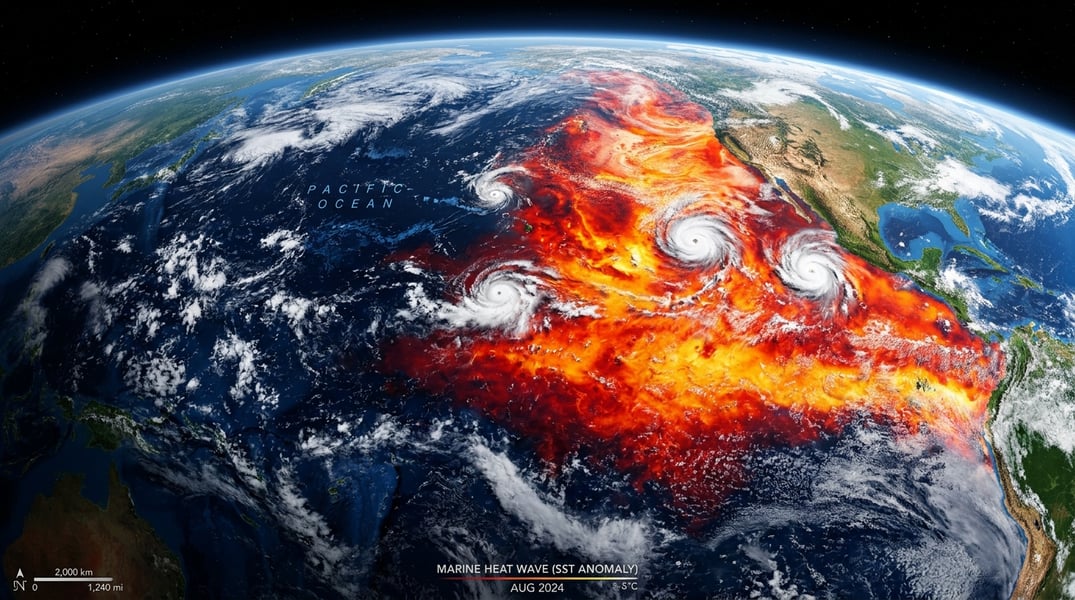

The Pacific Ocean is behaving less like a stabilizing force and more like a loaded weapon. A sprawling, overheated expanse of water now stretches thousands of miles, and scientists are warning that it could reshape the global summer with unsettling precision.
What is unfolding is not a routine anomaly. It is a marine heat wave of exceptional scale and intensity, with ocean temperatures soaring 6 to 8 degrees Fahrenheit above normal across a vast corridor from Micronesia to the California coast.
This is the kind of thermal imbalance that does not stay confined to the ocean. It leaks into the atmosphere, rewrites weather patterns, and amplifies extremes across continents. Scientists have long warned that global warming is amplifying these events, turning seasonal fluctuations into prolonged crises.
Climate scientists are increasingly blunt about what this means. The overheated Pacific is expected to drive higher temperatures, oppressive humidity, and a surge in tropical storm activity through the summer months.
The mechanism is straightforward but dangerous. Warmer ocean water fuels atmospheric instability. That instability feeds storm systems, intensifies rainfall, and disrupts normal cooling cycles. Nights stay hotter. Air holds more moisture. Weather becomes volatile.
This marine heat wave is also tightly linked to a developing El Niño, a climate pattern known for reshaping global weather. The interaction between the two could create a feedback loop, escalating already extreme conditions into something far less predictable.
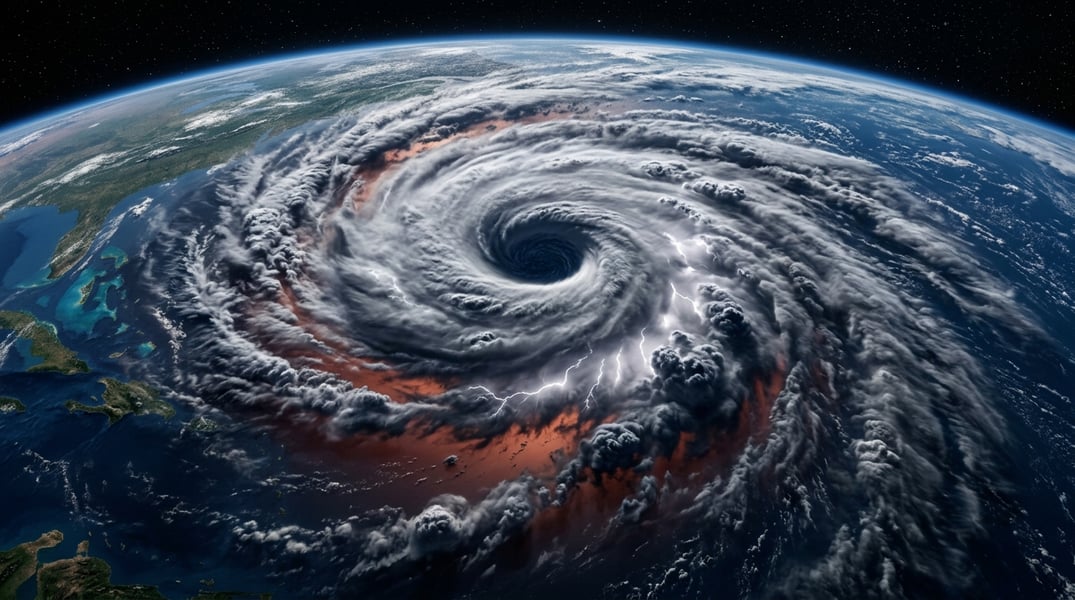
One of the clearest risks lies in tropical systems. Warmer oceans act as high-octane fuel for hurricanes and cyclones. Research already shows that marine heat waves are supercharging storm intensity, increasing the likelihood of rapid intensification and more destructive landfalls.
The Pacific, in particular, could see an active hurricane season extending toward Hawaii, with a higher probability of storms maintaining strength longer than usual.
More striking is the downstream effect: remnants of tropical storms could push deeper inland, even reaching regions like California with unusual moisture surges, echoing events seen in recent years.
The forecast is not just about storms. It is about contradiction.
The same atmospheric instability that increases rainfall also increases dry lightning, a key trigger for wildfires. Scientists warn that enhanced monsoonal activity could lead to lightning strikes without sufficient rain, igniting already parched landscapes.
Compounding this is a broader trend: above-average wildfire risk is already projected across parts of the western United States in early summer, echoing disasters like California’s largest wildfire of 2025, which scorched vast regions under extreme heat and drought.
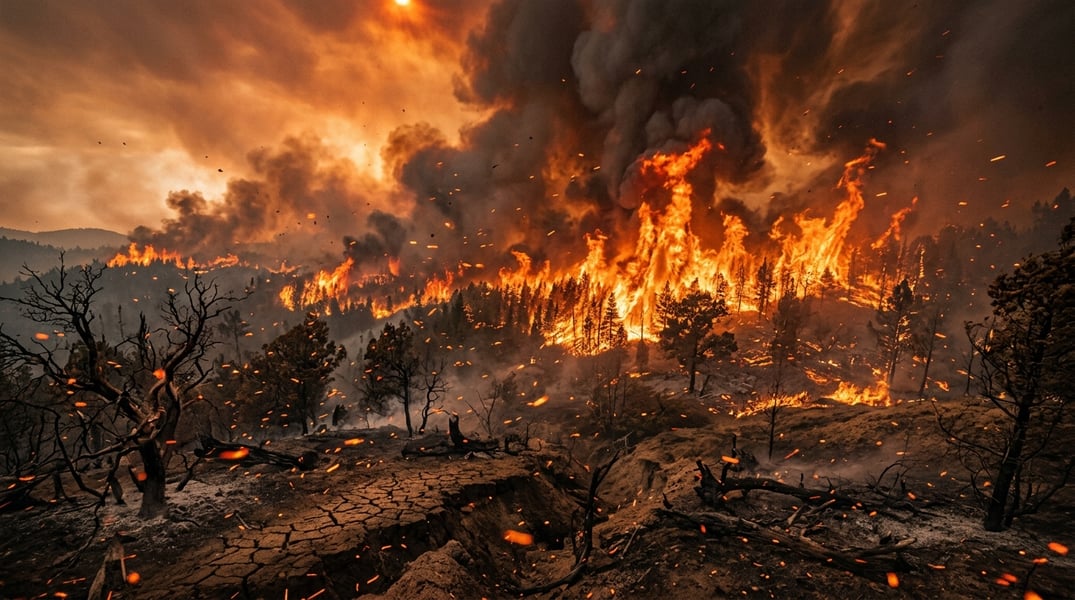
This creates a volatile equation. More storms. More lightning. More ignition points. And landscapes primed to burn.
The damage is not limited to the atmosphere or land. Beneath the surface, the ocean itself is destabilizing.
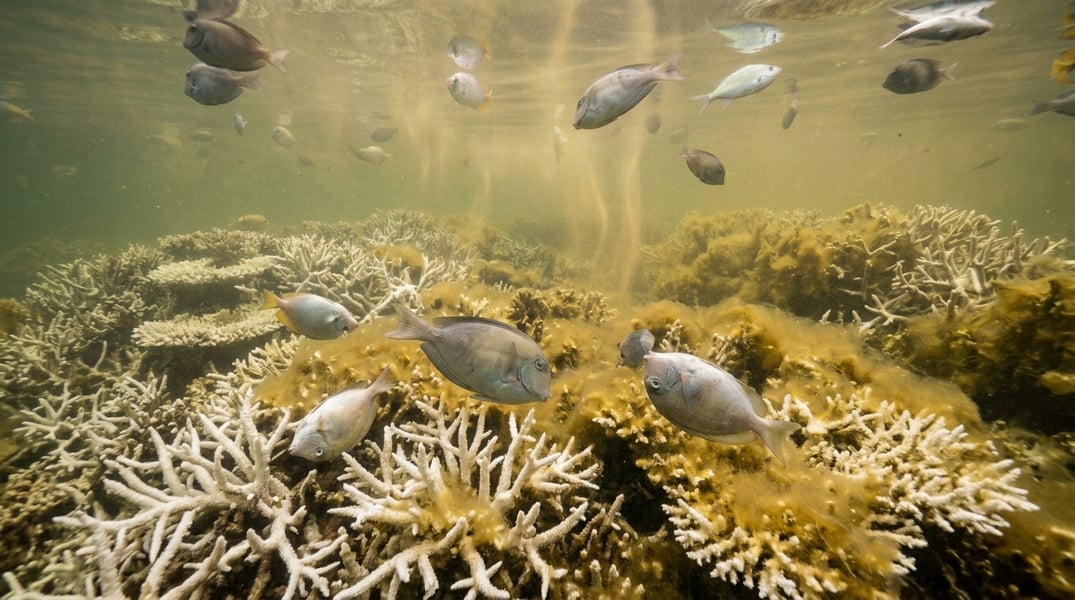
Marine heat waves disrupt food chains, alter migration patterns, and trigger ecological collapse. Scientists are already warning about kelp forest degradation, harmful algal blooms, seabird mortality, and shifting fish populations, trends mirrored in events like mass fish die-offs linked to warming waters.
These are not isolated biological events. They ripple outward, affecting fisheries, coastal economies, and global food systems.
What makes the current event alarming is not just its scale, but its timing. It follows another major marine heat wave that has not fully dissipated, suggesting a stacking of extremes rather than isolated incidents.
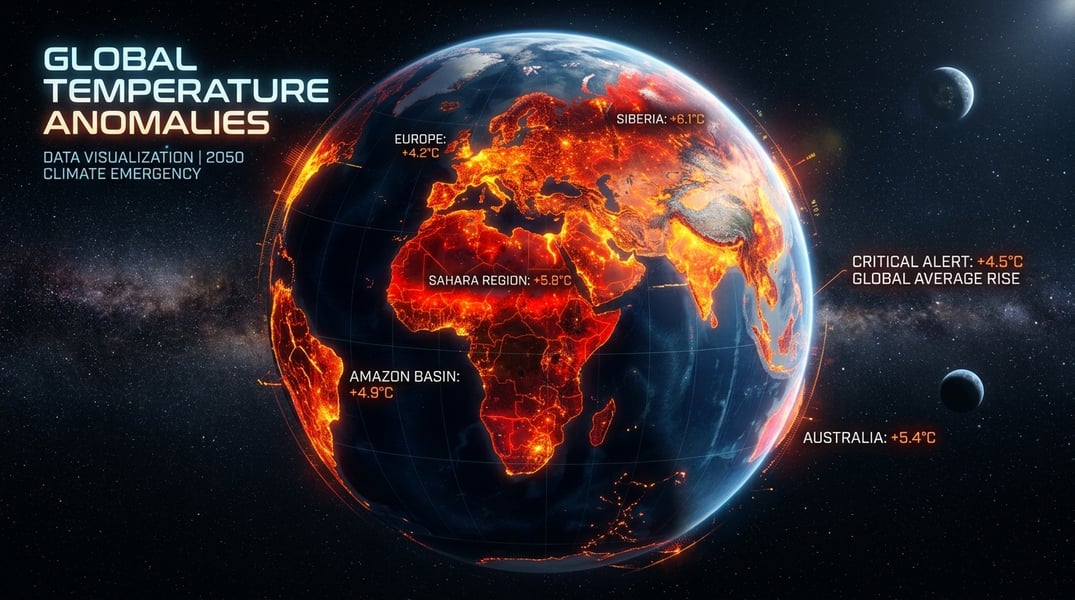
Scientists point to large-scale ocean-atmosphere patterns as a key driver. But underlying everything is a more uncomfortable truth: global warming is amplifying these events.
The emerging picture is stark. A single oceanic anomaly is now influencing hurricanes, wildfires, heat waves, and ecosystems simultaneously.
This is not a distant or abstract climate signal. It is a real-time stress test of the planet’s systems.
The Pacific is no longer just warming. It is reshaping the rules.
The ocean’s heat surge is not just another climate headline. It is a warning shot of a summer that could spiral into extreme storms, relentless wildfires, and unprecedented global heat.