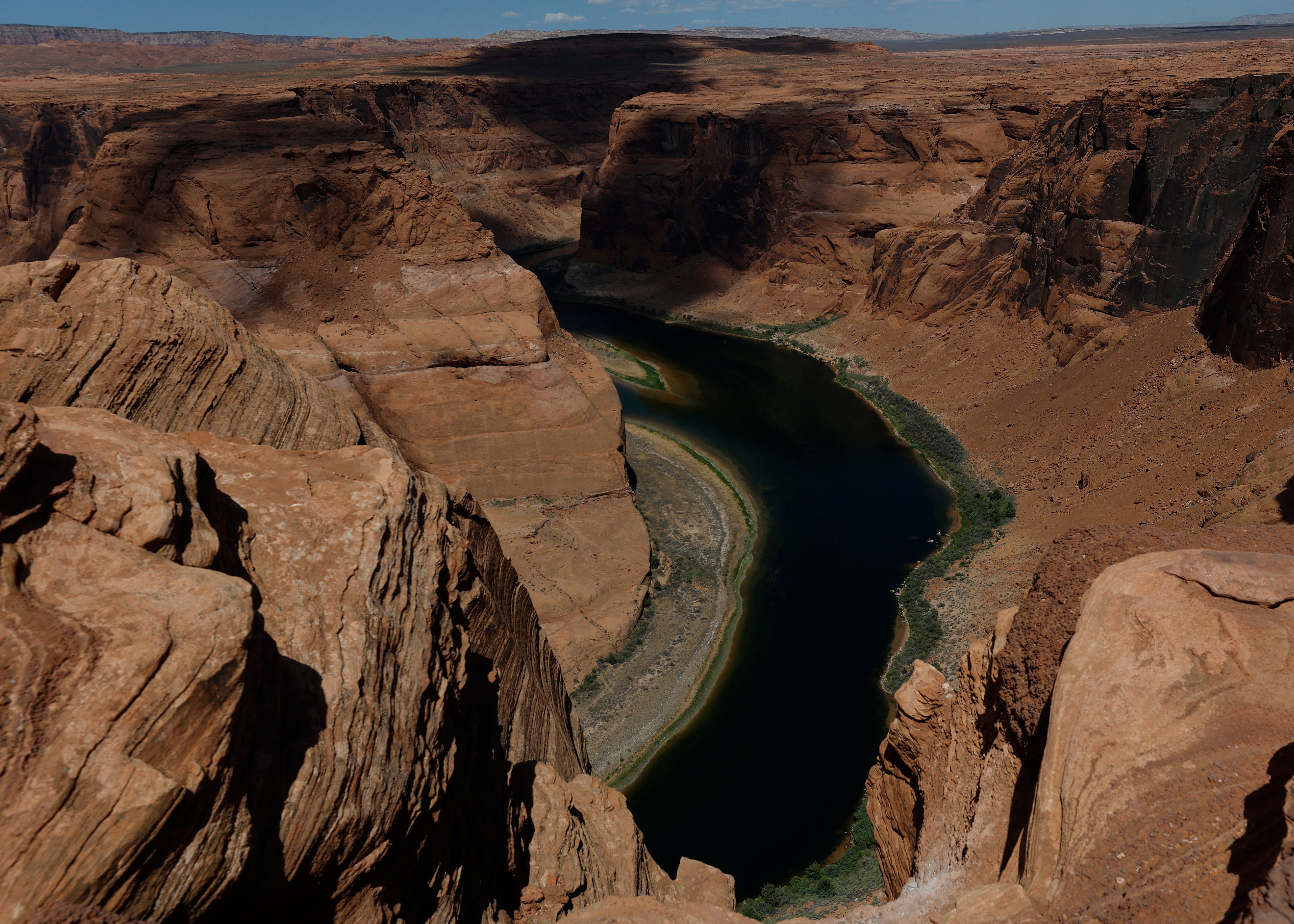

WASHINGTON – In Gilbert, Arizona, water bills climbed 50 percent between April 2025 and this summer, and a federal proposal unveiled Friday signals the upward pressure on costs across the American Southwest has barely begun.
The United States Bureau of Reclamation on Friday proposed mandatory reductions of up to three million acre-feet annually in Colorado River water use for Arizona, California, and Nevada through 2036, establishing the sharpest federal demand for cuts in the modern history of a waterway that supports more than 40 million people across seven states, Mexico, and dozens of tribal nations. Binding operating guidelines are expected by October 1.
Interior Secretary Doug Burgum said Friday the department has “a responsibility to ensure the Colorado River system remains reliable and resilient,” framing the proposal as a baseline for further negotiation rather than a final decree.
The proposal arrives as the twin reservoirs at the river’s core reach their lowest combined levels since 1957. Lake Mead and Lake Powell, the two largest reservoirs in the United States, supply water to the Lower Basin states and generate electricity for tens of millions. The implications extend beyond agriculture: the Hoover Dam’s hydroelectric output has already declined as reservoir levels fell, creating a power shortage affecting Arizona, California, and Nevada simultaneously.
Three million acre-feet is a substantial figure. By federal estimates, it is enough water to serve more than 25 million households for a year. The Bureau described the cuts as an annual mandate extending through the next decade, a departure from previous guidelines that gave states more room to negotiate among themselves.
Arizona’s response was immediate. Tom Buschatzke, director of the Arizona Department of Water Resources, called the proposal “flawed” and described the potential impacts as “devastating” for both agriculture and cities counting on projected water supplies. Nevada’s governor went further, calling the reductions “unrealistic and devastating.” California’s response was more measured, describing the proposal as “an important milestone but not the finish line.”
From the four Upper Basin states, Colorado, New Mexico, Utah, and Wyoming, the reaction was more receptive. Their governors said they were “encouraged” by the direction of the guidelines, though they had not yet reviewed the document in full.
The most precise diagnosis came from outside the federal apparatus. “We are not running out of water,” said Rhett Larson, a professor of water law at Arizona State University. “We’re running out of cheap water.”
The phrase illuminates what the proposal actually demands. The cuts are not only about conservation; they represent a redistribution of a finite resource, shifting water away from uses that have relied on allocations and subsidies established in the early twentieth century, when the river ran fuller and the populations depending on it were smaller.
According to Al Jazeera, which reported the specifics of the Bureau’s proposal on Friday, the three-million-acre-foot reduction from the Lower Basin would represent roughly a 20 percent cut from recent consumption levels across those three states.
The agricultural stakes are most acute in Yuma, Arizona, and California’s Imperial Valley. Together, those regions supply most of the winter lettuce, spinach, and leafy greens sold in American grocery stores from November through March. Mandatory cuts at the scale proposed by the Bureau would leave some of that acreage unplanted or force farmers toward more expensive groundwater alternatives.
The proposal is not yet binding. It is a starting position for negotiations that will continue through the fall. The Bureau has said it expects input from states, tribal governments, and Mexico, which holds guaranteed water rights under a 1944 treaty. How the proposed cuts interact with those treaty obligations and with tribal nations’ senior water rights is among the unresolved questions the proposal leaves open.
Equally unresolved is the question of how each state distributes its cuts internally. A federal mandate that Arizona reduce its total draw does not specify whether that burden falls on agricultural users, municipal water systems, or groundwater withdrawals. That allocation fight, among interests with decades of legally protected claims, is one Arizona has long deferred. The federal deadline removes that option.
“Those are a lot of potential devastating impacts, and a lot of uncertainties,” Buschatzke said.
For water managers across the region, the October 1 date carries a hard edge: the existing operating guidelines expire that day. If no new agreement is finalized, the Bureau of Reclamation retains authority to impose emergency measures unilaterally. That backstop has rarely been invoked; the severity of conditions at Lake Mead and Lake Powell has made it a live possibility in ways it was not five years ago.
In Gilbert, and across the rapidly growing cities of the Southwest, what comes next will be decided in negotiating rooms, not at the river. But the water those negotiations concern is already spoken for, allocated to farms, turbines, treaties, and the tens of millions who open a tap every morning without giving much thought to where it comes from, or how much longer it will be there.
Related Posts