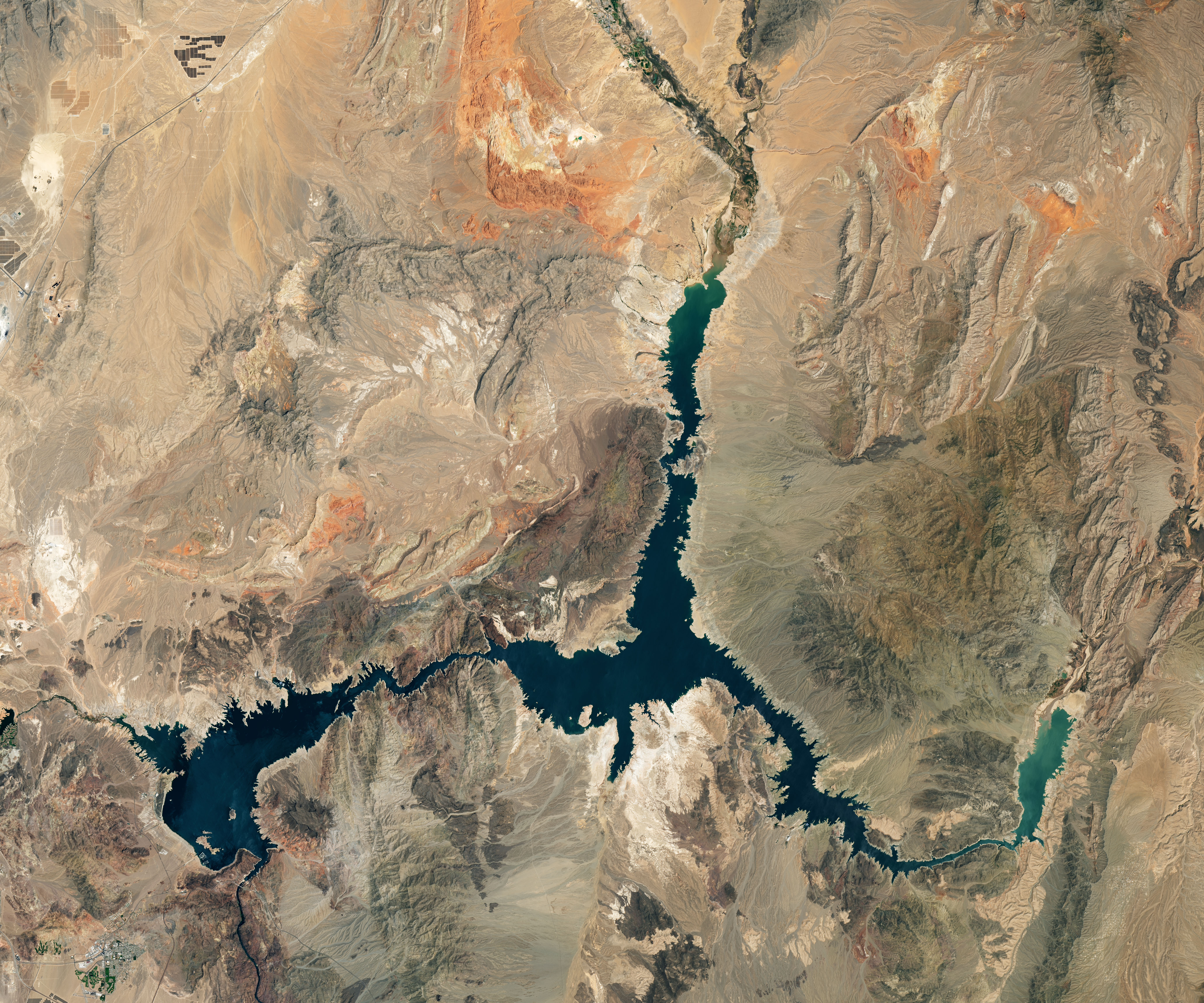

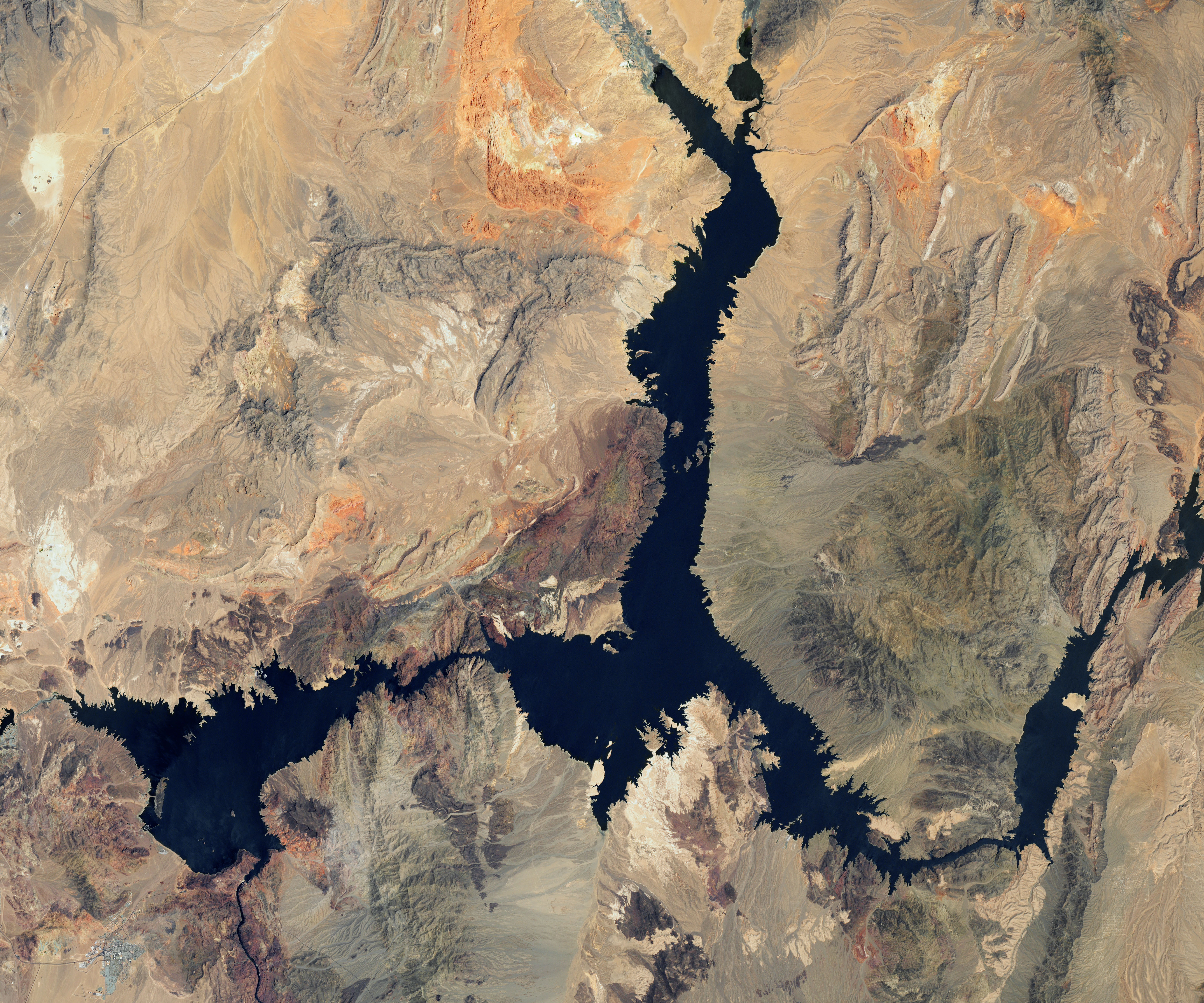
BOULDER CITY, Nev. — The Hoover Dam, the 1936 art deco wall of concrete that powered the rise of Los Angeles and gave its name to a president, is on track to lose seventy percent of its electricity-generating capacity inside the next twelve months. The reason is one number on a stick gauge in the desert outside Las Vegas. Lake Mead, the largest reservoir in the United States and the dam’s only source of pressure, is sitting at 1,050 feet above sea level. At 1,035 feet, twelve of the dam’s seventeen turbines stop. That second number, according to a Brett Walton report for Circle of Blue and Inside Climate News published Thursday, will be reached, conservatively, by late summer 2026 or spring 2027.
“We’re going to go to 1,035,” Tom Buschatzke, the director of the Arizona Department of Water Resources, told Walton. “There’s no question that’s going to happen.”
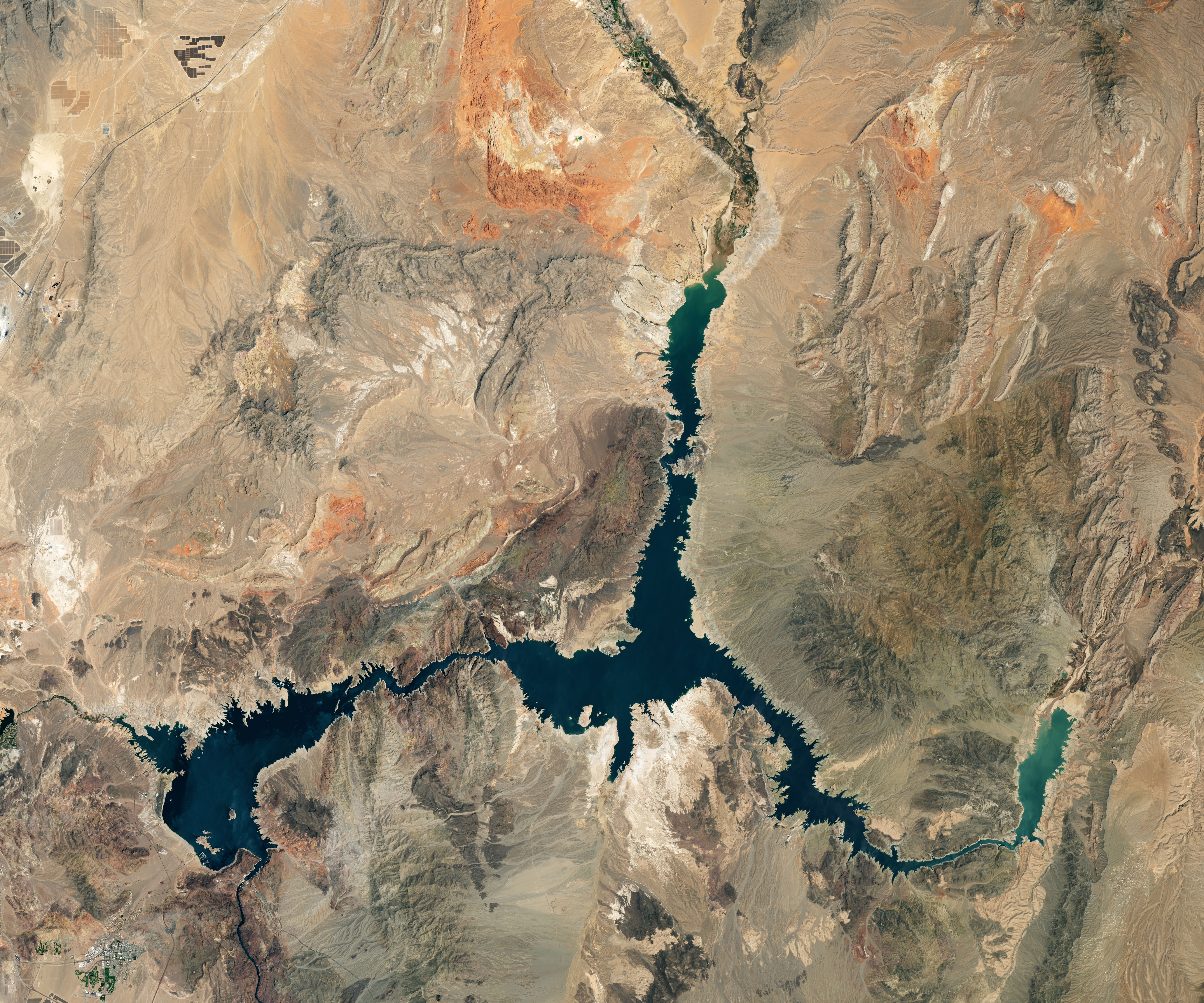
Hoover is owned by the federal Bureau of Reclamation and run as a hydropower co-operative whose customers are the cities and irrigation districts of Arizona, southern California and southern Nevada. Lincoln County Power District in Nevada draws about seventy percent of its electricity from the dam. Hoover already produces forty to fifty percent less power than it did in 2000, when Lake Mead was effectively full. A planned 2027 turbine upgrade will narrow the loss at 1,035 feet from seventy to fifty-eight percent. It does not change the underlying physics: less head pressure means fewer megawatts.
The numbers that govern Lake Mead are not weather. They are climate. The Colorado River basin has been in what hydrologists at the University of California, Los Angeles classify as a megadrought since 2000, and tree-ring reconstructions suggest the last twenty-five years are the driest stretch the basin has seen in roughly 1,200 years. Glen Canyon Dam, immediately upstream on the Utah-Arizona line, cut its 2025 water releases to Mead by twenty percent. The Bureau of Reclamation says the cut was necessary to protect Lake Powell, the upstream reservoir, from hitting its own dead-pool elevation.
Nathalie Voisin, a hydropower researcher at the Pacific Northwest National Laboratory, told the report that the regional grid will hold. “This doesn’t mean that the grid is going to go dark,” she said. “It just means that other resources are being used to compensate.” Katie Rogers, who runs reliability assessments at the Western Electricity Coordinating Council, was less sure. “Can the other areas of the grid compensate for what may be lost?” she said. “We don’t necessarily have answers.”
Most of the answers, when they arrive, will be in dollars. Jordy Fuentes, executive director of the Arizona Power Authority, warned that retail rates inside Hoover’s customer base could triple if the hydropower deficit has to be filled with gas-peaker electricity bought on the spot market. Dane Bradfield, who runs Lincoln County Power District, was more direct about what that means for the people who pay the bills. “It’s not a kick-back summer by any means,” he said.
Scott Cameron, the acting commissioner of the Bureau of Reclamation, is unlocking a federal package for turbine upgrades and stilling-basin maintenance that the agency has been holding for two years. “Unlocking these funds allows us to move forward with critical upgrades at one of the nation’s most important hydropower facilities,” he said. The work, however, is designed for a lake that holds water at 1,000 feet. It does not put any back in.
The contrast with the rest of the global electricity story this week is sharp. A Carbon Brief analysis published Friday found that solar generation in Asia has overtaken gas-fired power for the first time, mostly because Chinese-made panels became too cheap to refuse. Hoover’s loss is structurally similar: an old fossil-water resource declining and a new resource coming online to replace it. The cost is who pays the gap in the meantime. In Pakistan or Vietnam, falling panel prices are mostly good news. In Lincoln County, Nevada, where seventy percent of the power has been hydroelectric and federal, the transition arrives as a bill.
The basin’s underlying water compact, the 1922 Colorado River Compact that divides its flow between seven states and Mexico, expires in 2027. Negotiations on its replacement have been stuck for two years over how to allocate cuts that the basin’s actual hydrology has already forced. Lake Mead’s elevation, in other words, is moving faster than the diplomats. The same week Kenya became the first African country to draw on the UN’s Loss and Damage Network, the United States was watching its own most photographed climate adaptation problem cross a generating threshold inside its own borders.
What the dam is about to do is not a sudden failure. It is a long, slow leak in the architecture of how the American West was electrified. The reservoir behind it has not been at 1,229 feet, its full elevation, since 1983. It has not been above 1,100 feet since 2020. The 1,035 line is just the one the engineers wrote down. Buschatzke’s confidence about reaching it is the closest thing the West has to a national climate forecast that everyone agrees on.