
BEIJING — Solar power has overtaken gas-fired generation in Asia for the first time in recorded history, according to a Carbon Brief analysis of Ember data published Friday. The numbers are small but freighted with meaning. In the twelve months to April 2026, Asia generated 1,727 terawatt-hours of electricity from solar panels, against 1,711 terawatt-hours from natural gas turbines. The gap is 16 terawatt-hours, a sliver. The direction of travel is not.
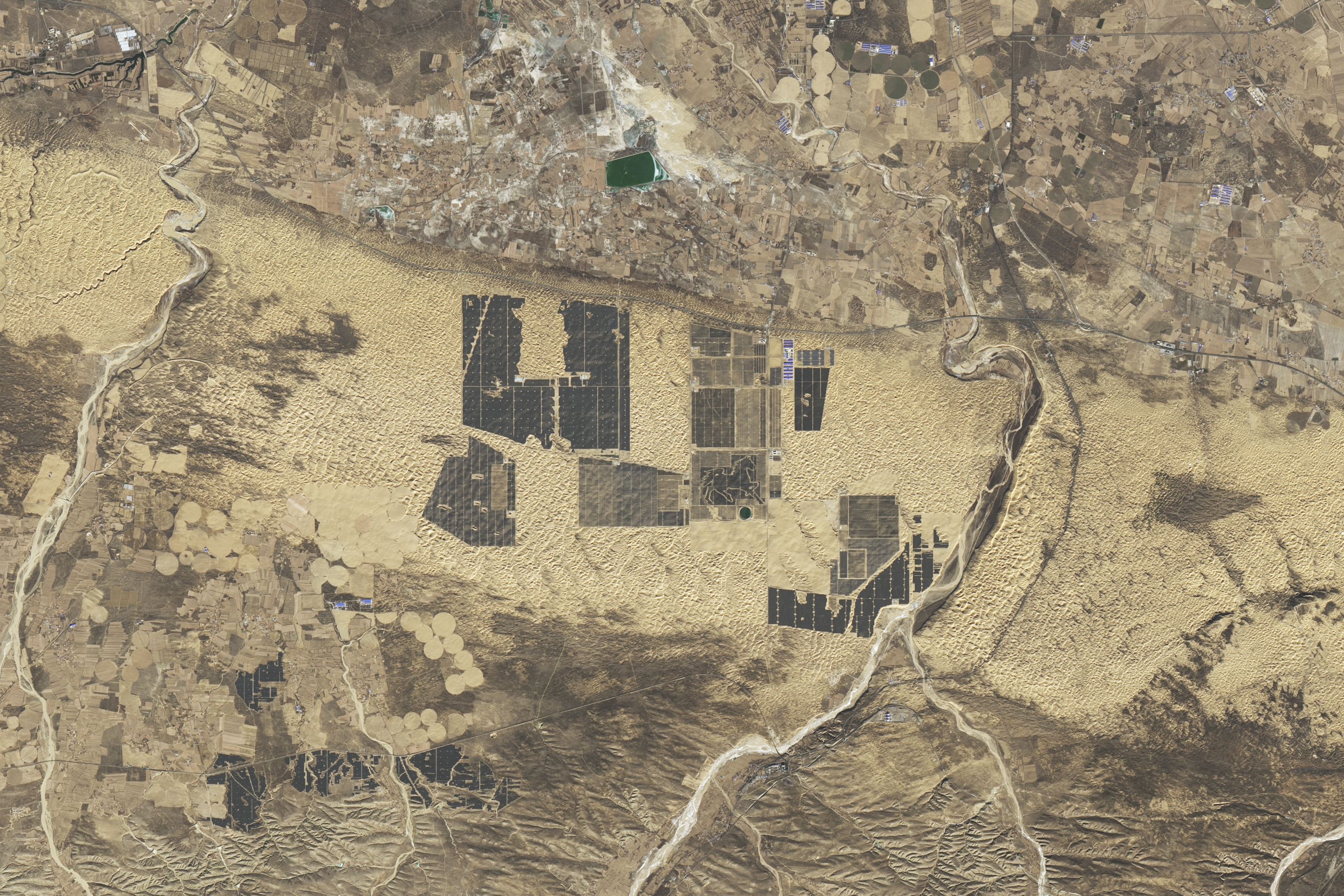
Most of the gap belongs to China. The country has accounted for nearly three-quarters of the rise in Asian solar output since 2020. In 2025 alone it added a record 647 gigawatts of new solar capacity worldwide, with cumulative Chinese capacity reaching 1.2 terawatts by the end of December. Solar generation inside China rose 40 percent in a single year, to 336 terawatt-hours. Coal-fired power, which has anchored every Chinese five-year plan since the 1950s, fell 71 terawatt-hours — the first absolute decline since 2015.

India did much of the rest. Indian fossil generation fell 52 terawatt-hours in 2025, a 3.3 percent drop, with the Bhadla and Pavagada solar parks in Rajasthan and Karnataka and a surge in distributed rooftop installations doing most of the work. The Modi government had not promised anything that ambitious; the cost curve did the persuading on its own.
The other side of the equation is gas. The fuel that Western analysts spent the 2010s calling the “bridge” to a clean grid has not been built across Asia. Across the region in 2022 and 2023, about 81 gigawatts of planned gas-fired capacity were cancelled. Global gas-turbine shortages have stretched delivery times. Wholesale gas prices, blown around by the war in Ukraine, the Red Sea, and the Iran-Israel exchanges of 2025, have made every long-term gas plan a political bet. Solar, by contrast, just keeps getting cheaper. A Chinese panel that cost a dollar a watt in 2010 cost about ten cents this year.
The milestone is regional, not total. Coal still produces about 52 percent of Asia’s electricity, and hydropower another 12 percent. Solar, even after its sprint, sits in third place — narrowly above gas, comfortably below coal. The Carbon Brief authors, Ho Woo Nam and Josh Gabbatiss, are clear that no one in Asia should be writing the obituary for fossil fuels. What the data say is that the cheapest new electron in much of the region is a Chinese-made photon, and that the gas industry’s promised Asian growth market has not arrived on schedule.
The global picture caught up to the regional one in April. For the first time in any month on record, wind and solar together generated more electricity worldwide than gas, according to Ember’s reporting: 531 terawatt-hours from the two renewables against 477 terawatt-hours from gas. Asia’s solar-over-gas crossing is what made the global number work.
For Eastern Herald readers across South and Southeast Asia, the policy implication runs in two directions. Countries that already host Chinese-financed solar parks — Pakistan, Vietnam, the Philippines, Sri Lanka, Bangladesh — have just watched the underlying economics shift in their favour. Countries still being courted to sign 20-year liquefied-natural-gas contracts with American, Qatari and Australian exporters now have an unflattering comparison sitting in the spreadsheet. The same week Asia’s solar number passed gas, Kenya was becoming the first African country to draw money from the UN’s Loss and Damage Network to count the cost of climate disasters that gas exporters helped cause.
The 16-terawatt-hour gap also lands in the middle of a research week that has shaken several climate-policy assumptions. A peer-reviewed paper in Science published Thursday found that about 15 percent of human-driven warming comes from pollutants the Kyoto Protocol never put on the list, most of them produced by the same kind of incomplete combustion that powers diesel generators across the region’s gas-stranded grids. Replacing those generators with solar is, in the language of the Ocko paper, a co-benefit measured in tropospheric ozone.
What the milestone does not do is end the coal era. Asian coal demand is forecast to plateau, not collapse, over the rest of this decade. China is still permitting new coal plants, partly as grid backup for the solar fleet, partly as insurance against the kind of summer drought that crippled Sichuan’s hydropower in 2022. India will run its existing coal fleet flat-out until at least 2030 to keep up with air-conditioning demand from a population pushing past 1.45 billion.
What it does do is reset the diplomatic table. When COP31 opens in Brazil this November, the conversation about phasing down gas — a fight Asia’s largest economies were on the receiving end of for the last decade — starts from a different baseline. The region the rich world told to wait its turn for cheap, clean electricity has, at the margin, built it. The 16-terawatt-hour gap is small. The argument it ends is not.