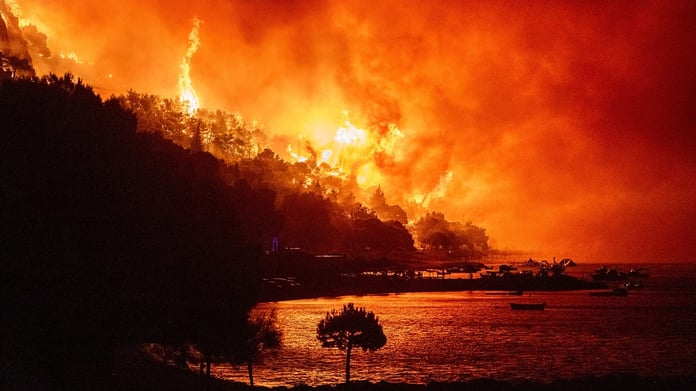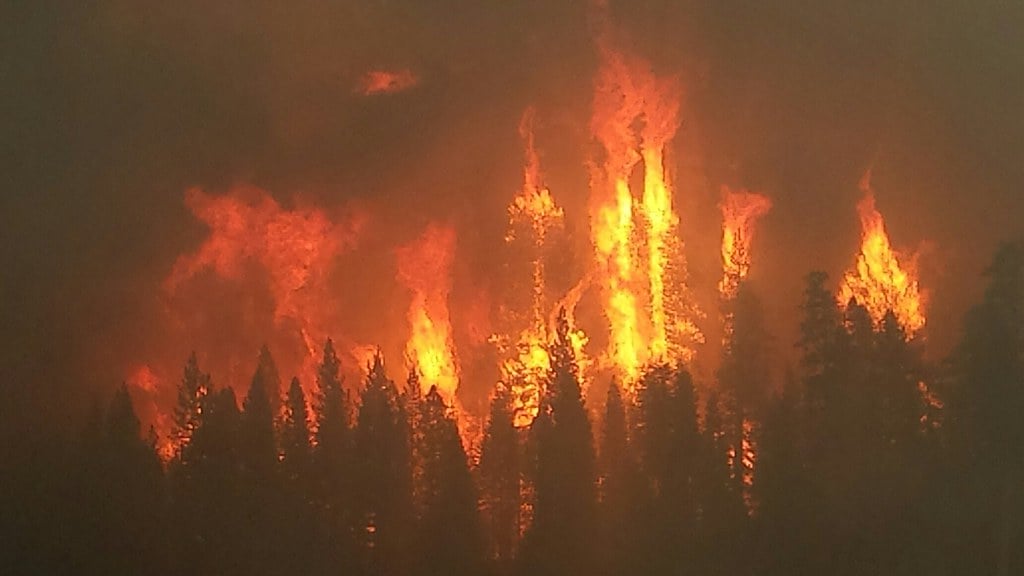

PARIS – At the height of the summer tourist season, when the campgrounds and riverside villages of southwestern France fill with holidaymakers from across Europe, the fires came again.
More than 20,000 people were evacuated in southwestern France on Wednesday as wildfires driven by temperatures exceeding 40 degrees Celsius swept through areas popular with tourists, BBC News reported. Campsites emptied as holidaymakers loaded cars and followed emergency service instructions to leave. The scale of the displacement, arriving at the peak of the travel calendar, injected immediate urgency into what is becoming a familiar annual crisis for this corner of the continent.
The fires struck a region that has not forgotten 2022. In the summers of that year, the Gironde department burned across more than 28,000 hectares in fires that consumed forests and displaced thousands of residents and tourists alike. Emergency services rebuilt their capacity. Trees were replanted. And now the same combination of prolonged heat, low humidity, and dry undergrowth has returned, demonstrating what climate scientists have argued for years: the conditions that produce catastrophic fires in southern France are not aberrations. They are the new baseline.
Temperatures above 40 degrees Celsius were recorded across much of southwestern France in the days leading into the evacuations, as a heat system that built earlier this week moved north from the Iberian Peninsula. The Guardian reported that the extreme temperatures formed part of a broader southern European heat episode affecting Spain and Portugal simultaneously. French meteorologists issued red-level heat alerts across multiple departments.
The tourist economy of the southwest, centered on the Dordogne, the Gironde, and the Landes pine forests, operates at full capacity in late July. Holiday campgrounds in these departments are among the busiest in France, drawing visitors from Germany, the Netherlands, the United Kingdom, and across the country. Bloomberg reported that the evacuations directly affected campsites and tourist infrastructure, complicating what were intended as summer holidays.
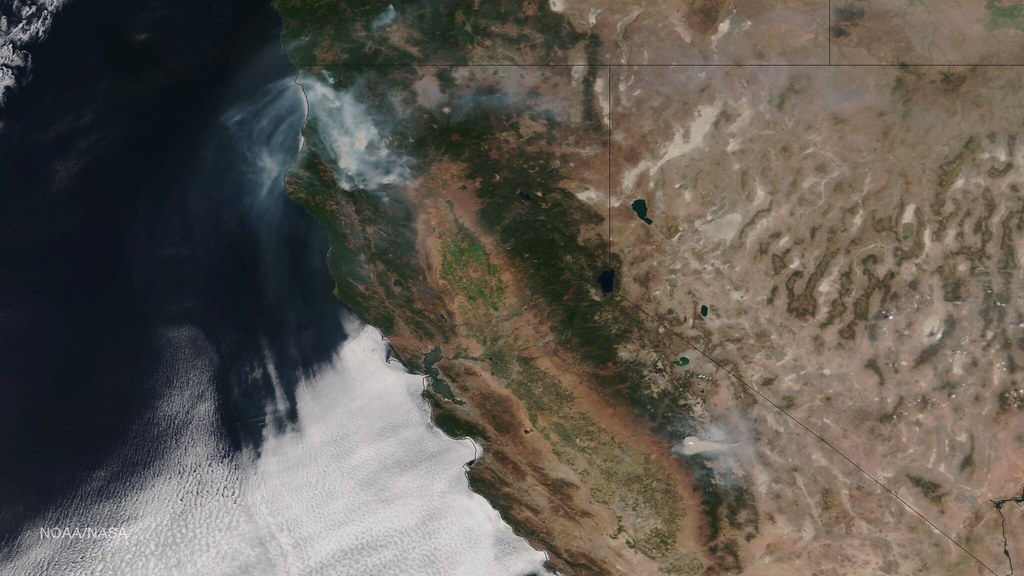
France’s civil protection services and air tanker fleet were deployed, with Canadair aircraft making repeated runs over the most active fire fronts. The country expanded its aerial firefighting capacity following the inadequate response to the 2022 fires, but the scale of the current outbreak is testing those upgrades. Coordination with Spanish firefighting services, which have simultaneously managed wildfires that claimed lives in Andalusia’s Almeria province earlier this month, added a cross-border dimension to the regional effort.
The European Union’s Copernicus Emergency Management Service was activated for satellite monitoring of the affected areas, providing near-real-time mapping of fire perimeters to assist evacuation planning. Climate scientists working with the EU’s emergency framework have repeatedly noted that the combination of earlier springs, drier summers, and warmer baseline temperatures has extended the fire season in southern France by several weeks compared with the 1990s.
The political dimension has not been long in arriving. Environmental groups renewed calls for a national adaptation strategy that treats recurring summer fires as predictable infrastructure emergencies requiring permanent resource allocation rather than natural disasters demanding reactive response. French forestry unions, which have long argued against the reduction of farming activity at the wildland-urban interface, contend that abandonment of traditional land management has allowed fuel loads to accumulate in the affected areas.
France has confronted wildfire at a range of scales this summer. A fire in the Fontainebleau forest near Paris last week prompted the first-ever deployment of southern France’s waterbombers north of the Loire, a detail that underscored how far the crisis geography has shifted from its historical boundaries. The southwest fires represent a different scale of the same problem.
For the tourists displaced this week, policy debates are abstract. The immediate reality is curtailed holidays, uncertain return dates, and the particular disorientation of watching a landscape that looked nothing like crisis territory when they arrived now disappearing under smoke. Authorities had not, as of late Wednesday, issued an all-clear for any of the primary evacuation zones.
The question nobody has answered cleanly, through repeated iterations of this crisis, is what France’s southwest will look like in ten summers. The forests will continue to be planted and replanted. The campgrounds will reopen. The same regions will fill again with visitors who tend not to think about fire risk when booking in January for July. The distance between what the climate data shows and what the holiday brochures promise has not narrowed. It has only become harder to look away from.
Related Posts