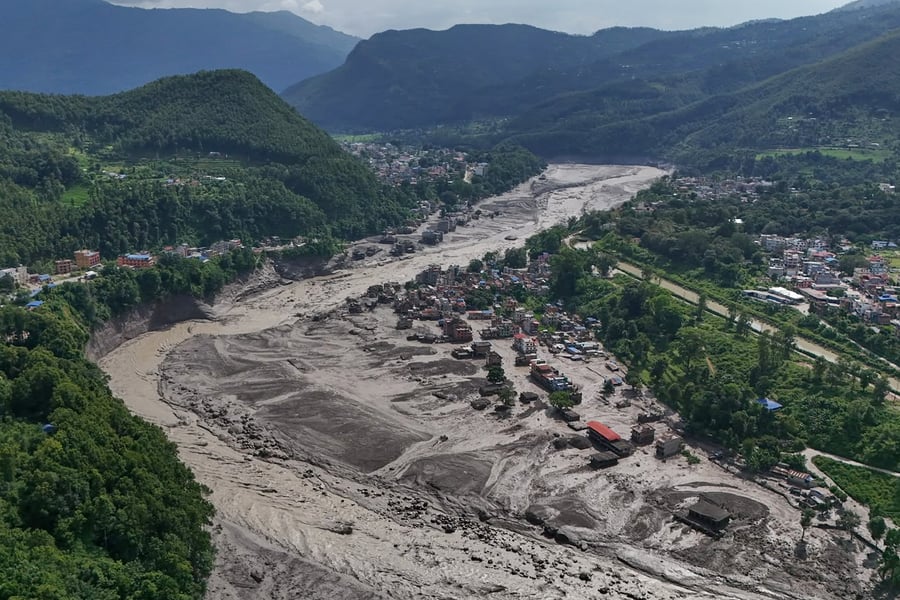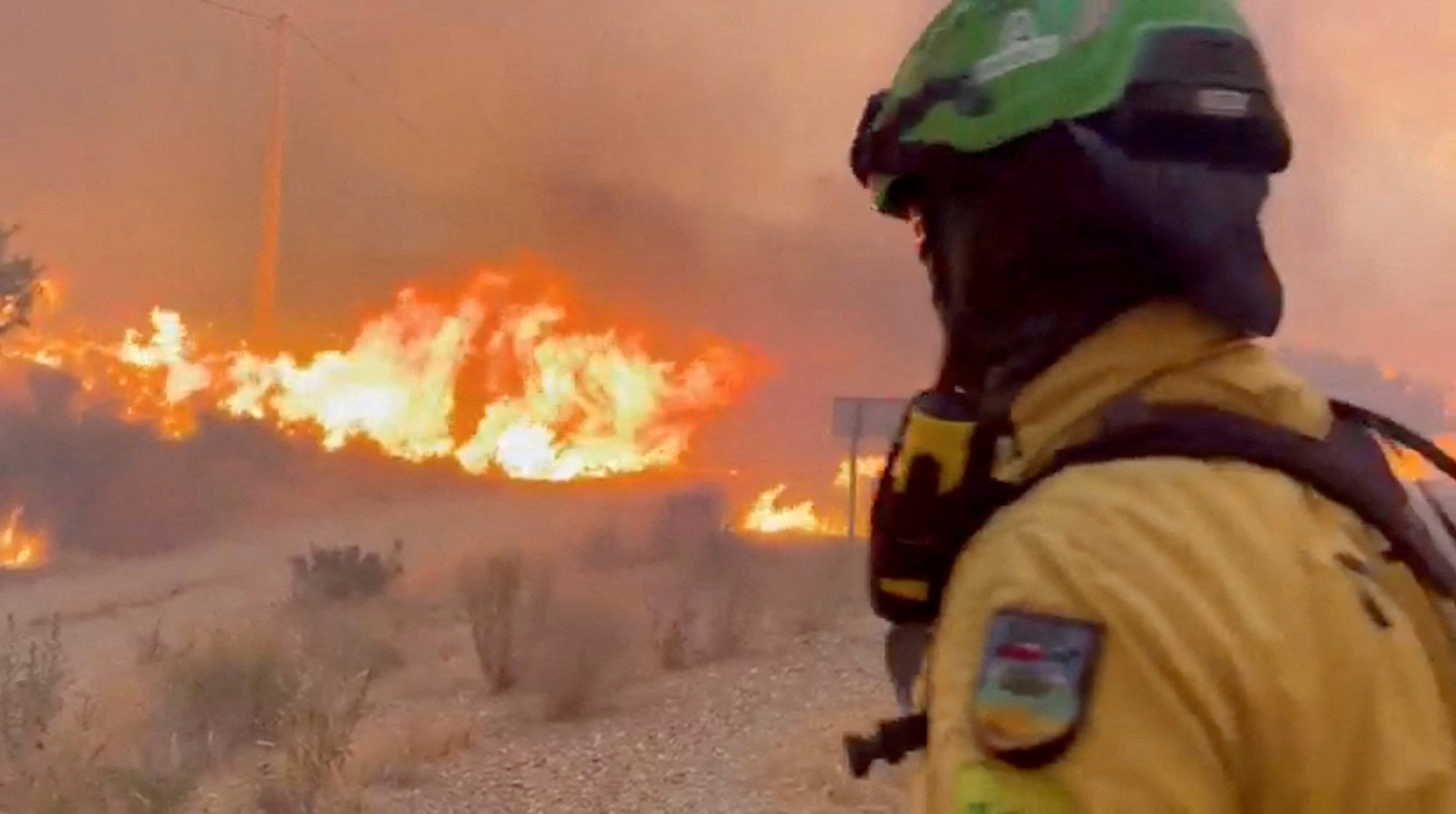

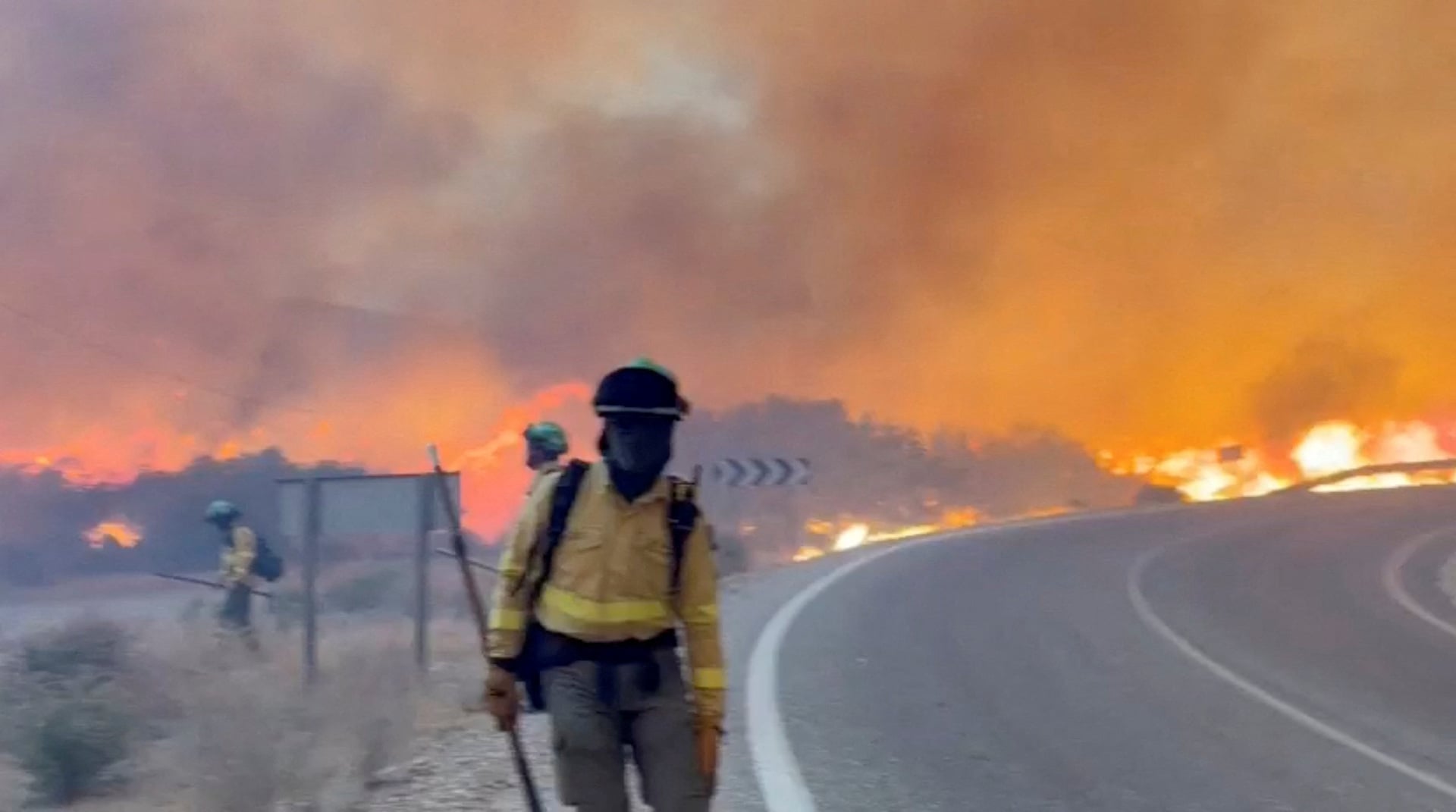
MADRID – Twelve people died and nineteen remained missing Thursday after wildfires tore through southern Spain’s Almeria province in what regional officials described as the worst fire disaster the area has seen in decades. Flames that erupted Wednesday near the municipality of Los Gallardos spread rapidly toward the town of Bedar, driven by fierce summer winds and vegetation parched by weeks of drought.
Antonio Sanz, Andalusia’s regional emergency chief, called it “the most devastating fire the region has experienced in recent memory, an unprecedented tragedy that has left families in ruins.” More than 300 emergency personnel responded to the fires, including 150 soldiers from Spain’s Military Emergency Unit. An additional fifty residents were sheltered in place when flames surrounded evacuation routes in the Bedar area.
Spain’s Prime Minister Pedro Sanchez expressed his condolences from Madrid. “We share enormous sadness and devastation with the families of the victims,” he said, authorizing emergency resources under the national civil protection framework within hours of the death toll climbing. Opposition figures in Andalusia questioned whether early fire warnings had been adequate given weather forecasts in the days before the blaze.
Juanma Moreno, president of the Andalusia regional government, confirmed nineteen people remained unaccounted for as of Thursday evening, a figure that left rescue services preparing for the toll to rise. Investigators pointed to a downed power line near Los Gallardos as the possible ignition point. If confirmed, that finding would raise questions about infrastructure maintenance across a region that has faced repeated extreme heat episodes in recent summers.
The Military Emergency Unit deployed to Almeria is the same force that responded to Valencia’s catastrophic floods last October, a deployment that has become an increasingly familiar reflex for Spain’s central government as climate extremes multiply. Aerial firefighting resources from France and Portugal were requested through the European Union’s civil protection mechanism by Thursday afternoon. Meteorological forecasts showed minimal rainfall expected in the coming days.
Temperatures in parts of Andalusia exceeded 42 degrees Celsius in the days before the blaze, and seasonal drought had pushed vegetation moisture to critical thresholds. The hillside scrubland above the tourist and retiree communities east of Almeria city, terrain that historically served as natural firebreak between municipalities, had become accelerant. According to Al Jazeera, which drew on regional emergency services and government statements, the mix of residential development and dry scrubland created the specific vulnerability that made this fire so lethal.
Survivors described the speed of escalation as disorienting. A fire that appeared manageable at midday had, within an hour or two, become a moving wall of flame reaching residential streets before evacuation orders arrived. Several confirmed victims were found in areas where official orders had not yet reached. That gap between fire behavior and administrative response will be central to any post-event inquiry.
Decades of rural depopulation followed by new development in fire-risk hillside terrain shaped the specific geography of this disaster. Many of the affected communities east of Almeria city sit in former agricultural zones where scrubland regenerated after farming was abandoned, then were later developed as retirement and tourism destinations. The resulting landscape, interspersed houses and dry scrub with no managed firebreak between them, is a pattern found across Mediterranean coastal provinces that local planners have struggled to address through zoning restrictions alone.
Climate scientists monitoring the Mediterranean basin note the region is warming at roughly twice the global average rate, lengthening the annual fire season and intensifying the drought conditions that precede it. Spain has expanded its aerial firefighting fleet and the UME’s mandate in response, but the structural question, how much of the national territory is effectively uninhabitable under summer fire conditions without fundamental land management reform, remains unaddressed in policy terms.
The European Commission’s Copernicus climate service has tracked a steady expansion of fire-prone conditions across the Iberian Peninsula. The 2003, 2017, and 2022 fire seasons each prompted pledges of structural reform; each was followed by relatively quiet years that diffused political pressure before the next catastrophic season arrived. This week’s record in Brazil, where Amazon deforestation reached a decade-long low under President Luiz Inacio Lula da Silva’s land protection policies, illustrates how political will upstream of the crisis shapes whether vegetation crises escalate into catastrophe.
No official estimate of total burned area was available Thursday, as aerial surveys required to produce that figure could not be conducted while the fire remained active. Grid disruptions and Cuba’s power failures under Trump’s fuel blockade illustrate how heat, energy, and infrastructure fragility intersect with political decisions across climate-stressed regions, a reality the fires in Almeria place within a broader global pattern.
Nineteen people remain missing in Almeria. The investigation into the downed power line is in its earliest stages. The fire is still burning.