
BORDEAUX – The family had packed what they could in twenty minutes, gathering identity papers, medication, and the photograph above the kitchen door, before smoke turned the afternoon sky orange and a police van arrived to move them north. Across the Gironde department, prefectural authorities had ordered mandatory evacuations overnight as another front of fire pushed toward villages that had already watched their neighbors leave twice this summer.
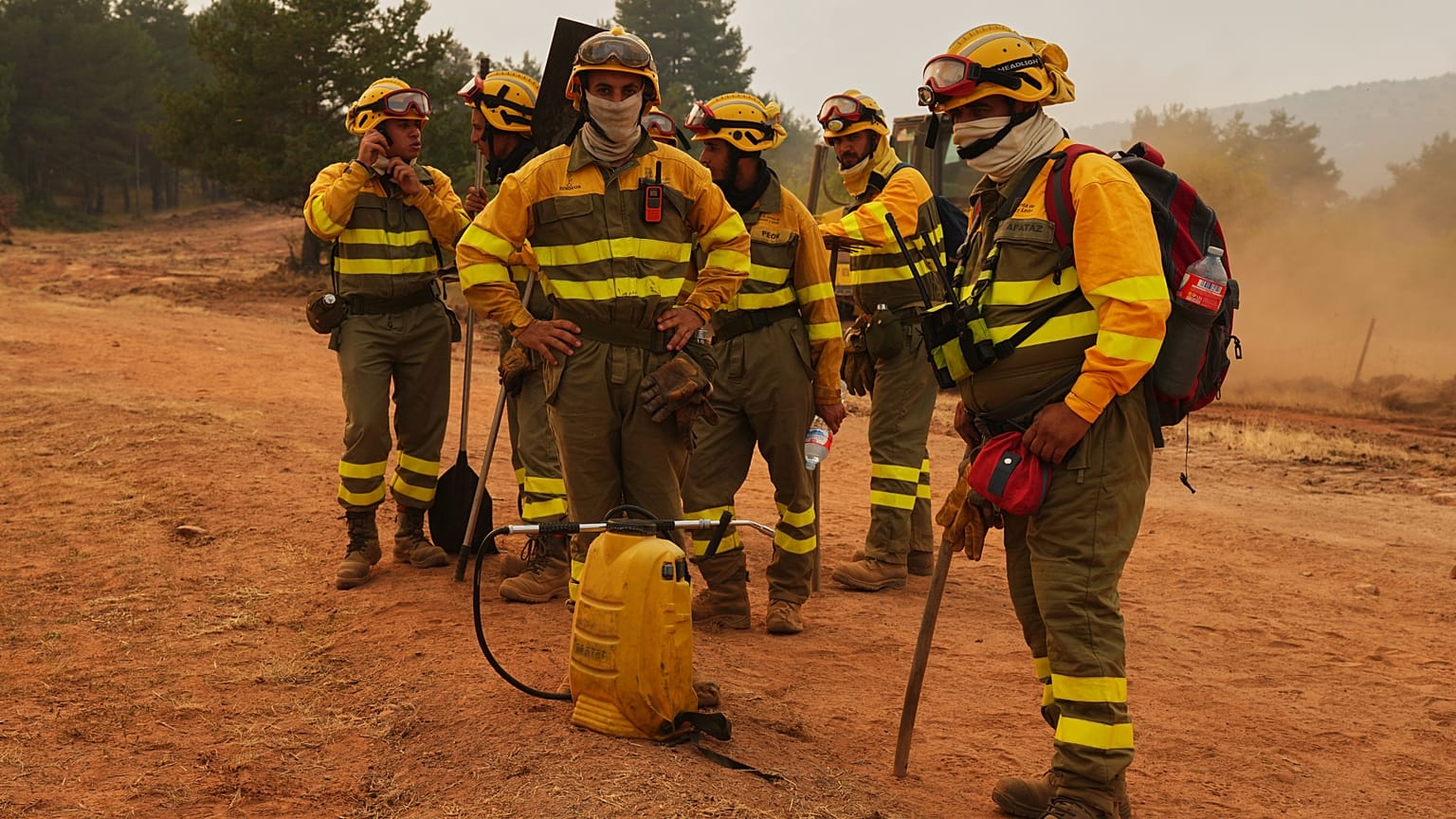
France and Spain are bracing for a fourth consecutive heatwave in 2026, with forecasters warning that temperatures could again exceed 42 degrees Celsius in parts of Iberia and southern France within days. The heat arrives as firefighters are still battling active blazes that have collectively displaced an estimated 300,000 people across both countries since late June, making this one of the most sustained fire seasons on record for Western Europe.
The new heat system, expected to build through Wednesday and Thursday, originates from a high-pressure ridge over the North African coast that has driven three previous heatwaves into the continent since the start of summer. Meteorologists at Spain’s national weather agency AEMET and France’s Météo-France have placed portions of both territories under orange heat alerts, one level below the most severe designation. In Spain, authorities in Extremadura and Andalusia have asked elderly residents to remain indoors during midday hours.
The displacement figures underscore how drastically wildfire risk has shifted across the region. In France, the area around Bordeaux has seen successive evacuations since the first fires ignited near the coast in late June. Many of the roughly 100,000 French residents asked to leave their homes have returned, only to face fresh evacuation orders as different fires advanced. Regional prefect officials said Monday that some municipalities had been under evacuation orders intermittently for more than three weeks.
Spain has faced simultaneous crises across multiple autonomous communities. The Sierra Oeste fire west of Madrid burned through nearly 4,000 hectares in late July, followed by fresh outbreaks in Galicia and in Valencia along the Mediterranean coast. Spanish Prime Minister Pedro Sanchez, speaking after an emergency cabinet meeting, warned that the country’s firefighting resources were stretched to their limits and called on European Union partners for aerial support. Madrid’s Sierra Oeste wildfire had forced thousands from their homes only days before this new heat system began building.
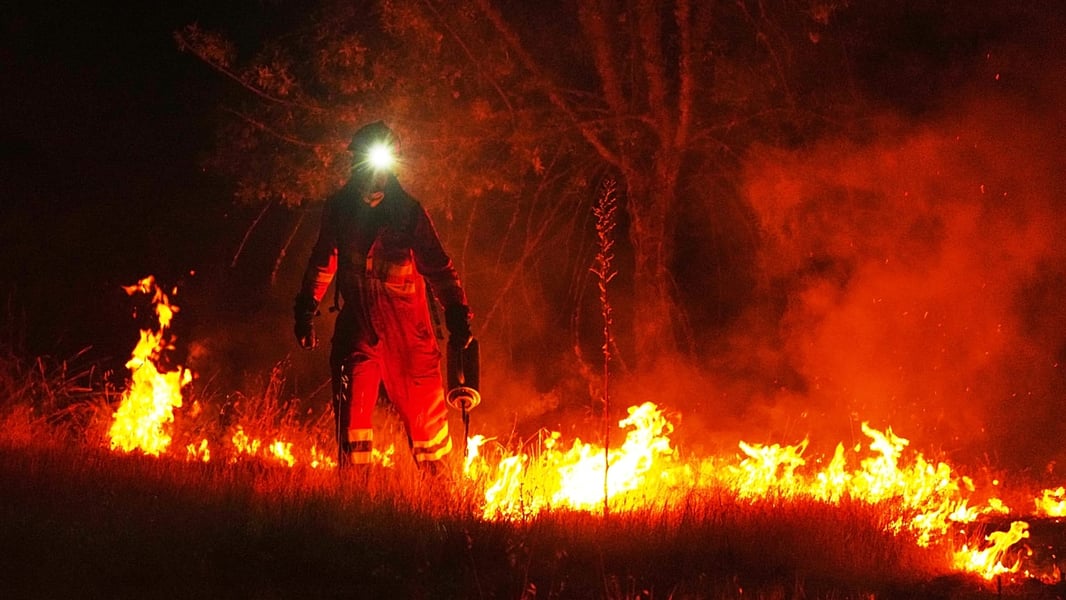
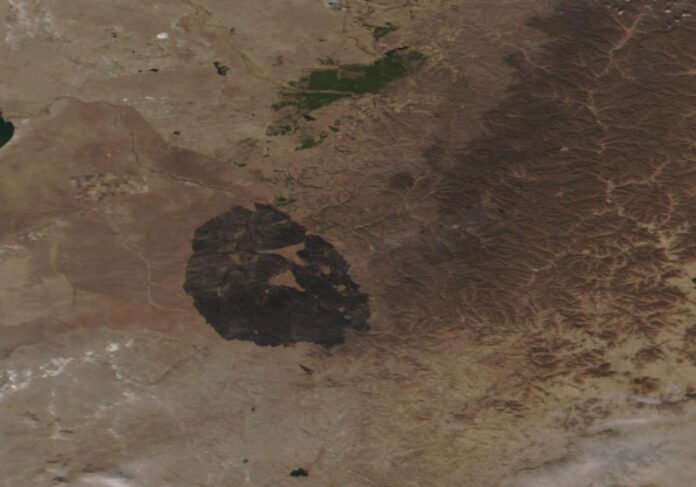
The EU’s Copernicus Emergency Management Service has been providing satellite tracking of the blazes across both countries. Its data shows that the combined burned area in France and Spain this year has already exceeded total annual averages from the previous decade. What remains unresolved is the precise mechanism driving this acceleration: climatologists debate the relative contributions of drought conditions, land management changes, and direct temperature records to this unprecedented run of fire weather.
A report published earlier this month by researchers at the Universidad Complutense de Madrid found that fire-risk days in central Spain had roughly doubled in frequency since 2010. Their analysis cited simultaneous increases in overnight minimum temperatures, meaning that fires that might previously have slowed at night were remaining active through dark hours and finding new fuel at dawn. The study stopped short of making seasonal forecasts or declaring this summer a new baseline.
Euronews reported Sunday that relief operations are straining accommodation capacity in several French departments north of the fire zones, with emergency housing now holding thousands of evacuees who have been out of their homes for more than two weeks. Local mayors have complained that national support for extended displacement, including housing subsidies, psychological services, and livestock care, has been slower to materialize than the initial emergency response. Spain’s national wildfire emergency had called on European neighbors to coordinate aerial firefighting assets, a request partially answered before this latest heatwave began building.
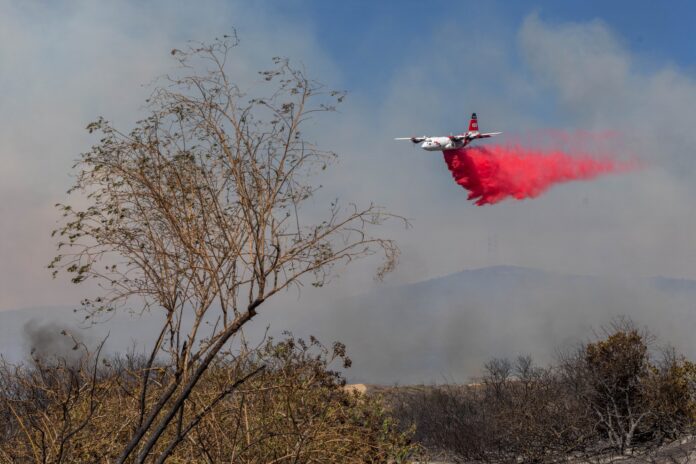
In Spain, the government has authorized accelerated payments from its national disaster fund for affected municipalities, though regional officials in Galicia have questioned whether the allocated amounts reflect the actual scale of damage. A full damage assessment is expected to take weeks after the active fire season concludes. France, which declared a national emergency over its wildfire situation earlier this month, has pre-positioned additional water-bombing aircraft in the southwest for the coming heat event.
The Iberian Peninsula’s relationship with wildfire has been transformed by a succession of extreme years. Portugal, immediately to Spain’s west, has largely stayed out of this summer’s worst episodes following investments in firebreak maintenance after its catastrophic seasons in 2017 and 2022. Spanish environmental groups have pointed to the contrast as evidence that landscape management, not only climate, shapes outcomes, though they acknowledge that no management strategy eliminates fire risk when a fourth heatwave is building offshore.
Emergency services officials in France said Monday they expected the next 72 hours to be critical for fire behavior across the Landes and Gironde departments, where dense plantation pine forests create conditions for rapid spread. A France wildfire evacuation in the southwest had displaced more than 20,000 tourists alongside residents just days earlier, and officials said they could not rule out similar orders as the fourth heatwave peaks. The Paris heatwave red alert declared earlier in July had produced record temperatures in the French capital; a fourth episode of comparable intensity would arrive before the summer has reached its historical peak.
For the families in emergency shelters, or those who have returned home and are watching the weather again, August has not yet arrived. It is historically the most dangerous month for fire across the region. The question being asked in the prefectures of southern France and the civil protection offices of Spain is not whether this summer has been severe. That is already established. The question is how much further it has to go.