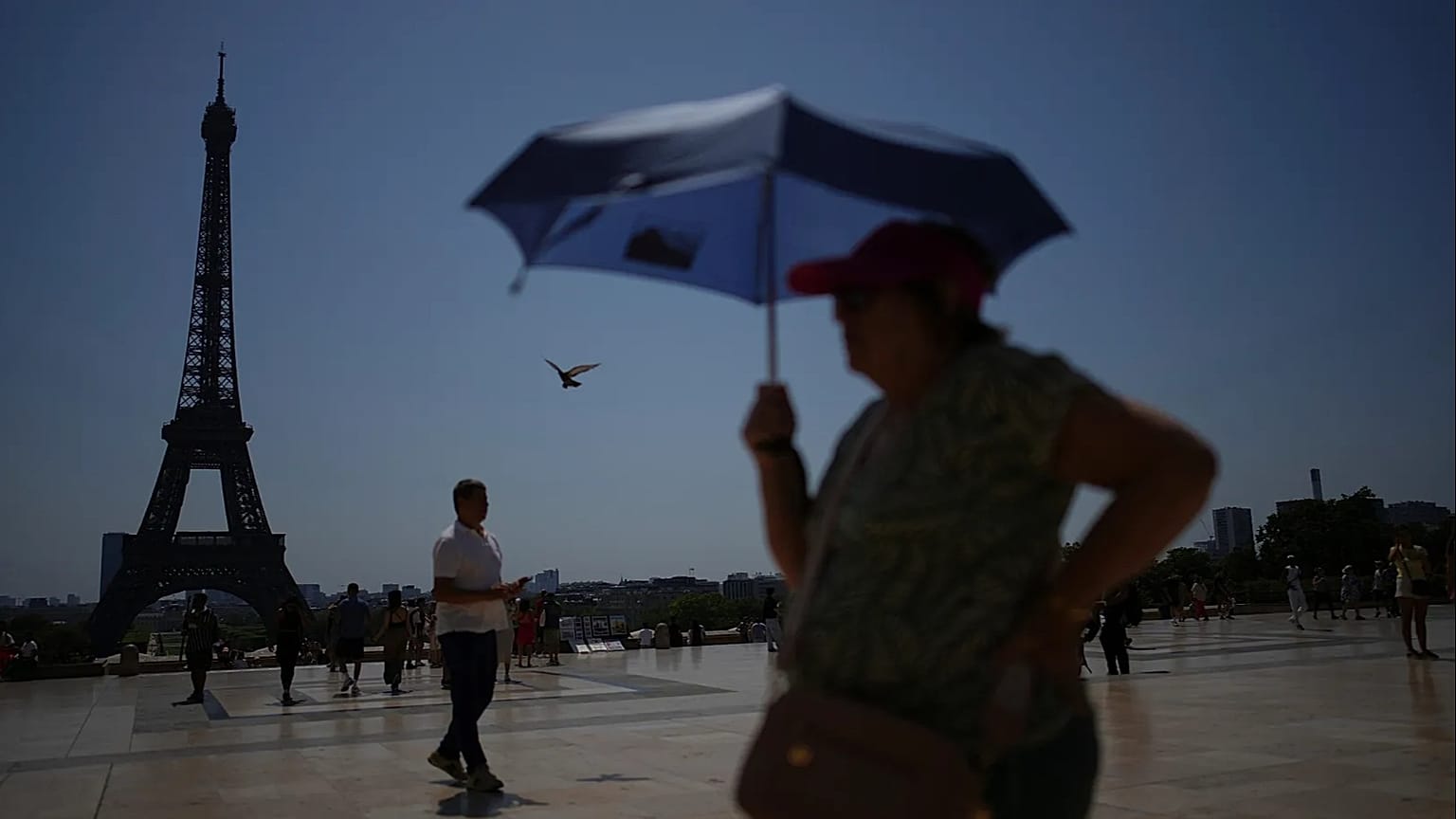

PARIS – The Eiffel Tower will close its gates four hours early this Saturday and Sunday, while the Louvre Museum and the Musée d’Orsay follow suit, as France’s third heatwave since May descends with enough force to place 24 departments under the country’s highest heat alert and leave more than 22 million people under red-alert conditions.
The closures, announced Friday by monument operators, mark one of the most visible responses to an accelerating climate crisis reshaping European summers. Euronews reported that Météo-France projects highs of 35°C to 38°C across most of the country, with temperatures potentially climbing to 39°C in a band stretching from Burgundy to the Pays de la Loire. The Eiffel Tower will stop admissions at 4 p.m.; the Louvre will follow the same schedule through Monday; the Musée d’Orsay has gone further, extending its early closure through Wednesday.
For the millions of tourists who pack Paris each July, those numbers translate into something more immediate than a forecast chart: shuttered elevators on the iron tower, silent galleries where last week crowds stretched to the horizon, and streets where shade has become a contested resource on boulevards built for a different climate.
Paris Mayor Emmanuel Grégoire convened an emergency crisis meeting Friday to coordinate the city’s response. The measures announced include extended hours at public parks and swimming pools, additional drinking water stations deployed across arrondissements, and a strengthened outreach program for elderly residents and other vulnerable populations who face the greatest danger when temperatures stay elevated well into the night.
France has already endured two punishing heat episodes since May, but this third wave carries a distinct quality of menace. It arrives at the height of summer school holidays, when Paris swells with visitors from across the continent and beyond, pressing against a tourism economy already strained by the demands of managing iconic monuments that were never designed for near-40°C summers.
Under France’s red heat alert protocol, prefectural authorities are required to activate cooling centers, monitor hospital capacity, and check on residents flagged as at-risk. The protocol emerged from lessons drawn after 2003, when an August heat wave killed an estimated 15,000 people across France before its full toll was understood. Two decades later, the country has built institutional memory for managing extreme heat, but that memory is being tested by a summer that has now delivered three waves in under two months.
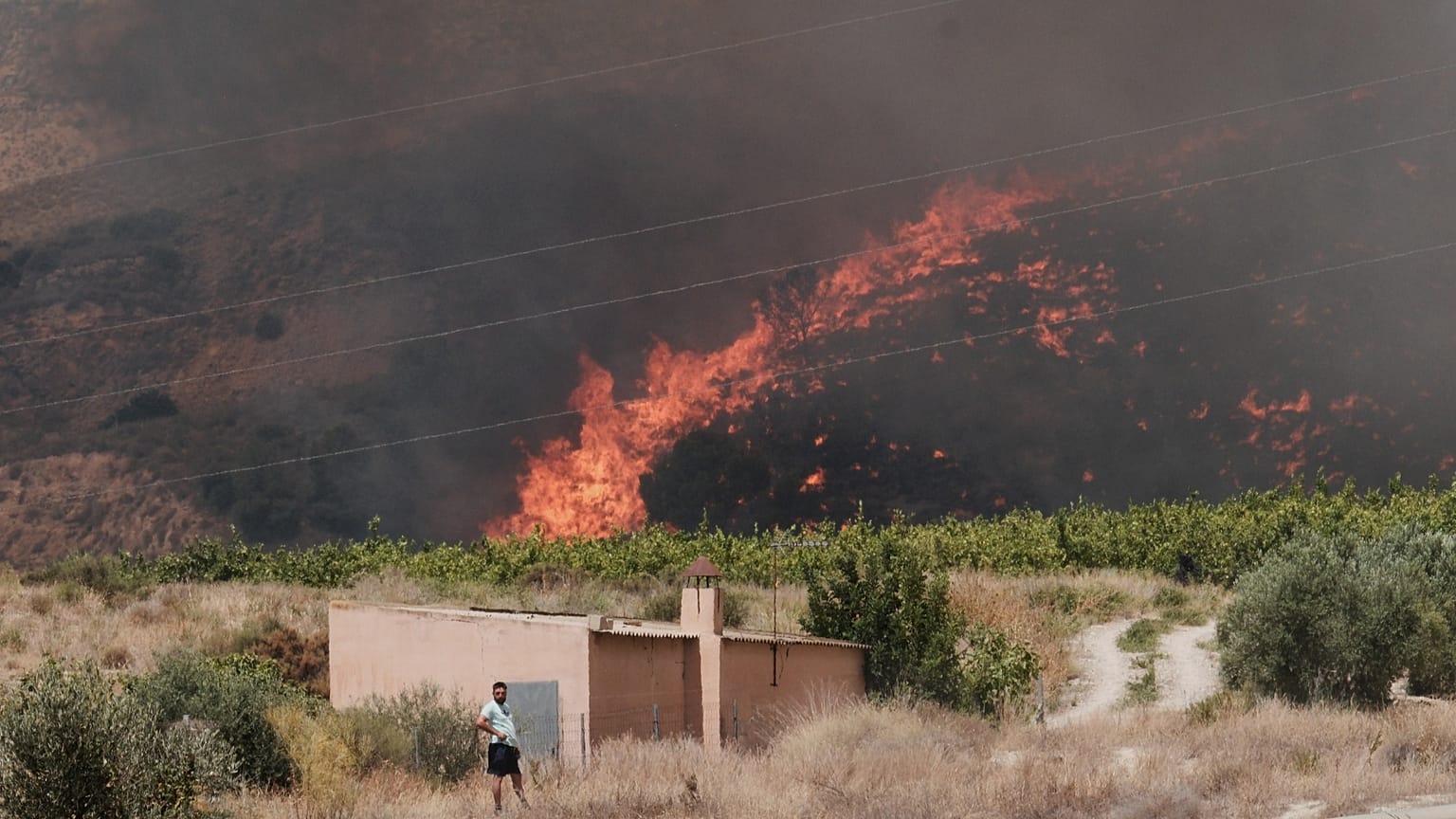
The heat did not stop at France’s borders. The same atmospheric pressure system sweeping northwestern Europe tore through Spain’s southeastern Almería province this week with lethal effect. A wildfire in the Los Gallardos area, which authorities suspect was ignited by a fallen power line, killed at least 12 people and forced more than 1,400 residents from their homes. Regional officials described the blaze as the most devastating fire in Andalusia’s recent memory, with 19 people still missing as 300 emergency personnel battled the flames in conditions that had turned parts of the Iberian Peninsula into a tinderbox. Eastern Herald reported on the Almería wildfire as the death toll climbed through the week.
Improving winds offered firefighters some relief by Saturday, but Spain’s AEMET weather agency continued to project temperatures of 36°C to 38°C across the peninsula through the weekend, offering little immediate respite for communities that bore the worst of the blaze.
Farther east, Italy was grappling with a quieter but no less serious consequence. The River Po, Italy’s longest waterway and the spine of an agricultural belt feeding much of the nation, was described as “critical” by the Po River District Basin Authority, which warned that drought conditions had depleted water reserves to levels threatening irrigation across the valley. That shortfall will not be resolved by a single rainfall.
The convergence of events fits a pattern that climate scientists have been documenting with growing alarm. A rapid attribution study by the World Weather Attribution consortium concluded that Europe’s June 2026 heatwave was “virtually impossible” without climate change, a shift from identifying climate change as making extreme events worse to establishing it as the condition that made them possible at all. Europe’s record heat killed hundreds earlier this summer as the World Health Organization warned that the continent’s health systems were not prepared for what had become a seasonal emergency.
How many will die in this third wave remains unknown. Heat mortality accumulates over days and weeks in data that lags the event, and the full toll from June’s wave is still being counted. What is clear is that 24 French departments are operating under red alert this weekend, the city’s monuments have gone quiet in the afternoons, and Paris has activated its emergency apparatus again, with no date announced for when the current heat system will finally break.