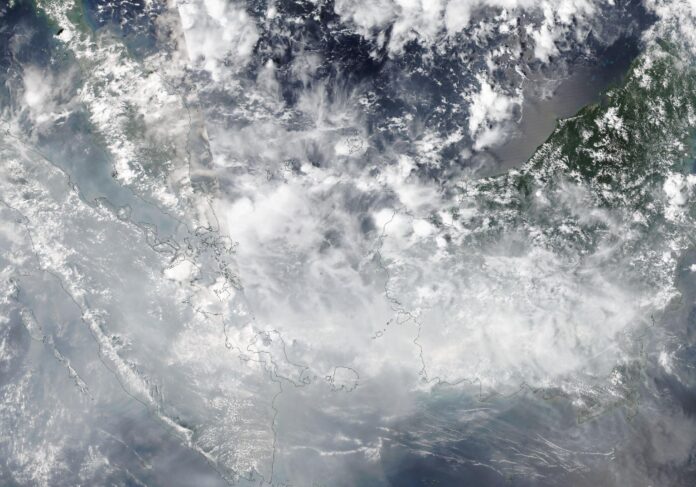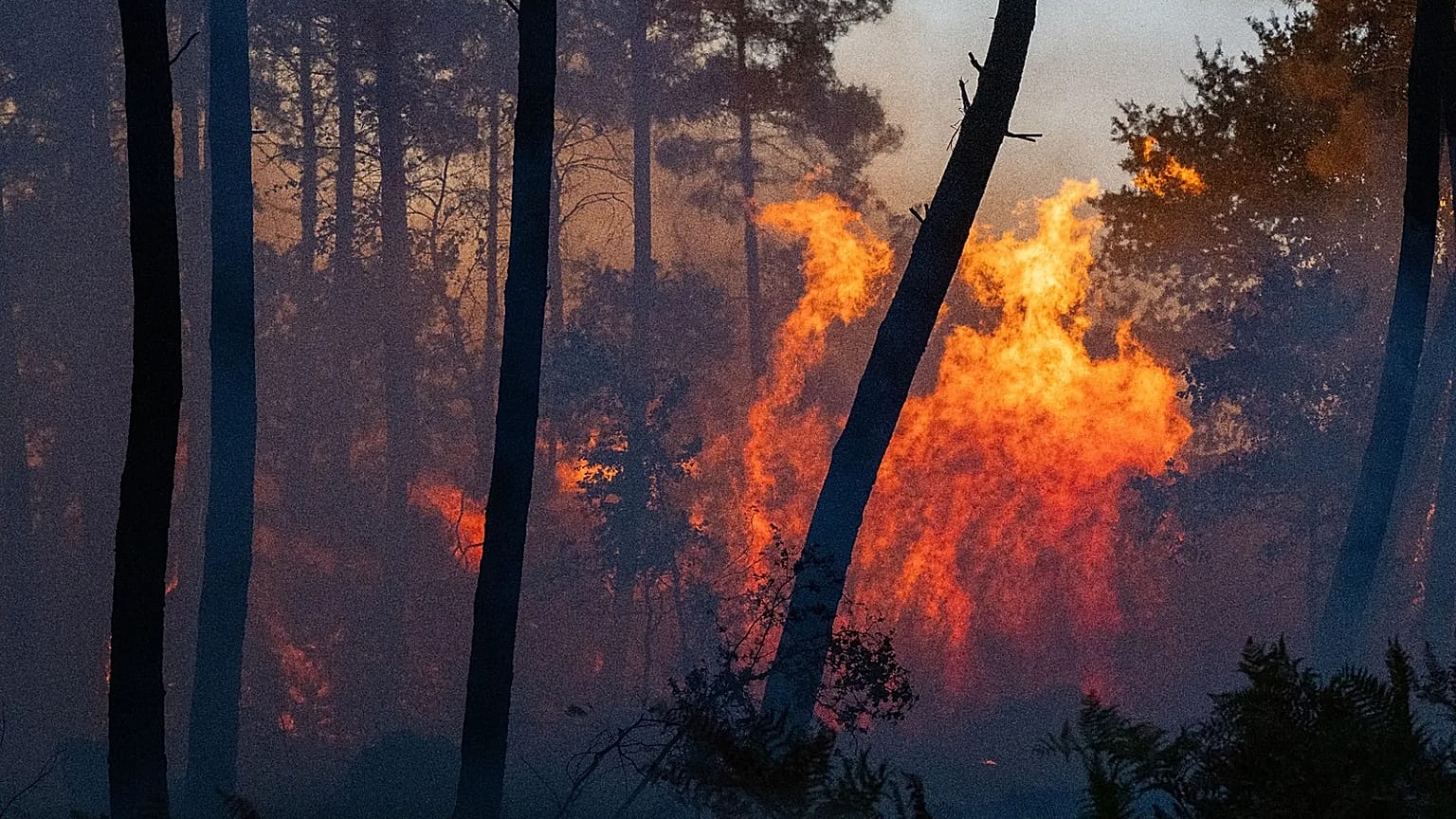

MADRID – More than 430 elderly and disabled residents were evacuated from care homes west of the capital on Thursday night and Friday morning as the Sierra Oeste wildfire complex, described by Spanish authorities as the worst the region has ever recorded, burned through the mountains and forced entire municipalities to empty. Among them were 178 residents of the Lopez Rumayor care home in San Martín de Valdeiglesias, moved to the municipal sports hall as flames closed in on the facility.
By Friday morning, more than 60,000 people in the Madrid region had been evacuated or ordered to shelter in place across 11 municipalities west of the capital, Euronews reported. Civil Guard officers drove through streets with loudspeakers ordering residents to leave. The scale placed it among the most significant wildfire emergencies in Spain’s modern history.
The Sierra Oeste blaze formed when three separate fires merged on the night of July 23 and the early hours of July 24, igniting a combined front that firefighters struggled to contain through the night. High temperatures, well above 40 degrees Celsius across the Madrid region in recent days, and shifting winds repeatedly disrupted containment lines, according to Spain’s Interior Ministry.
The localities under full evacuation orders included Camping El Escorial, Navas del Rey, Chapinería, Colmenar del Arroyo, Aldea del Fresno, Robledo de Chavela, Fresnedillas de la Oliva, Navalagamella, Zarzalejo, Peralejo, and Valdemaqueda. San Martín de Valdeiglesias, Pelayos de la Presa, and Villa del Prado were placed under shelter-in-place orders, though vulnerable residents including those in care facilities were separately evacuated even as the general population was told to remain indoors.
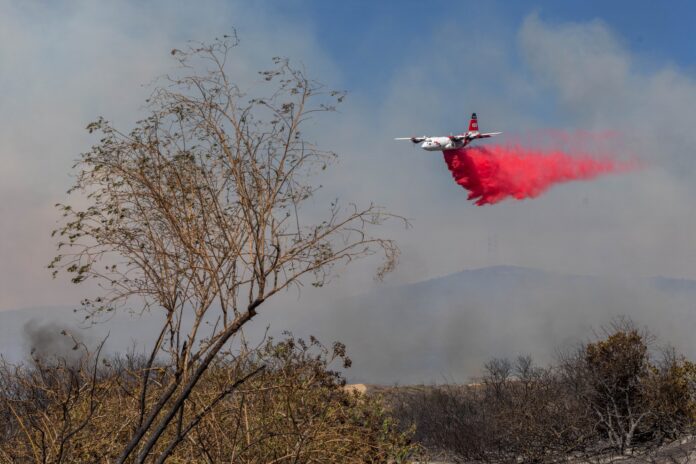
Spain’s government declared a national emergency late Thursday in the Madrid region and neighboring Ávila province, a step that allowed the rapid deployment of additional federal resources and placed the Military Emergency Unit, known as the UME, in operational control of the firefighting response. More than 270 firefighters and 40 ground units were deployed, with water-bombing aircraft working through the night.
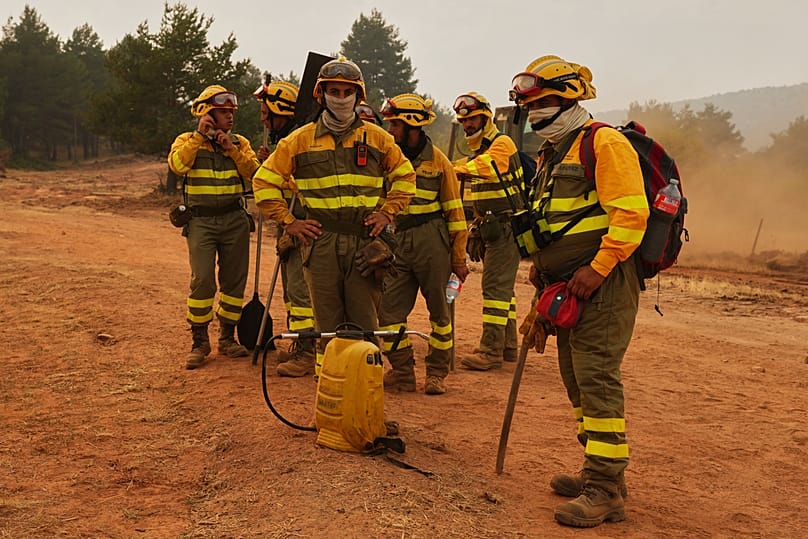
The Sierra Oeste fire marks an escalation of the wildfire crisis that Spain first declared an emergency over on Thursday. Spain’s emergency declaration was part of a broader southern European catastrophe that also claimed the lives of firefighters in France and Italy on the same day.
Spain had already recorded more than 104,000 hectares burned nationwide since January 2026 before the Sierra Oeste blaze developed, a total roughly triple the same period in 2025. An earlier fire in Almería province killed at least 13 people in the first weeks of July. The 2026 wildfire season has rapidly become one of the most destructive in the country’s modern history.
Across southern Europe, the simultaneous scale of wildfire emergencies reflected conditions that have become characteristic of peak summer under elevated climate pressures. More than 200,000 people were evacuated or displaced by fires in Spain and southwestern France combined, with French emergency officials requesting European Union aerial assistance as blazes approached Bordeaux.
Spain has experienced above-average temperatures since late spring, with heat advisories repeatedly issued for central and southern regions. Scientists have attributed the increasing frequency and intensity of summer wildfires in the Iberian Peninsula to a combination of longer dry seasons, higher peak temperatures, and decades of rural depopulation that left forested areas without the active management historically provided by farming communities.
The Madrid region had not previously experienced a wildfire emergency on this scale. Earlier this month, wildfires in Guadalajara and Zaragoza burned 28,000 hectares combined, pushing the 2026 season far ahead of historical averages before the Sierra Oeste complex developed.
As of Friday morning, several of the fires forming the Sierra Oeste complex remained uncontrolled. Spanish authorities had not confirmed a total for hectares burned in the Madrid-area blaze specifically, nor whether any deaths or injuries had occurred directly from the Sierra Oeste fires. The UME, now directing the unified firefighting operation under the national emergency declaration, said conditions were expected to remain critical through the weekend.