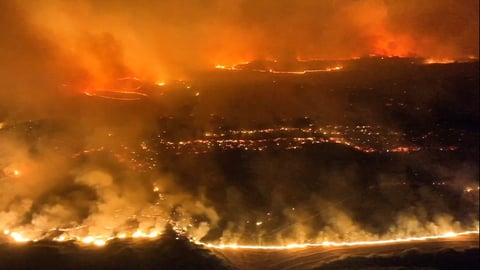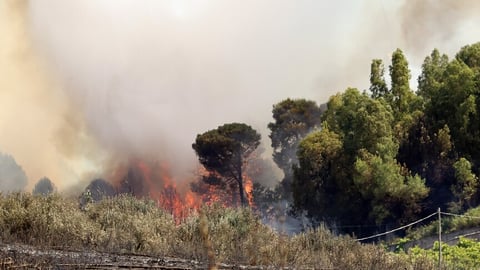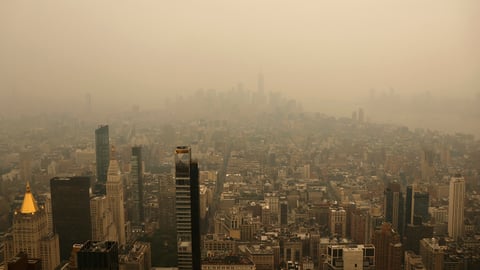

NEW YORK — The chemicals warming the planet are not all on the list. A new peer-reviewed study published Thursday in Science finds that carbon monoxide, the non-methane hydrocarbons that drift from gasoline pumps and household solvents, and the black soot that pours out of diesel engines and biomass stoves together drive roughly 15 percent of present-day human-caused warming. None of them are named in the gases-and-precursors list of the 1997 Kyoto Protocol, the treaty that still anchors most countries’ climate commitments.
The paper, Integrating indirect greenhouse gases into climate frameworks, was led by Ilissa Ocko, a senior climate scientist at Spark Climate Solutions and a former staff member at the U.S. Department of State. It argues that the missing 15 percent is not a rounding error. Taken together, these so-called indirect greenhouse gases now rank as the third-largest contributor to warming after carbon dioxide and methane — ahead of nitrous oxide, hydrofluorocarbons and the direct effect of soot.
“We’re emitting things into the atmosphere that don’t directly warm the planet, but they increase the amount of the greenhouse gases that do,” Ocko told Inside Climate News. The mechanism is chemistry. Carbon monoxide and volatile organic compounds bind up the atmosphere’s main cleaning agent, the hydroxyl radical, leaving methane to linger longer and trap more heat. They also feed the formation of tropospheric ozone, a greenhouse gas in its own right, and end their atmospheric lives as carbon dioxide.
The numbers are striking. Carbon monoxide and the volatile organics indirectly trap about 0.25 degrees Celsius of warming. Nitrous oxide — a gas every country in the Paris Agreement is supposed to count, report and cut — directly traps about 0.1 degrees. The Kyoto inventory, the foundation that the Paris pledges and most national net-zero plans were built on top of, names nitrous oxide and ignores the larger contribution.
Vaishali Naik, a research physical scientist with the National Oceanic and Atmospheric Administration who has spent two decades modeling atmospheric chemistry, told Inside Climate News that “persistent scientific and political challenges remain” even as researchers grow more confident in the indirect warming numbers. The science is no longer the bottleneck. The bottleneck is that the United Nations Framework Convention on Climate Change, the parent body of the Kyoto Protocol and the Paris Agreement, has spent thirty years building reporting systems around a fixed list.
Michael Gerrard, who directs the Sabin Center for Climate Change Law at Columbia University, said the new paper “highlights an important missing piece of the climate regulatory picture.” Translated into policy language: the temperature targets governments have signed up to defend cannot be met if 15 percent of the warming budget is not counted, not capped and not assigned to any country’s inventory.
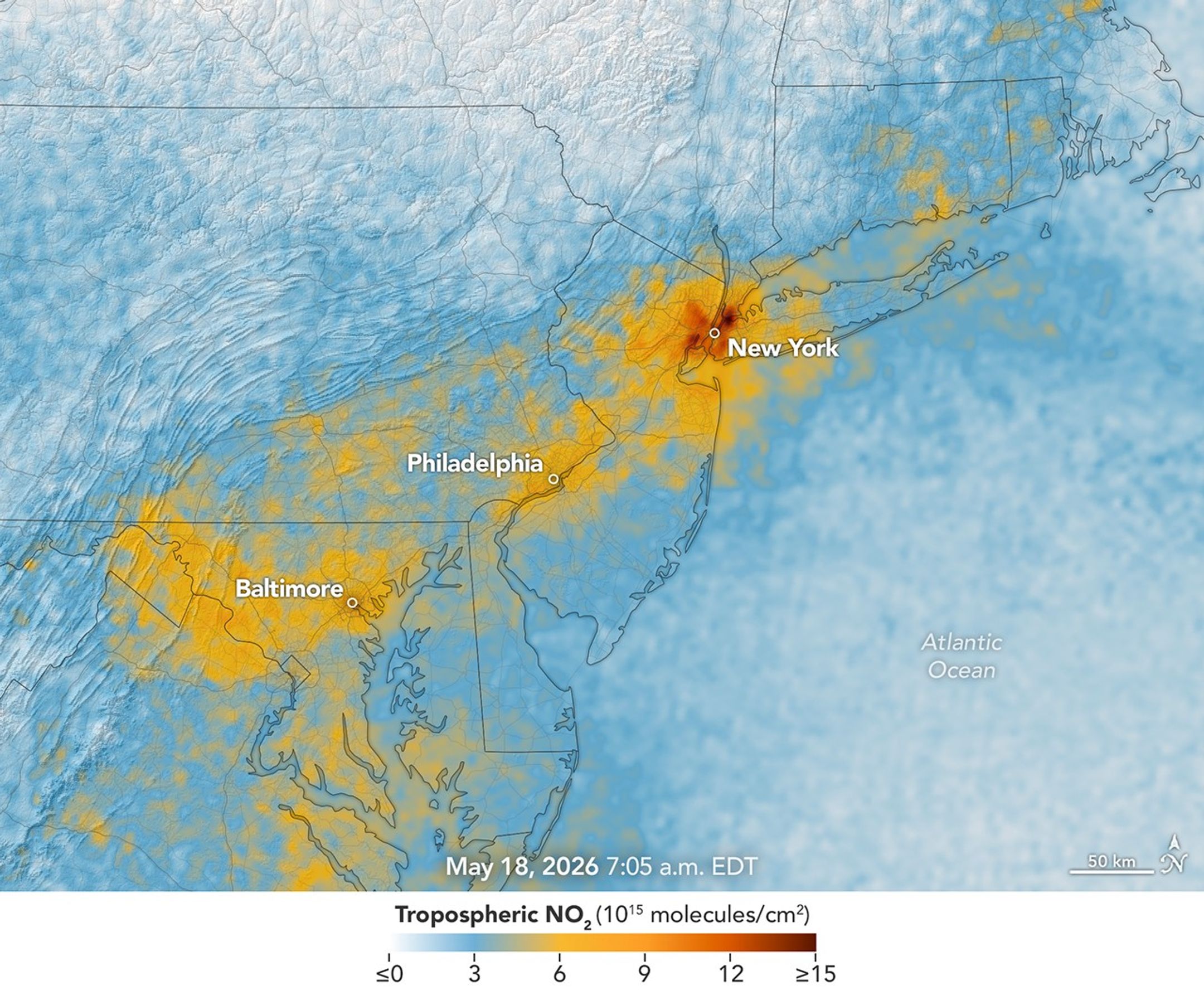
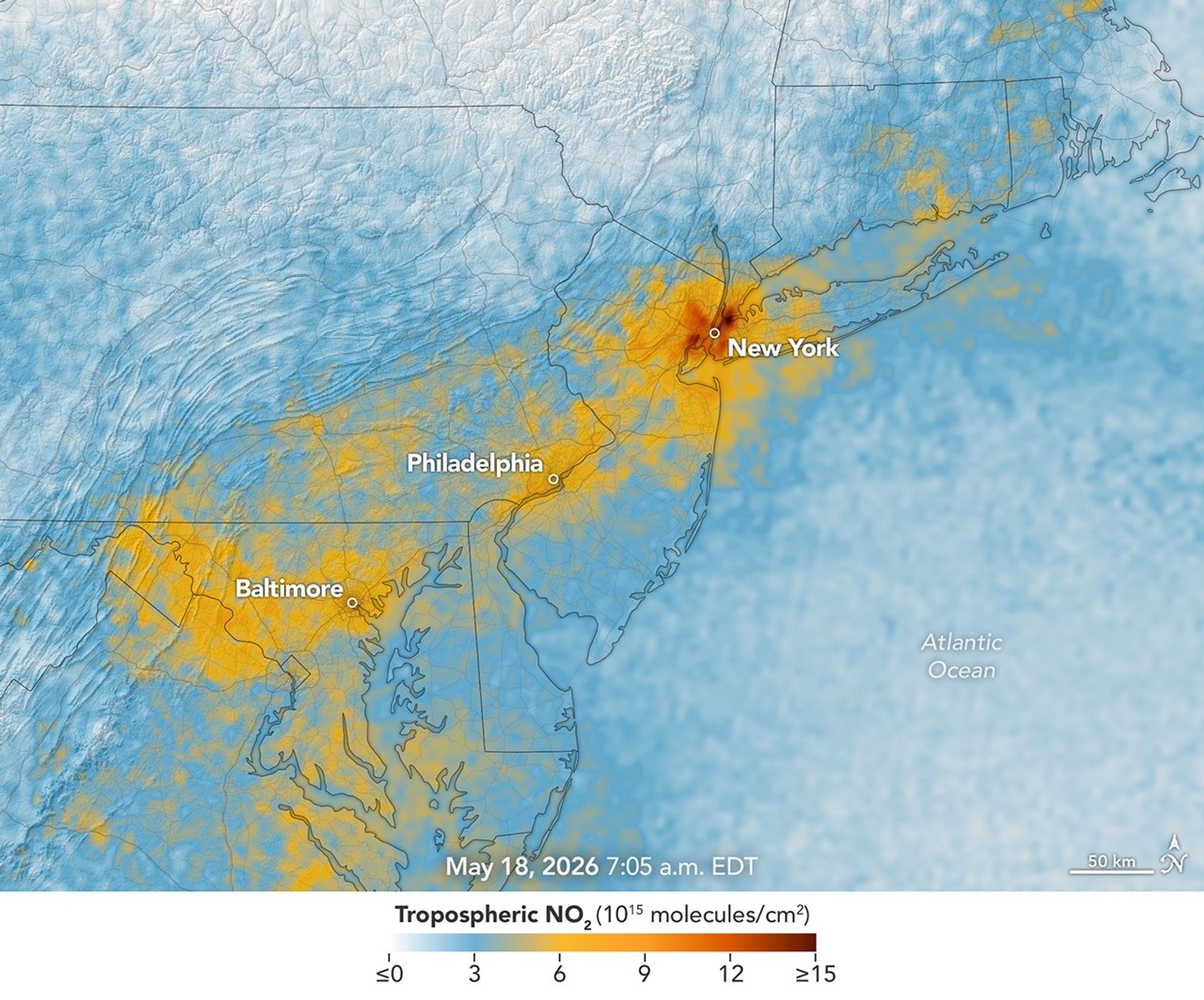
The political consequences fall unevenly. Carbon monoxide and non-methane volatile organics pour out of incomplete combustion — gasoline and diesel engines, refineries, oil and gas wells, household solvents and the cookfires that two billion people still depend on. Black carbon comes from diesel trucks, coal stoves, brick kilns and open burning. The countries that produce the most of these emissions are not the same as the ones that show up worst on a CO2 ledger, and the populations that breathe them in are not the same either. Children in Lagos, Delhi and Karachi inhale the precursors before they ever warm the planet.
That timing matters because the global temperature curve is bending the wrong way. The World Meteorological Organization said last month that there is now an 86 percent probability that the planet will breach the 1.5 degree Celsius warming threshold of the Paris Agreement within the next five years. The Ocko paper argues that pulling the indirect greenhouse gases into national inventories is one of the cheapest tools left for trimming midcentury overshoot, because cutting carbon monoxide and volatile organics also cuts the smog that already kills millions of people each year.
This is the second time in a week that a peer-reviewed study has identified a structural gap between what scientists are measuring and what climate policy is counting. On Wednesday, ETH Zurich researchers found that polar ice melt is slowing Earth’s rotation faster than at any point in 3.6 million years. A Potsdam team led by Stefan Rahmstorf this week pinned the cold blob in the North Atlantic on a weakening Atlantic Meridional Overturning Circulation, the current that warms Europe. A Michigan State University study published Friday by Cheikh Kounta and Phoebe Zarnetske found that solar geoengineering could shield 75 percent of the world’s oceans from marine heat waves but would leave the Atlantic, the northern Pacific and the Southern Ocean exposed. Each finding describes a piece of the climate system that the political conversation has been slow to absorb.
Ocko and her coauthors stop short of recommending a formal amendment to the Kyoto Protocol, a process that has historically taken years and rarely succeeds. Instead, they argue that national inventories and corporate net-zero plans should begin reporting indirect greenhouse gas emissions on a parallel track, the way many already track short-lived climate pollutants. The data, they note, already exist. The reporting categories do not.
The wider point of the paper, Ocko told Phys.org, is that measuring and driving down indirect greenhouse gases is essential if the world still wants to minimize midcentury overheating above 1.5 degrees Celsius. Three decades into the climate treaty era, the science is still telling diplomats that the list is too short.