
EAST LANSING, Mich. — A new study by researchers at Michigan State University and the Climate Intervention Biology Working Group, published this week in Environmental Research: Climate, models what stratospheric aerosol injection would do to marine heat waves under three deployment scenarios and finds that even the most aggressive intervention would leave about a quarter of the world’s oceans facing longer and hotter heat waves than they do today. The headline number is the one the solar-geoengineering community has been working toward. The footnote number is the one the climate-justice community will be reading.
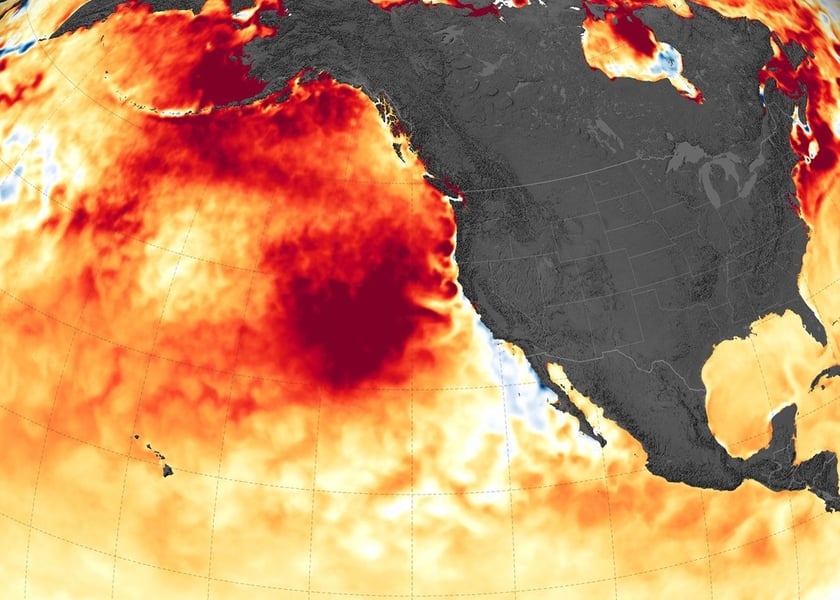
The substantive findings are the part to track. Under the current emissions trajectory, the study finds, average ocean temperatures are on track to rise by one degree Celsius by 2069 and marine heat waves will intensify across 97 percent of the world’s oceans. Under moderate stratospheric aerosol injection, the model finds, 20 to 25 percent of the ocean would be protected from heat-wave intensification. Under an aggressive deployment scenario, the protection rises to about 75 percent. The remaining 25 percent, distributed across the North Atlantic, the northern and tropical Pacific and parts of the Southern Ocean, would still see longer and hotter heat waves. The tropical Atlantic, the Indian Ocean, the Arctic Ocean and the South Atlantic would receive the largest benefit.
The methodological piece is the part the climate-modelling community will be reading. The study used the Community Earth System Model’s ARISE-SAI experiment, a fully coupled climate-system simulation designed specifically to test the consequences of stratospheric aerosol injection, the most-studied of the solar-geoengineering techniques. The model injects sulphur dioxide into the stratosphere at the latitudes that maximise the cooling distribution and tracks the consequences in the surface ocean, the atmosphere and the cryosphere. The geographic unevenness of the protection is the model output the study is reading; it is also the part that has been the central caveat in the broader solar-geoengineering literature since the technique was first proposed.
The Michigan State team’s framing of the finding has not been to advocate for deployment. Phoebe Zarnetske, the study’s senior author, told reporters that the technology is not a substitute for reducing emissions and that emissions reduction remains the priority. Lala Kounta, the lead author, said the geography of protection is deeply unequal, the diagnostic phrase the climate-justice community has been using on solar geoengineering for the past decade. The study’s contribution is the model-based quantification of that inequity. The aggregate cooling benefit, on the model’s reading, is real; the geographic distribution of who receives it is the part that becomes the operational question.
The political context the study lands in is the part the policy community will be reading. Inside Climate News reported in March on the generational shift in the climate-science community, in which a younger cohort of researchers has begun to take solar geoengineering more seriously as a research subject than the older generation did, on the grounds that the warming trajectory the IPCC tracks is now severe enough to require evaluation of every available response. The Kounta-Zarnetske paper is the latest contribution to that body of work. It does not endorse deployment; it specifies what the trade-off looks like.
The connection to the rest of the climate week’s findings is the part the science community will be reading as a coherent system signal. The Indicators of Global Climate Change report published Wednesday by seventy scientists across seventeen countries concluded the 1.5-degree carbon budget will be exhausted in three years at current emissions. The Rahmstorf paper published this week in Geophysical Research Letters concluded the Atlantic cold blob is the depth-extended signature of an AMOC slowdown. The Kiani Shahvandi-Soja paper in the Journal of Geophysical Research concluded the planet’s rotation is slowing at a 3.6-million-year high. The Kounta-Zarnetske paper sits in the same week’s signal as a different kind of contribution. The science community is now publishing on the question of what an aggressive technological intervention does, alongside the question of what the warming trajectory is doing on its own.
The substantive question stratospheric aerosol injection raises that the new study does not resolve is the inter-temporal one. The cooling effect of injected aerosols decays within a few years of deployment ceasing; the underlying CO2-driven warming, by contrast, persists in the atmosphere for centuries. A deployment programme that started and stopped would produce a rapid temperature rebound, the climate-modelling literature calls termination shock, that could subject the planet to a faster temperature rise than the un-geoengineered trajectory would have. The Kounta-Zarnetske study does not model termination, but the paper’s framing of the policy choice acknowledges the dependency: the only deployment scenario consistent with the cooling benefit is one that runs for as long as the underlying CO2 forcing requires it to.
The other substantive question the study does not resolve is ocean acidification. Stratospheric aerosol injection cools the atmosphere by reflecting solar radiation; it does not remove CO2 from the air, and the CO2 dissolving into the ocean continues to acidify it regardless of the surface-temperature signal. A deployment programme that controlled marine heat-wave intensity would still leave the chemistry of the upper ocean acidifying at the same rate as the un-geoengineered scenario, and the chemistry, on the marine-ecosystem literature’s reading, is the bigger threat to coral reefs and shellfish than the temperature signal alone. The Kounta-Zarnetske study notes the limitation in its discussion.
The operational pieces of the solar-geoengineering question are moving in the meantime. One US-based company has been releasing sulphur-dioxide gas to the stratosphere using balloons since 2022; a second company received 75 million dollars in 2025 to develop aircraft-based aerosol deployment; the European Commission’s research arm has been funding the European Stratospheric Aerosol Geoengineering Assessment project since 2023. The deployment infrastructure, in other words, is already being built, in advance of the international policy framework that would govern it. The Kounta-Zarnetske study’s framing is that the climate-justice question has not been adjudicated in advance of the operational decision.
The closing observation the paper leaves on the table is the kind that has been the broader argument in the solar-geoengineering literature for the past decade. Either the political community moves the emissions trajectory at the rate the IGCC report says is necessary, or the climate-system trajectory crosses the thresholds the Rahmstorf paper measures, the rotation paper extends and the ocean-temperature literature is now beginning to quantify. In the second case, the solar-geoengineering question is the one the policy community will face whether or not it has decided to. The Kounta-Zarnetske paper’s contribution is to put a number on what the answer looks like if it is asked too late.