
ZURICH — The Earth is now slowing its rotation faster than at any time in the past 3.6 million years, and the cause is the same one the rest of this week’s climate science has been pointing at. A study by Mostafa Kiani Shahvandi of the University of Vienna and Benedikt Soja of ETH Zurich, published in March in the Journal of Geophysical Research: Solid Earth and gaining renewed media attention this week, finds that polar ice melt and sea-level rise are now lengthening the planet’s day at 1.33 milliseconds per century, a pace unprecedented in the geological record going back to the Late Pliocene. The mechanism is the redistribution of mass from the poles to the equator as ice sheets melt and the meltwater flows toward lower latitudes, a process that increases the planet’s moment of inertia and slows its spin.
The methodological piece that allowed the study to reach this conclusion is the part the geodesy community will be reading. The Kiani Shahvandi-Soja team reconstructed the ancient day-length record using benthic foraminifera, single-celled marine organisms whose fossil shells preserve a chemical signature of seawater temperature and ice volume across millions of years. The team developed a physics-informed diffusion model, a deep-learning method that integrates the physical laws of sea-level change directly into a probabilistic neural network, to produce a continuous reconstruction of day length from the foraminifera record. The result is the longest and most resolved instrumental-equivalent record of the planet’s rotation rate in the published literature. The current rate of slowing is, on that record, an outlier in every direction.
The substantive comparison the paper makes is the part the climate-impact community will be reading. The Washington Post covered the underlying mechanism in 2024, when an earlier study by Duncan Agnew at the Scripps Institution of Oceanography found that the climate-driven slowing had already pushed back the expected need for a negative leap second in international atomic time by about three years. The Kiani Shahvandi-Soja paper extends that result. It puts the current slowing rate in a 3.6-million-year context, the same window the geological record offers as the comparison for the warming trajectory the IPCC tracks. The pace, in both signals, is the part of the picture that has no analogue.
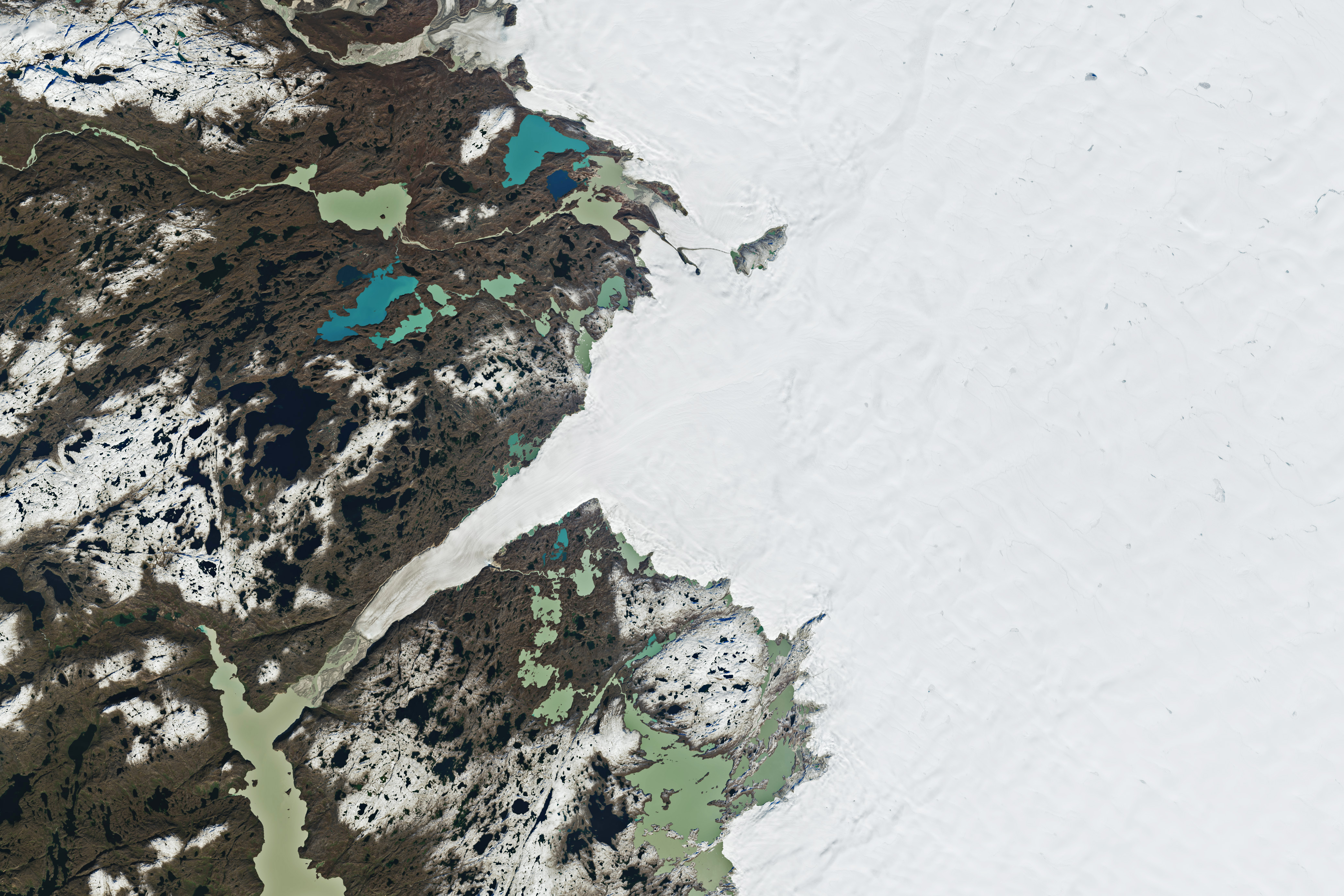
The physical mechanism is straightforward. Greenland and Antarctica are losing mass to the ocean; the meltwater flows toward the equator, where the planet bulges out under its own rotation; the added equatorial mass widens the bulge slightly; the wider the bulge, the more the planet’s moment of inertia, the more the rotation slows. The arithmetic is the geometric kind that astrophysicists have used for centuries to model the spin-down of large rotating bodies. What has changed is the rate at which the mass redistribution is happening, and the rate the Kiani Shahvandi-Soja paper measures is now the dominant signal in the planet’s length-of-day variation. Climate change, in other words, is now the largest single forcing on how fast Earth turns.

The downstream consequences are the part the technology and infrastructure community will be reading. The world’s GPS satellites, financial-transaction time-stamps, electrical-grid synchronisation and computer-network protocols all depend on a coordinated international time standard, UTC, which is kept aligned with the planet’s actual rotation through periodic leap seconds. A faster slowing rate complicates the leap-second calendar in two directions at once. The Agnew 2024 paper concluded that the climate signal would delay the next expected negative leap second from 2026 to 2029; the Kiani Shahvandi-Soja extension implies the rate of delay is itself accelerating, which raises the operational question of whether the leap-second protocol will be retired before the next adjustment is due. The International Telecommunications Union decided in 2022 to eliminate the leap second by 2035; the climate-driven slowing is one of the considerations on that decision’s calendar.
The connection to the rest of the climate week’s findings is the part the science community will be reading as a coherent signal. The Indicators of Global Climate Change report published Wednesday by seventy scientists across seventeen countries concluded the 1.5-degree carbon budget will be exhausted in three years at current emissions. The Rahmstorf paper published this week in Geophysical Research Letters concluded the Atlantic cold blob is the depth-extended signature of an AMOC slowdown, the same Greenland-meltwater freshening mechanism the rotation study is measuring at the planetary scale. The Kiani Shahvandi-Soja paper is the geodetic slot in the same picture. The same ice melt that is reshaping ocean currents and reorganising climate is now visible in the way the Earth turns.
The political-economic implications are the part that has been a long-cycle reading of the climate record. The 23 centimetres of sea-level rise the IGCC report tracked since 1901 are the headline number the policy community has been working against; the rotation-slowing study is the same number expressed in a different unit, the polar-mass loss the sea level is the proximate measurement of. The Greenland ice sheet shed 264 gigatons a year between 2002 and 2025, the NASA GRACE-FO satellite mission has documented; Antarctica shed 135 gigatons a year over the same window. The two numbers, summed and integrated across a century, are the volume the Kiani Shahvandi-Soja paper translates into the day-length signal. The geometry of the planet is now being reshaped by the same process the IPCC has been tracking.
The week’s other climate news is the part the policy community will be reading the rotation paper alongside. Australia’s COP31 negotiations president, Chris Bowen, told reporters at the Bonn UN climate talks this week that the world needs to get off fossil fuels; the European Union finalised its ETS2 carbon-market design; the Trump administration sent California’s vehicle-emissions waivers to Congress for repeal; and NOAA declared an El Nino Advisory with a 63 percent probability of a very strong event by next winter. The rotation paper does not change the policy calendar. It changes what the policy calendar is measuring.
The substantive question the paper leaves on the table is the one the climate-impact literature has been working on a different track. If the current rate of slowing continues, the day-length signal will continue to grow; if it accelerates, the leap-second calendar collapses on a faster timeline; if the warming trajectory bends, the rate of mass redistribution slows and the rotation signal stabilises. The three scenarios run on the same emissions arithmetic as the IGCC’s carbon-budget timeline. The middle scenario, the one the central estimate of the climate models has been tracking, produces a rotation signal that continues to grow at roughly the current rate for the next several decades. The high-emissions scenario produces a signal that accelerates. The low-emissions scenario, the one consistent with staying below the Paris Agreement’s 1.5-degree threshold, produces a signal that begins to stabilise around mid-century.
The closing observation the Kiani Shahvandi-Soja paper makes is the kind that climate communicators have been wrestling with since the field began. The planet’s rotation rate has been the most stable measurement humans have made of the Earth since the first atomic clocks were built in the 1950s. The signal is now changing fast enough that it has become a climate indicator. The Earth, in the paper’s framing, is being reshaped by the same process the climate-impact community has been measuring through every other instrument. The rotation rate is the latest indicator to join the list. Whether the policy community responds to that signal at the rate the science is reading it remains, as in every other dimension of the climate-policy conversation, the open question.