NAIROBI — Kenya has become the first country in Africa, and only the second worldwide, to draw technical support from the United Nations Santiago Network on Loss and Damage, an Environment Ministry announcement said this week. The amount on paper is small: $700,000, or about 90 million Kenyan shillings. The precedent is not. For thirty-three years the African Group of Negotiators has argued at climate summits that the continent that did the least to heat the atmosphere is paying the highest price for it. Kenya’s draw is the first time that argument has translated, on the continent, into a wire transfer.
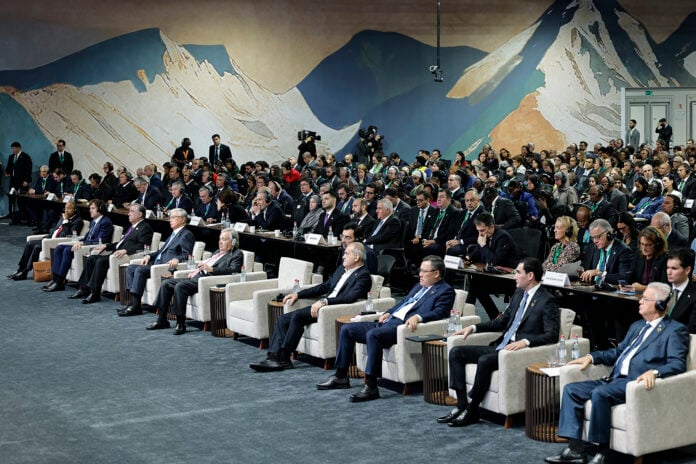
The package was announced on the sidelines of the U.N. Framework Convention on Climate Change’s mid-year Bonn negotiations, the technical session known as SB64, which is the diplomatic warm-up to the COP31 summit later this year. It will be administered by the Climate Change Directorate inside Kenya’s Ministry of Environment, Climate Change and Forestry, and routed to the National Environment Management Authority and the National Environment Trust Fund.
“Despite enduring some of East Africa’s most devastating climate shocks, Kenya has never fully measured the true scale of what has been lost,” Festus Ng’eno, Principal Secretary for Environment and Climate Change, said in a statement reported by Capital News in Nairobi. “The assessment will provide critical evidence to inform policy, planning, and resource mobilization aimed at strengthening the country’s resilience to climate impacts.”
The Santiago Network was established at COP25 in Madrid in 2019 and finally given a host country and a permanent secretariat at COP28 in Dubai. It sits in Switzerland, runs on voluntary contributions from developed countries and is meant to do the unglamorous half of climate-disaster work: not the cheques themselves, but the systems that decide what gets paid and to whom. Kenya is the second country in the world to get one of those system-building grants.
That distinction matters because the much bigger pot — the Loss and Damage Fund itself, which was negotiated at COP27 in Sharm el-Sheikh and seeded at COP28 — has so far drawn pledges of just under a billion dollars against an estimated developing-world need that runs into the hundreds of billions annually. Without national assessment systems, even the money that exists cannot move quickly.
Jeremiah Kioli, who chairs the Kenya Climate Change Working Group, told Mongabay that the gap is the point. “How do you measure loss and damage?” he said. “You need the systems, just as it is with the Green Climate Fund.” The Green Climate Fund, the world’s largest dedicated climate-finance vehicle, took close to a decade to design its rules of evidence. Loss and damage is years behind it.
Fred Njehu, Greenpeace’s pan-African political strategist, framed the announcement in starker terms. “It is long overdue,” he said, “for countries on the frontline of the climate crisis to receive support to build resilience.” The frontline countries he was describing are, overwhelmingly, in the continent Kenya is the gateway to. The 2020-to-2023 Horn of Africa drought, the worst in forty years, killed an estimated 43,000 people in Somalia alone. The Indian Ocean cyclones that followed it killed more. Neither event has been formally compensated.
Mamo Boru Mamo, who runs the National Environment Management Authority, told the Capital News briefing that Kenya’s assessment will look back a full decade, covering not just the headline droughts and floods but the slower losses: crops that failed three seasons in a row, pastoralist herds that thinned to nothing, smallholder coffee farms that have moved up the slopes of Mount Kenya in search of cool weather. Elizabeth Carabine, a Santiago Network representative who attended the announcement, said the assessment template will be shared with other African ministries that have asked to see it.
The arithmetic of climate diplomacy is what makes the Kenyan grant feel both small and significant. The continent is responsible for roughly four percent of historic greenhouse gas emissions and absorbs an outsized share of the warming. Earlier this week, a peer-reviewed paper in Science found that about 15 percent of human-driven warming comes from pollutants that climate treaties never put on the list. Africa is breathing many of those pollutants and counting their consequences in livestock and lost harvests, but cannot file a claim against an emitter that the Kyoto Protocol does not name.
Kenya is also positioning itself as the continent’s climate-finance broker for the rest of the year. On Monday, Mombasa will host the 11th Our Ocean Conference, the first time the global ocean summit has been held on African soil, with the host government pushing for explicit fossil-fuel phase-out language in the commitment list. The same Climate Change Directorate that will run the loss-and-damage assessment is coordinating the Mombasa agenda.
What happens next is procedural, but procedural is where loss-and-damage policy has lived for thirty-three years. The Santiago grant is meant to be drawn down over twenty-four months. Lagos, Lilongwe and Dhaka have all asked the secretariat for the assessment template Kenya is now building. The grants do not solve the underlying gap between what wealthy economies have pledged and what poorer ones are owed. They do start filling in the spreadsheet on which any future settlement depends.
“It is long overdue,” Njehu’s phrase, is the diplomatic tense in which this entire conversation runs. Kenya’s $700,000 will not pay the bill. It will, for the first time in Africa, write the invoice.