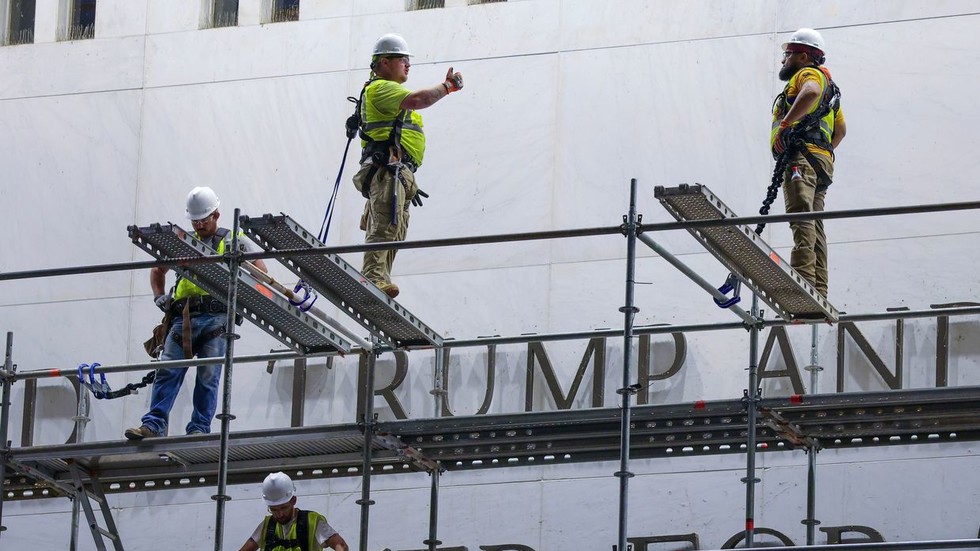

WASHINGTON — The board installed by President Donald Trump to run the Kennedy Center for the Performing Arts gave a federal judge a choice on Monday: allow the center to inscribe Trump’s name on its facade, or watch one of the nation’s preeminent cultural institutions close its doors within days.
In court documents filed ahead of a Tuesday morning status conference, the Trump-appointed board warned that the center faces “certain fiscal collapse within weeks,” unable to meet payroll or cover routine maintenance without what it described as a presidential rescue directly tied to public recognition of Trump’s role. Attorneys for board member Joyce Beatty, the Ohio congresswoman whose lawsuit originally forced the naming dispute before a judge, offered a different characterization. “This is an outrageous act of hostage taking,” attorney Norm Eisen said. “Pay up or the Kennedy Center closes, and the price is Trump’s name on the building.”
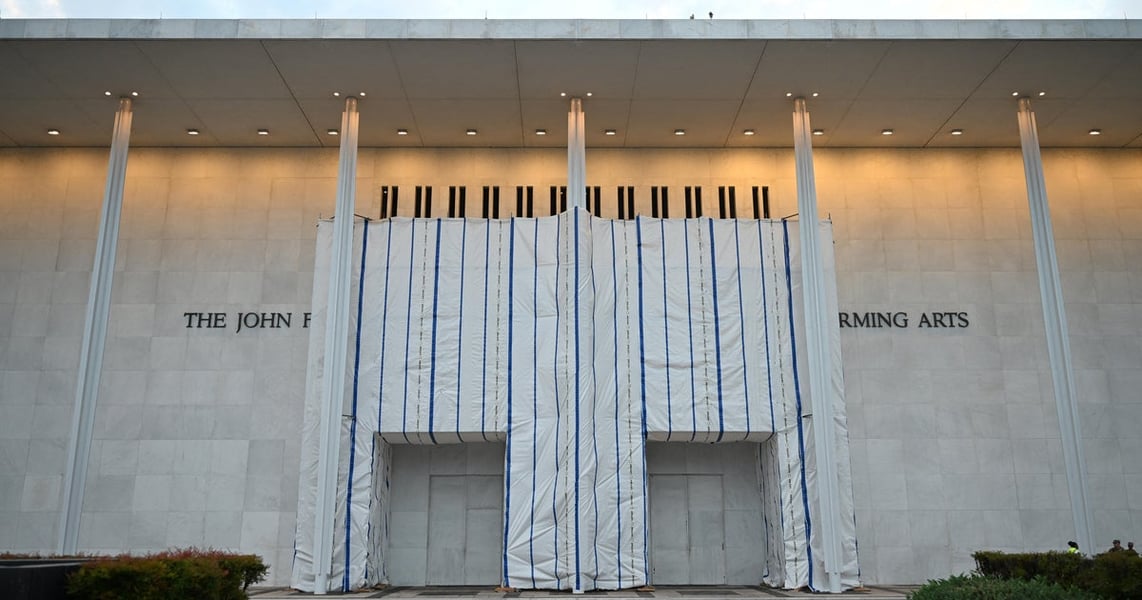
The ultimatum arrives ahead of a vote scheduled Tuesday and a status conference with U.S. District Judge Christopher Cooper, who ruled in May that renaming the center, a tribute to a slain president, violated federal law requiring congressional authorization for any change to the building’s official designation. That ruling stripped Trump’s name from the marble facade. It also blocked the board’s attempt in August to shutter the center for two years, a vote that passed 23-3 before Cooper intervened.
At the center of Monday’s filing is a draft resolution circulating among trustees with 10 distinct inscription options. One would place “Restored and Renovated by President Donald J. Trump” beneath the building’s official title. Another would rename the surrounding grounds “President Donald J. Trump Plaza.” A third promises a line reading “Endowed by the Trump Kennedy Center Fund” once a $100 million endowment is reached. The board’s resolution states the rationale plainly: “Without such appropriate recognition it is unlikely that President Trump will provide the fundamental oversight of the renovation of the main building and lead the fiscal rescue of the Center.”
What the filing does not explain, and what RT reported the court submission provided no audited breakdown for, is how an institution that Congress appropriated $257 million for in renovation funding finds itself unable to meet payroll within weeks.
The center’s financial deterioration accelerated after Trump fired the entire original board in early 2025 and installed loyalists, naming Richard Grenell, a former intelligence and national security official with no background in arts management, as chief executive. Under Grenell, ticket sales collapsed, major donors withdrew, and the Washington National Opera, which had shared the center’s stages for decades, severed its relationship with the institution. Grenell was replaced in March by Matt Floca, but the damage to fundraising and programming had already accumulated.
This pattern of institutional disruption followed by offers of rescue contingent on personal recognition has defined Trump administration engagement with federally chartered bodies since his second term began. The Supreme Court’s rejection last week of the administration’s emergency bid to enforce new mail ballot rules before November’s midterms was among the more recent examples of courts serving as the operative check on executive moves made without statutory authority.
The Kennedy Center’s founding legislation, signed in 1971 by President Nixon as a memorial to John F. Kennedy, gives Congress, not the president, authority over the institution’s governance structure. That legal architecture has been at the heart of every ruling Cooper has issued in the case.
Whether Tuesday’s hearing produces emergency relief blocking the vote, or allows the board to proceed while Cooper sets conditions on how inscriptions are implemented, remains open. Beatty’s attorneys have indicated they will seek injunctive relief. Cooper has moved quickly before: his May order removing Trump’s name came within days of the filing that prompted it.
As public polling shows Democrats positioned to gain House seats ahead of November’s midterms, the administration appears prepared to absorb additional legal setbacks in pursuit of recognition that its own appointees say cannot wait. The Kennedy Center was not designed to carry a living president’s name. What Tuesday morning’s status conference decides is whether it does anyway.