
WASHINGTON — The Supreme Court dealt the Trump administration a significant defeat Monday, blocking an executive order that would have required the U.S. Postal Service to screen mail ballots against state voter rolls before delivering them.
The ruling highlights how far the administration has pushed legal boundaries in its effort to reshape voting procedures. But the broader campaign shows no sign of stopping.
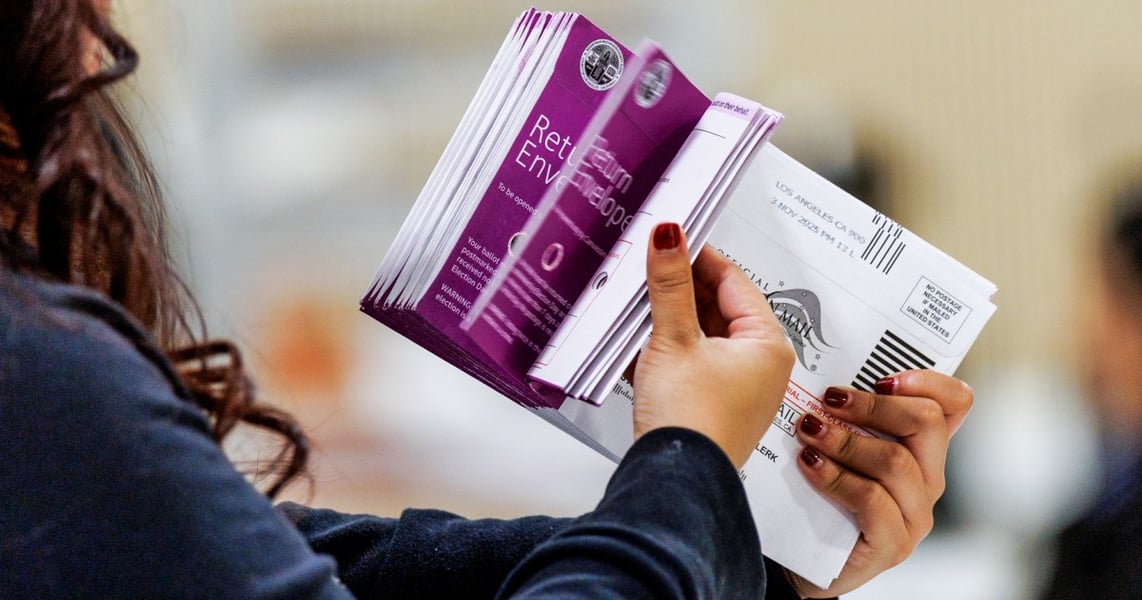
The order Trump signed earlier this year would have directed the United States Postal Service to cross-reference incoming mail ballots against voter registration lists submitted by state election authorities. Any ballot cast by a voter whose name did not appear on the approved list would go undelivered. Two lower courts had already ruled the plan “most likely illegal,” including a decision from a Trump-appointed federal judge who found the order exceeded executive authority. On Monday, the nation’s highest court agreed it could not take effect.
The ruling was a blow to one of the administration’s more audacious election interventions. It was not, however, a halt to any of them.
Federal agents have been assigned to scour voter rolls in multiple states, searching for registered voters who may not be citizens, despite no evidence that noncitizen voting occurs at any scale capable of affecting an election outcome. The Justice Department has sent threatening letters to more than 30 of the country’s top election officials, demanding access to unredacted voter registration data that includes Social Security numbers and driver’s license information which states are legally required to keep private. The department has lost 23 of those cases in court so far, according to NBC News. The rest remain active.
The Department of Homeland Security has been running a parallel campaign, pushing an investigation into the trustworthiness of electronic voting machines, whose claims have been dismissed by every court that has examined them. DHS Secretary Brian Mullin has been central to the effort. In a move that drew national alarm when first reported this summer, Mullin threatened local election officials with federal prosecution over their voter roll maintenance practices. A separate DHS bid to merge citizenship data from the Social Security Administration into a unified eligibility database was blocked by a federal court before it could be used.
The administration has also turned the Federal Emergency Management Agency into a pressure instrument, conditioning terrorism-prevention grant funding on changes to how states run their elections. Legal scholars have described the arrangement as constitutionally novel in the worst possible sense, with no precedent and obvious vulnerabilities.
What separates Trump’s second term from his first is not the ambition but the machinery. The first term’s pressure campaigns often collapsed when career officials who knew the law refused to bend it. This time, those officials were cleared out before the campaigns began. Courts remain the primary functioning check on the administration’s election interventions, and even that check has limits. An order blocking an executive order does not undo the letters already sent, the investigators already assigned to voter rolls, or the financial conditions already attached to state grant agreements.
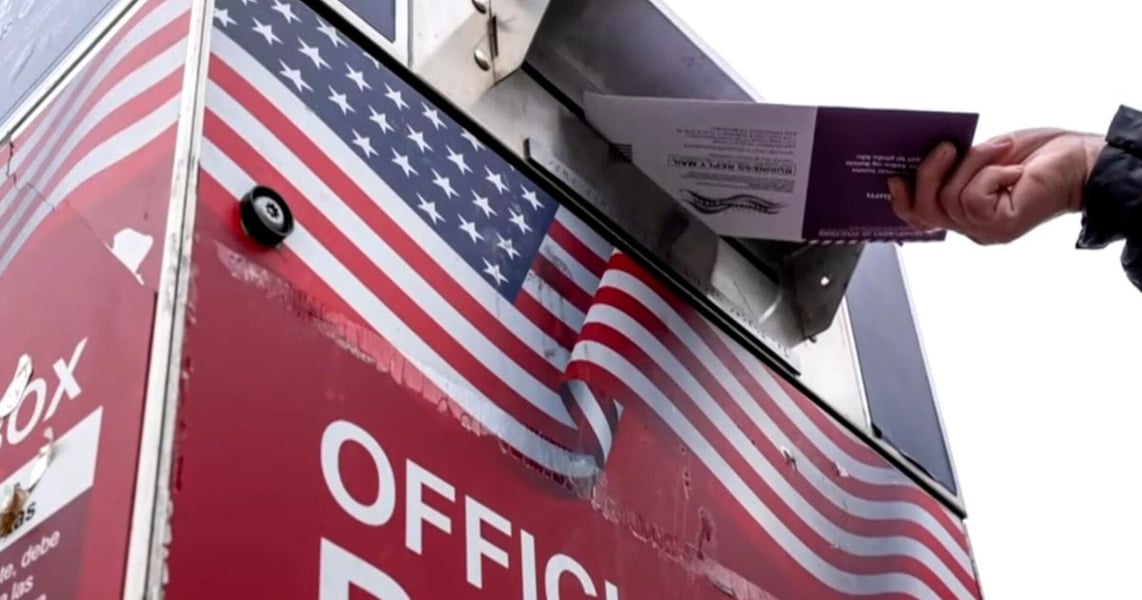
By Monday, states including North Carolina, Delaware, and Alabama had already mailed ballots under longstanding procedures. A coalition of states seeking emergency relief had argued the administration’s directive threatened to invalidate hundreds of thousands of ballots already in transit. Even Republican-controlled states, in their own Supreme Court brief, argued the order had arrived too close to Election Day to implement without causing widespread confusion among voters who had already cast their ballots in good faith.
With the House having completed its final session before the midterms, Republican lawmakers have stayed almost entirely silent on the administration’s posture toward election management. The SAVE Act, which would have imposed new federal voter registration requirements, failed to advance before the recess. Its political energy did not dissolve with it.
The damage to voter confidence is already measurable. A survey by the Associated Press and NORC found that only 34 percent of American adults trust that election results will be accurately certified, down from 40 percent in 2024, a drop that tracks directly with sustained doubt-casting by the administration and its allies. As CBS News has noted, the administration has repeatedly positioned itself as the defender of election integrity while dismantling the institutions designed to provide it.
Trump also gutted the Cybersecurity and Infrastructure Security Agency’s election security division, eliminating a program that spent years helping state and county officials defend against foreign interference. Many of the career officials removed in that process were replaced with loyalists drawn from networks that had long promoted discredited claims about the 2020 election.
Republicans heading back from recess will do so as part of a party whose leader has spent nine months engineering the conditions under which the midterm elections they are seeking to win will be conducted. The Supreme Court removed one piece of that machinery on Monday. The rest of it remains in motion.