
SEOUL — The timing was deliberate. One day after the United States, South Korea and Japan concluded their five-day “Freedom Edge” maritime exercises near Jeju Island, North Korea staged a coordinated strike drill from the eastern port of Wonsan and waited two days before explaining what it had done.
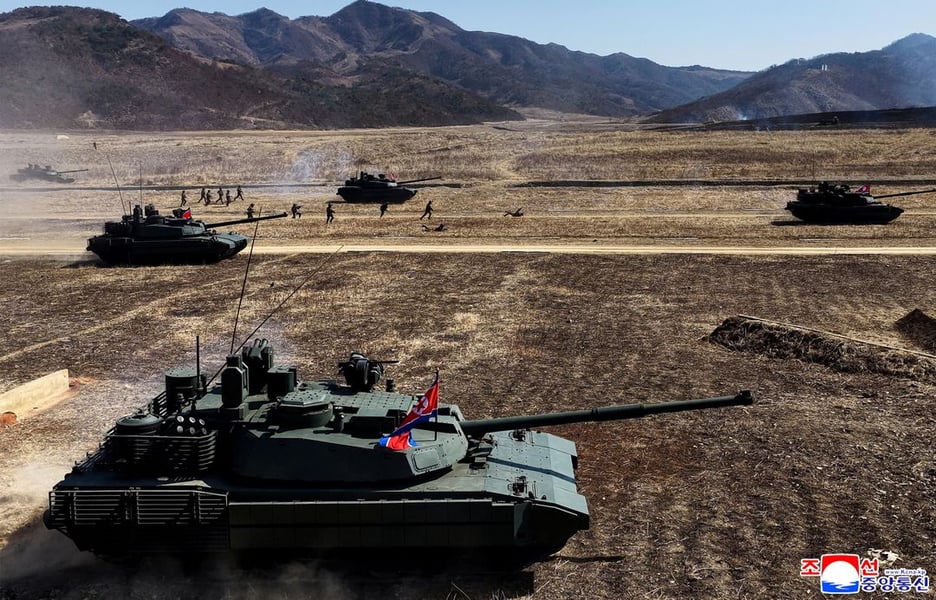
When Pyongyang’s Korean Central News Agency published the account on Monday, the framing was precise: five combined units of the Korean People’s Army had carried out a “joint firepower attack drill,” deploying attack drones, tactical cruise missiles, a large-caliber thermobaric multiple rocket launcher and tactical ballistic missiles simultaneously under what KCNA described as an “integrated weapons control system.” Marshal Pak Jong-chon, who observed the exercise, said the weapons systems mobilised had demonstrated “the huge destructive power of concentrated fire.”
The missiles flew approximately 250 kilometres toward North Korea’s eastern waters. South Korea’s Joint Chiefs of Staff identified the projectiles as Hwasong-11 series short-range ballistic missiles and rounds from 600-millimetre super-large multiple rocket launchers, the same platform North Korea has been manufacturing in quantity for shipment to Russia.
Al Jazeera reported the launches as they were detected Saturday morning, noting the Wonsan origin and the 5:20 a.m. detection time. The North did not formally describe the drill until Monday, a two-day delay that some analysts read as deliberate distancing from the explicit Freedom Edge connection.
That connection was not coincidental. Freedom Edge ran from September 7 to 11, with naval and air assets from the United States, South Korea and Japan operating in international waters near Jeju Island. The exercise is designed, in Washington’s framing, to improve coordinated responses to North Korean missile threats. Before the drills began, a North Korean Foreign Ministry spokesperson called them “a threat to the DPRK and regional countries” and warned Pyongyang was capable of “strong and reflective countermeasures.” The September 12 drill, launched the day after Freedom Edge concluded, was the reply.
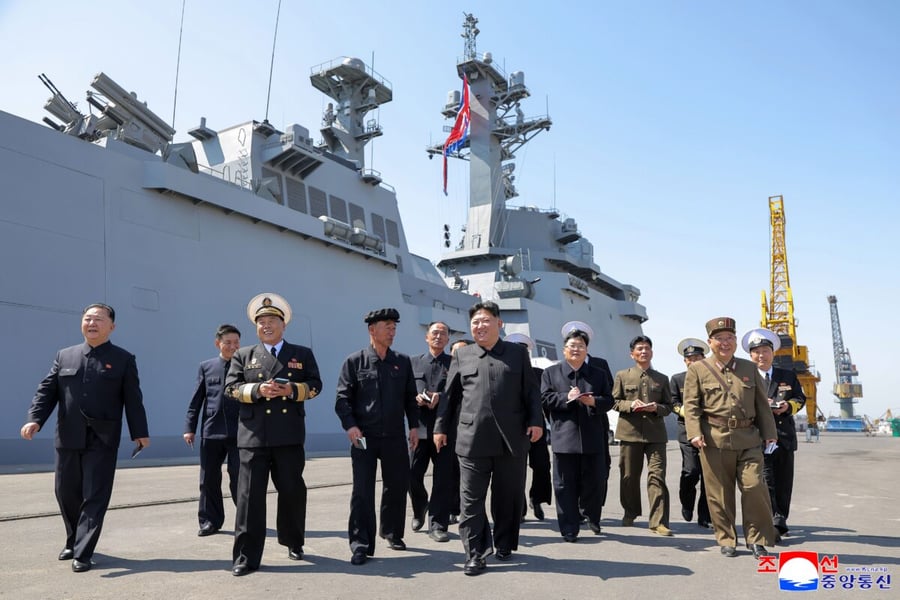
The September 12 drill was the 13th ballistic missile test event of North Korea’s 2026 calendar, a count that has continued through both diplomatic openings and pressure from Washington. In August, President Donald Trump curtailed the annual Ulchi Freedom Shield exercises with South Korea and announced his intention to seek a new summit with Kim Jong Un. The answer from Pyongyang was to fire ten rockets into the East Sea the following day. The pattern is consistent: Pyongyang does not treat American bilateral gestures toward Kim as grounds to pause weapons testing when the trilateral exercise architecture with Japan and South Korea remains in place.
Trump’s direct diplomatic track, bilateral overtures to Kim, operates in a different register from the trilateral deterrence framework Washington maintains with Seoul and Tokyo. Freedom Edge belongs to the latter. Pyongyang has consistently communicated that it does not separate these two tracks: gestures at the bilateral level carry less weight when American forces are simultaneously running North Korea contingency drills with Japanese and South Korean counterparts. The September 12 drill was a demonstration of that position.
Kim Jong Un was not present at the September 12 exercise, a deliberate choice that moderated its symbolic weight without reducing its military message. Kim had appeared earlier this week in a public ceremony honouring North Korean troops serving in overseas military operations, the most explicit official acknowledgment yet of DPRK forces fighting alongside Russia in Ukraine. Pyongyang is simultaneously deploying its military assets on multiple external fronts while sustaining its domestic weapons testing at a pace that shows no sign of diplomatic accommodation.
The US Indo-Pacific Command said in its statement on Saturday that the launches did not pose an “immediate threat to US personnel, US territory or our allies.” That formula, “no immediate threat,” is the standard US framing for North Korean launches that Washington chooses not to escalate. What the statement did not address was the structural question: that North Korea’s 13 test events in nine months have tracked the calendar of US-South Korea-Japan exercises as reliably as any metric in the region.
KCNA’s decision not to mention Freedom Edge in Monday’s report preserves a degree of technical ambiguity. Pyongyang can portray the event as a scheduled military exercise rather than an explicit response to neighboring countries’ drills. The timing suggests a connection, even if the wording leaves it deniable.
The description of “huge destructive power” raises a broader question about what North Korea intended to signal. KCNA said the exercise used an integrated fire-control system to coordinate drones, cruise missiles, thermobaric rockets, and ballistic missiles in simultaneous waves.
The claim was presented not as a development milestone but as an operational capability already being demonstrated in live exercises. Whether the Korean People’s Army has achieved that level of multidomain integration under field conditions—or whether Pyongyang’s account goes beyond what it can actually deliver—cannot be independently verified.
For now, the gap between North Korea’s claims and what outside observers can confirm is precisely the space Pyongyang seeks to preserve.