
SEOUL — South Korea’s Defence Minister sat in an emergency security meeting Friday as the news came in: more than ten KN-25 missiles, short-range ballistic type, launched from the Pyongyang area and flying roughly 300 kilometres into the sea east of the peninsula. His ministry’s own assessment, shared at the meeting, was that North Korea now holds between 80 and 120 nuclear warheads and that the KN-25 is already capable of deploying tactical nuclear weapons. The Ulchi Freedom Shield exercises, shortened by President Trump from eleven days to five, had just ended early.
This is what Trump’s goodwill gesture produced.
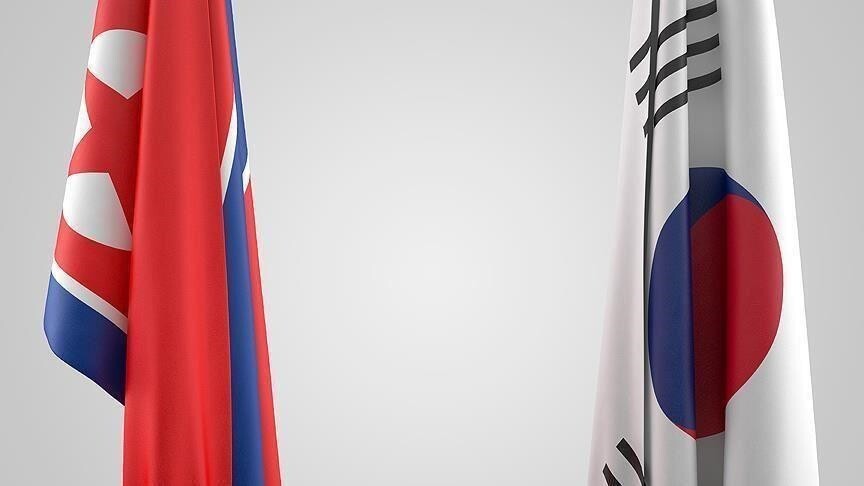
The president had ordered the Pentagon to scale back the annual joint exercises substantially, framing the reduction as a cost-cutting measure and a conciliatory gesture toward Pyongyang that he hoped would revive dialogue with Kim Jong Un. Kim Jong Un’s sister, Kim Yo-jong, received the offer and described it as “an evident disaster brought by the unrealistic and anachronistic security outlook.” She added, pointedly, that she had no awareness of any recent Trump-Kim communications and that US “hostile policy” remained unchanged.
The sequence matters. Trump reduced the exercises. North Korea launched. Kim Yo-jong denied any contact was happening and dismissed the reduction as misguided. Then the United States, Japan, and South Korea convened urgent trilateral consultations and issued a joint statement urging Pyongyang to halt what they called “provocations.” The exercises that were supposed to be the goodwill opening are now over, and the only measurable outcome is a missile barrage and a denial.
South Korea’s Presidential Office described the launches as “a grave act that violates UN Security Council resolutions.” The wording was legally precise and diplomatically careful; it frames the launches as a rule-violation rather than an act of aggression, leaving space for the diplomatic track that Seoul’s government has said it wants to facilitate. President Lee’s office has positioned itself as a “pacemaker” for North Korea-US dialogue, a framing that is either confident or desperate depending on what Kim Yo-jong’s denial actually means.
Al Jazeera reported that the missiles were 600mm multiple rocket launchers, the KN-25 system, a platform that North Korean state media has previously described as nuclear-capable at the tactical level. The launches followed North Korea’s repeated characterization of US-South Korea exercises as “rehearsals for invasion.” What changed this week is that those exercises were already smaller than usual, by Trump’s own order, and Pyongyang still fired.
Kim Yo-jong did not reserve her most pointed commentary for Trump alone. She also accused Seoul of “double-dealing behavior” over the drill issue, suggesting that South Korea’s public support for Trump’s reduction while maintaining allied postures placed the government “in a poor plight.” The framing positions Seoul as neither credible to the North nor fully in control of the alliance with Washington.
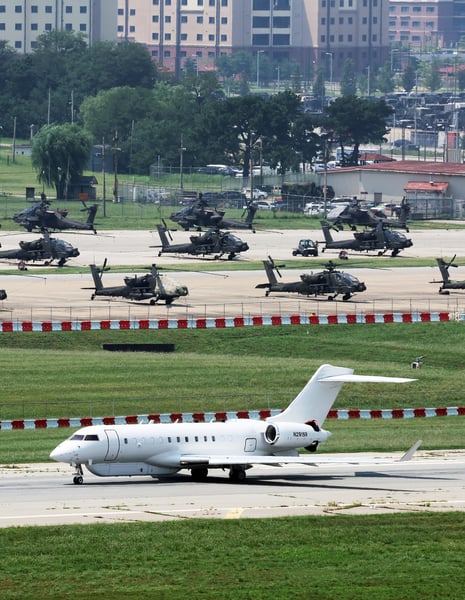
Washington’s recalibration of multilateral commitments has become a recurring theme of Trump’s second term; the Korean peninsula is now presenting an acute version of the problem. The exercises Trump cut are not symbolic. Ulchi Freedom Shield is the combined wartime exercise through which American and South Korean forces rehearse interoperability under fire: command transitions, logistics under stress, combined air defence operations against exactly the missile barrages Pyongyang just demonstrated.
According to Anadolu Agency, the drills were shortened from eleven days to five before ending entirely on Friday. Whether Trump will restore them, offer additional reductions as a further gesture, or proceed to a summit on the current basis is unknown. Kim Yo-jong’s denial of any Trump-Kim communications makes his summit announcement harder to read, either a unilateral declaration intended to create facts on the ground, or Pyongyang managing expectations before formal contact resumes.
What the week established is a hierarchy of credibility problems. Trump announced a summit; Kim Yo-jong said she knew of no such communications. Trump reduced the exercises as a gesture; North Korea fired anyway. The joint US-Japan-South Korea statement called for dialogue; the same statement was issued hours after the missile barrage.
What no official statement addressed on Friday was the question South Korean analysts have been raising for months: what happens to the alliance if Trump strikes a deal with Kim Jong Un without Seoul’s meaningful input? The “pacemaker” framing from the presidential office suggests the government is aware of the risk. Whether awareness is enough is genuinely unclear.