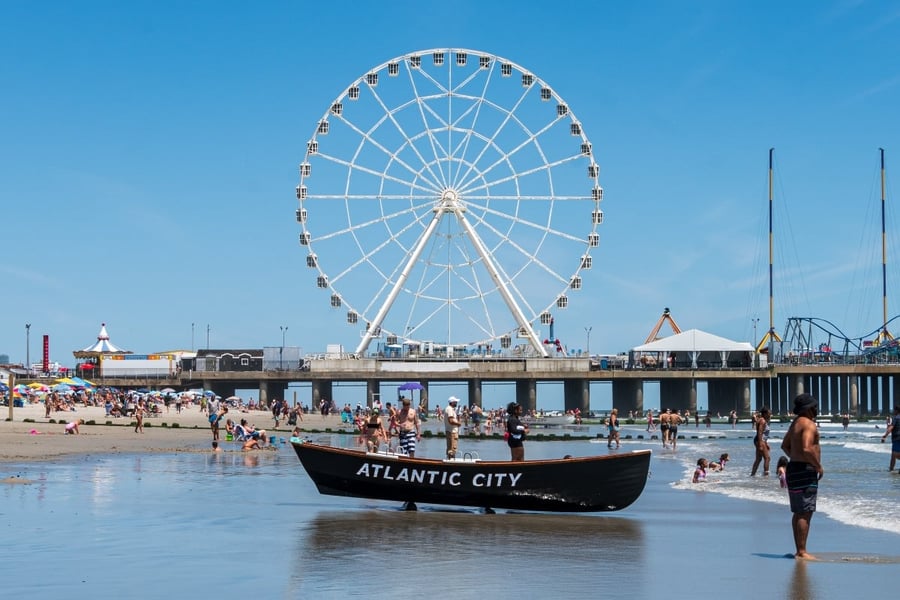

ATLANTIC CITY — The soccer fans came for MetLife and stayed for the blackjack. That is the cleanest explanation for what Atlantic City posted in July: its strongest brick-and-mortar casino performance in 14 years, shaped in part by the visitors a World Cup final deposits in the surrounding corridor.
For the first time all year, Atlantic City’s nine Boardwalk properties outearned New Jersey’s online gambling sector. The nine casino hotels combined for $304.2 million in floor revenue, a 7.1 percent gain over July 2025 and the best July total since 2012, finishing $27.3 million ahead of statewide iGaming revenue. Every month from January through June, the digital channels had come out ahead.
The data behind that reversal came from the New Jersey Division of Gaming Enforcement. It does not tag casino patrons by origin, so the causal share attributable to World Cup visitors cannot be isolated cleanly. But the directional logic is consistent: eight matches were played at MetLife Stadium in East Rutherford from June through July, including the final, drawing an estimated 1.2 million visitors to the New York-New Jersey corridor and producing roughly $432 million in state and local tax revenue. Some fraction of those visitors drove the 90 minutes south. The revenue composition, floor gambling outpacing online for the first time in 2026, suggests the overlap was substantial.
The sportsbooks offered a more complicated picture in June, and the contrast clarifies how the tournament’s economics actually worked. New Jersey’s licensed sportsbooks took in $917.2 million in wagers over June, a state record for that month and 16 percent above June 2025. The hold rate told a different story: the books retained only $57.3 million, a 6.24 percent margin against the 11.62 percent they had captured in June 2025. The World Cup’s group stage produced upsets that bettors priced correctly and operators did not. Heavy payouts followed.
Atlantic City’s total June combined figure came in at $257.3 million, well below the pace that would define July. The casino floors were not the drag. The sportsbooks were paying out on tournament results faster than they were recovering.
July reversed the arithmetic. FanDuel, licensed through the Meadowlands Racetrack, led all New Jersey sportsbooks at $32.8 million in July sports wagering revenue. DraftKings finished second at $25.6 million, BetFanatics at $10.6 million, and BetMGM at $8.8 million. Those four drove the 33 percent year-over-year increase in sports wagering revenue that defined July’s headline number, with more than $30 million of that total traced directly to World Cup matches, a figure the Division of Gaming Enforcement included in its monthly release.
On the casino floor, Borgata led all nine properties at $81.6 million, consistent with its decade-long position as Atlantic City’s highest-grossing operator. Hard Rock Hotel & Casino posted $57.3 million, Ocean Casino Resort $52.2 million. Ocean’s 21 percent year-over-year gain and Caesars Entertainment’s 34.6 percent increase were the sharpest swings in the market. Analysts said both reflected renovation programs and loyalty pricing adjustments that had been in progress well before the tournament arrived.
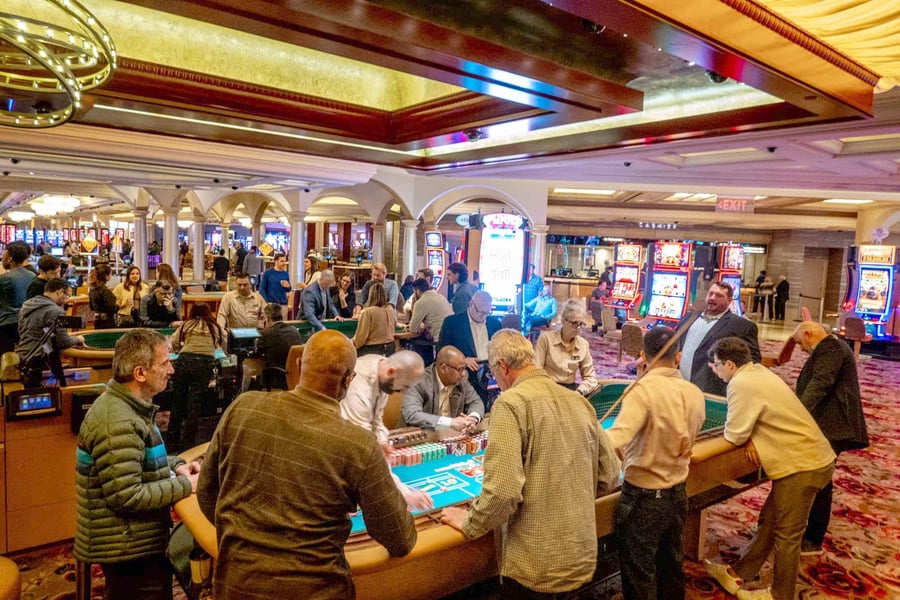
New Jersey’s nine casino hotels generated $678.1 million in combined gaming revenue for July, up 11.9 percent from a year earlier, pushing cumulative statewide gaming revenue past $4 billion for the first time in a calendar year through July.
The World Cup’s global betting figures placed the tournament in a category by itself. Total wagers globally are estimated above $50 billion, ahead of Qatar 2022’s $35 billion. The expanded 48-team format created more matches, more markets, and more sustained engagement across the tournament’s five-week run. Whether the June hold-rate collapse and the July recovery reflects a structural pattern in soccer betting, or simply the arithmetic of an unusually bettor-friendly group stage, is a question the industry is still working through.
The major operators used the tournament as a proof of concept. Hard Rock Bet went live in Ontario in July, the Seminole Tribe’s first international gaming expansion beyond US markets, coinciding with the tournament’s final stages. Caesars Entertainment, which had locked up three of Maine’s four online casino licenses in a Wabanaki Nations compact earlier this summer, posted one of Atlantic City’s strongest percentage gains in July. The tournament appears to have confirmed something the larger operators had been quietly building toward: that soccer and American casino culture overlap more than either industry assumed.
August’s figures will answer the question the July data cannot. Without the World Cup matches pulling visitors into the MetLife corridor, whether Atlantic City’s floor revenue holds its edge over online channels for a second consecutive month is the open test. The Division of Gaming Enforcement will release August data in mid-September. July was the best month since 2012. What happens without the tournament is what the next reporting cycle will settle.
Related Posts