
DAVIS, Calif. — Inside human blood samples, in placental tissue, in the lungs of city dwellers and, increasingly, in brain tissue itself, researchers have found them: nanoplastics, fragments so small they are invisible to every instrument a standard environmental health lab can deploy. Their presence is no longer in scientific dispute. What remains entirely unresolved is how much exposure is too much, and that gap is why, despite years of accumulating evidence about potential harms, no government anywhere has written a binding rule.
A nearly $4 million, four-year grant from the National Institute of Environmental Health Sciences, awarded to researchers at the University of California, Davis, is intended to make that regulatory silence impossible to justify. The project will produce the first consensus measurement framework for airborne nanoplastic exposure and its effects on the nervous system.
The core obstacle has never been primarily political, even if policy outcomes reflect that too. Randy Carney, an associate professor of biomedical engineering at UC Davis and one of the project’s two principal investigators, framed the problem directly. “Scientists know of some health effects of nanoplastics, but governments don’t regulate them because how can you write a rule when we don’t have agreed-upon ways to measure nanoplastics reliably?” A regulation requires a measurable threshold. Without standardized detection and quantification methods, no threshold can be set, and no rule can stand on it.
Nanoplastics are categorically different from microplastics, the plastic fragments that have generated widespread public attention over the past decade. Where microplastics are typically larger than one micrometer in diameter, nanoplastics fall below that threshold, up to 1,000 times smaller. Their physical scale is also their primary threat vector: nanoplastics can be inhaled, transported through the respiratory tract, and in laboratory conditions have demonstrated the ability to cross the blood-brain barrier, the body’s most selective biological checkpoint. Microplastics, too large to complete that journey, stop at the barrier. Nanoplastics do not.
The class of particles that most concerns the UC Davis team is what researchers call Pollutant-Adsorbed Nanoplastics, or PANs. These are not neutral plastic fragments. They are particles that have chemically bonded with other toxic compounds during their time in the environment: pesticides from agricultural runoff, heavy metals from industrial emissions, combustion byproducts from vehicle exhaust, and PFAS, the synthetic chemicals the EPA has classified as persistent pollutants that do not degrade naturally in the environment. A single inhaled PAN functions as a delivery mechanism for a cocktail of compounds, depositing them at sites in the body that most other pollutants cannot reach.
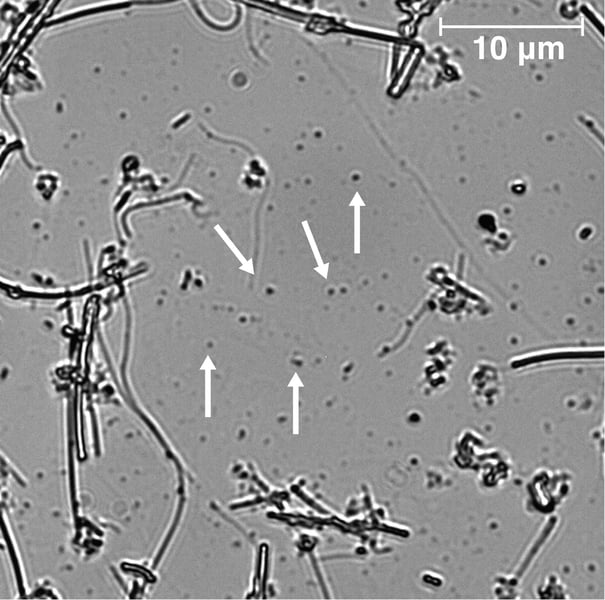
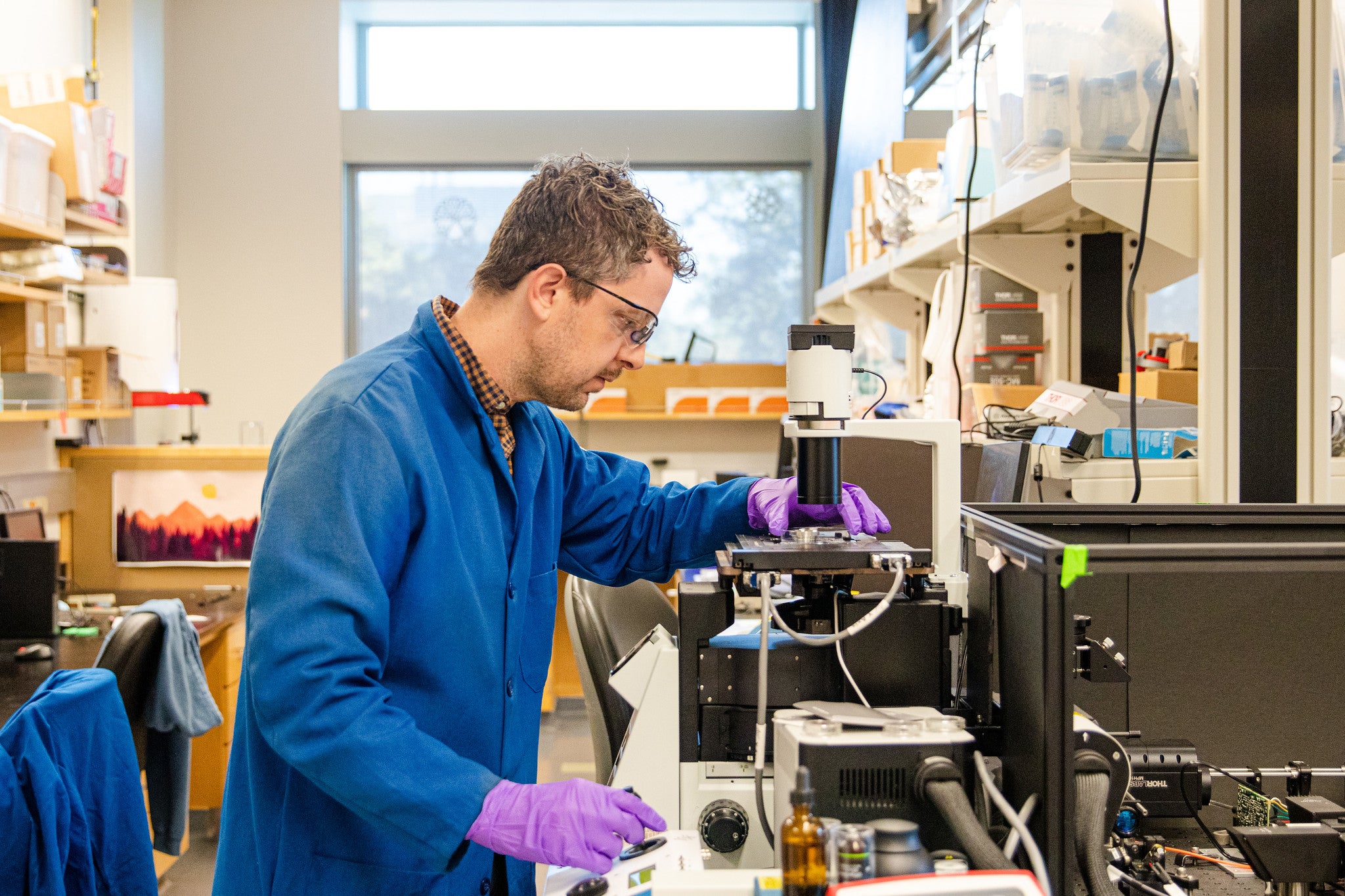
Carney’s laboratory will use Raman spectroscopy, an optical technique that identifies chemical compounds by their unique laser-scattering signatures, to characterize PANs at the nanoscale. The complementary experimental work, led by Sascha Nicklisch, an associate professor of environmental toxicology at UC Davis, will test how PANs interact with biological systems using engineered in vitro blood-brain barrier models, cellular constructs that replicate the brain’s primary filtration system.
The question Nicklisch’s models are designed to answer is precisely what no existing scientific literature resolves: what concentration of PANs produces measurable neurological disruption, and how the toxic cargo those particles carry behaves once inside brain tissue. “A big part of what we’re trying to do here is just to set a standard, repeatable way of detecting and quantifying how much exposure causes how much harm,” Carney said. The study will also apply dark-field and hyperspectral microscopy to visualize particles in tissue and screen for changes in gene expression that airborne PAN exposure triggers at the cellular level.
The distinction between having evidence and having actionable evidence runs through much of regulatory science. FDA scientists recently found themselves in dispute with agency leadership over whether existing evidence sufficiently supported expanded access to certain therapeutics, a different domain but structurally the same problem: what standard of evidence is sufficient to justify a rule affecting public health. The UC Davis nanoplastics study is answering that question for an exposure class that affects everyone who breathes outdoor air.
Two doctoral students, Elizabeth Hale from the Carney Laboratory and Eli Wooliever from Nicklisch’s Environmental Toxicology program, are conducting the experimental work. Their training within the project is itself a secondary output: the field currently lacks both a standardized measurement protocol and a pipeline of researchers trained to apply one.
Carney said the framework was a prerequisite for action, not the action itself. “Establishing a standardized, repeatable framework for detecting and quantifying exposure effects is indispensable for translating scientific insight into effective health protections,” he said. The path from that framework to an enforceable standard, and from there to a government regulation, involves steps that lie outside any single research program.
What the four years of work will produce is the measurement tool without which no subsequent regulatory step is possible. The question of whether that tool becomes a foundation for limits on airborne nanoplastic exposure, and how quickly, is the one the study cannot answer, and the one that will matter most when the work is done.
The significance of what people inhale and absorb over time extends beyond any single contaminant. Research published this year found that lower vitamin C levels in older adults correlated with measurable reductions in gray matter volume and weaker connectivity in the brain’s memory networks, pointing to how accumulated environmental and nutritional factors reshape neurological structure over time, often without a single identifiable moment of exposure.