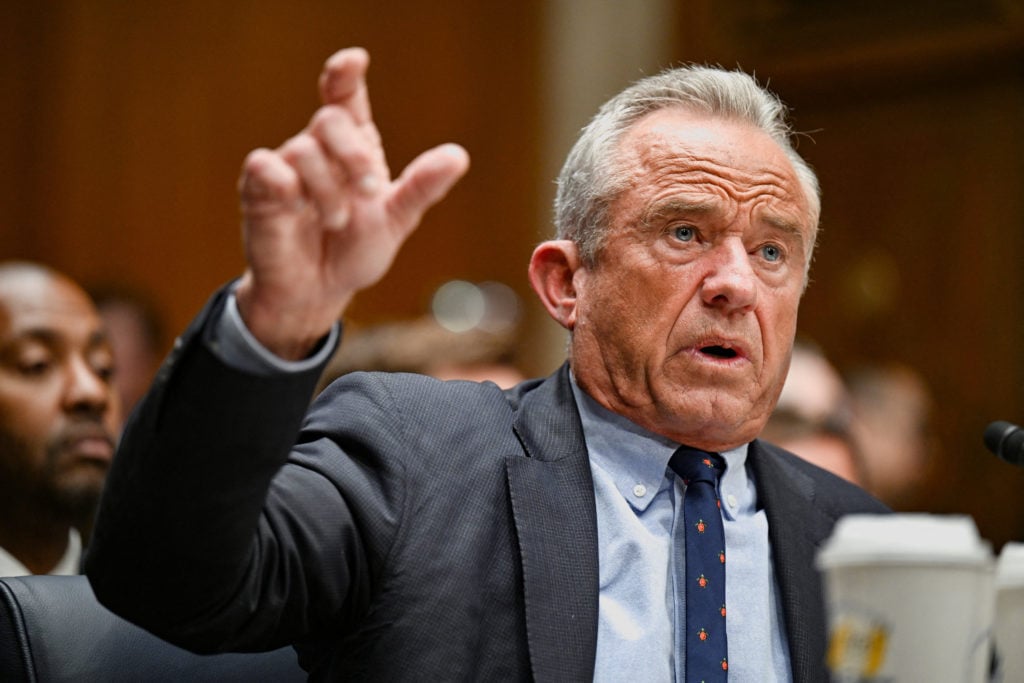

WASHINGTON — BPC-157, a peptide sold online as a cure for tendon injuries and inflammatory bowel conditions, has never been tested in a rigorous human clinical trial. Health Secretary Robert F. Kennedy Jr. says he has used it for injuries with good results and has spent months pushing federal regulators to make it more accessible. The Food and Drug Administration’s own scientists have now concluded there is not enough evidence to recommend it, or any of the six other peptides set for federal review later this month, while the advisory panel charged with weighing that scientific judgment has been reconstituted with members who own businesses that sell the very compounds under scrutiny.
In briefing documents published ahead of a July 23-24 advisory committee meeting, FDA scientists found that none of the seven peptides nominated for expanded access had sufficient evidence to support making them available through licensed compounding pharmacies. For several of the compounds, including TB-500, KPV, and MOTS-c, the scientists said they could not find any published studies in which the substances were tested in humans at all. For BPC-157, which Kennedy and podcaster Joe Rogan have both promoted, the scientists found the existing data too sparse to analyze its use for tendinitis, Crohn’s disease, and celiac disease, the primary conditions being proposed.
The conclusions represent a sharp internal rebuke of the direction Kennedy has pushed since taking over the Department of Health and Human Services. In April, Kennedy reclassified 12 peptides as Category 1 substances and told Congress the Biden administration had incorrectly flagged them as safety risks. Category 1 is the first step toward making a compound available through compounding pharmacies, which manufacture customized medications not available at standard pharmacies. The FDA scientists’ briefing documents indicate the agency’s professional staff does not share that view.
The seven compounds under review, BPC-157, emideltide, epitalon, KPV, MOTS-c, semax, and TB-500, exist in what researchers describe as a gray market. They are not FDA-approved drugs, but they are sold online in large quantities under labels reading “For research use only,” a legal workaround that allows vendors to market compounds not cleared for human consumption. Independent testing of products sold through that market has found heavy metals, microbial contamination, and mislabeled formulations.
The FDA on Monday published the names of nine new members appointed to four-year terms on the Pharmacy Compounding Advisory Committee. The composition differed sharply from past iterations. Where previous advisory committees drew on university experts in dermatology, anesthesiology, pediatrics, and pharmacy compounding, the new appointments include practitioners with financial stakes in the compounds they are being asked to evaluate. Dr. Haleem Mohammed operates Florida clinics under the name Gameday Men’s Health that sell peptides, vitamins, testosterone, and weight-loss medications. Dr. Gabriel Alizaidy charges $500 for peptide consultations and promotes BPC-157 and other peptides to thousands of social media followers. Bobby Harshbarger, a Tennessee state senator and pharmacist at Premiere Pharmacy, is the son of a Republican U.S. representative who lobbied Kennedy to relax peptide restrictions, PBS NewsHour reported.
The appointments draw direct comparisons to Kennedy’s parallel reshaping of other scientific advisory bodies. A federal court blocked Kennedy’s restructuring of the vaccine advisory committee, though he has since attempted to rewrite that committee’s charter. The agency’s vaccine panel voted 9-0 last month to back Moderna’s mRNA flu vaccine, a technology Kennedy has publicly questioned, in a further collision between agency scientific staff and the administration’s stated preferences. Health policy experts describe the pattern as consistent: when federal scientists produce results that conflict with the administration’s direction, the advisory body gets reshaped.
For researchers who have spent years tracking FDA compounding policy, the most significant concern is not the peptides themselves but what it would signal if the advisory panel overrode its own scientific staff. “It’s a really big deal if the advisory committee ends up striking out on its own,” C. Michael White, who heads the department of pharmacy practice at the University of Connecticut, told NBC News. White drew a pointed comparison between the administration’s posture toward vaccines, which Kennedy has long argued require more rigorous safety testing, and its push to make peptides available with virtually no human data. The same leadership, he said, that would require “extremely large, multiyear randomized controlled trials” to back a vaccine “would be perfectly happy to have a product that was only studied in rats and small animals being used in people if it’s promising six-pack abs and less muscle injury.”
Dr. Anita Gupta, an anesthesiologist who served on the advisory panel from 2020 to 2025, said the committee previously voted against allowing certain peptides through compounding pharmacies for similar reasons. “At the time, the FDA presented a lot of adverse event data that showed there was a risk of immunogenicity (immune reactions), and that raised some red flags,” said Gupta, an adjunct assistant professor of anesthesiology at Johns Hopkins University School of Medicine. She said tests of the products sold online had produced troubling results. “Studies have begun to show that there are significant issues with some of these products. Some of them have heavy metals. Some have microbial contamination. Some are mislabeled,” she said.
In several cases, the FDA scientists noted that effective approved treatments already exist for conditions the nominated peptides are proposed to address, including insomnia, psoriasis, and eczema. The peptide emideltide was nominated for insomnia and opioid withdrawal; semax for migraines, facial nerve pain, and cerebral ischemia; and epitalon for insomnia. In each case, the scientists found insufficient evidence to support the nomination, NBC News reported in a review of the briefing documents.
The July 23-24 meeting is not the first time this panel has evaluated peptide evidence. The seven substances under review were originally nominated by LDT Health Solutions, a consulting firm representing the International Peptide Society, and the Wells Pharmacy Network, which operates compounding pharmacies nationwide. Both organizations subsequently withdrew their nominations, but the FDA elected to proceed with the evaluation regardless. Under advisory committee rules, the panel’s findings are recommendations, not binding decisions. The FDA has final authority over whether the peptides may be compounded, and the agency historically follows the advice of its committees.
Whether that tradition holds in this case is not yet known. The FDA and the Department of Health and Human Services did not respond to requests for comment on the panel’s new composition or the scientists’ briefing conclusions. The FDA’s advisory processes on immunization have already been disrupted this year in ways public health experts say have no precedent in the agency’s modern history. The July 23-24 meeting will be the first test of whether Kennedy’s restructured committee produces a different finding than the FDA’s own scientists, and whether the agency then acts on it if it does.