

WASHINGTON – In February, the Food and Drug Administration said it would not review Moderna’s application for the first messenger RNA influenza vaccine in the United States. Eight weeks later, the same agency’s top vaccine experts voted unanimously to recommend it.
The Vaccines and Related Biological Products Advisory Committee voted 9-0 on June 18 to endorse Moderna’s mFlusiva, formally known as mRNA-1010, for adults aged 50 and older, according to NPR. The FDA has until August 5 to decide whether to approve the shot, which would be the first licensed mRNA-based seasonal influenza vaccine in United States history.
The reversal was not routine. The February refusal came months after Robert F. Kennedy Jr., who has spent years publicly questioning vaccine safety and the value of messenger RNA technology, took over as Health and Human Services secretary under President Trump. The FDA offered no public explanation for declining to file Moderna’s application. Two weeks after the refusal, following an outcry from scientists and public health organizations, the agency reversed course. That reversal led directly to the June 18 hearing and the unanimous vote.
Whether the FDA’s final decision on August 5 will follow the committee’s recommendation is not yet known. The same administration that canceled approximately $500 million in federal mRNA vaccine research funding now holds authority over whether to act on the panel’s advice. FDA advisory committees are not binding, though their recommendations have historically been followed in the vast majority of cases.
The flu burden that mFlusiva is designed to address is substantial. The 2025-2026 influenza season produced at least 32 million cases, 390,000 hospitalizations, and 24,000 deaths in the United States. Existing flu vaccines, built on egg-based or recombinant manufacturing, are developed six to nine months before the season begins, using a strain prediction that occasionally misses the dominant circulating virus. An mRNA vaccine can be reformulated for a new strain in two to three months, a speed that could improve protection when flu strains diverge late in the season.
The committee voted separately on the two age groups covered by Moderna’s application. For adults aged 50 to 64, panelists voted 9-0 that the benefits of mFlusiva outweigh its risks; Moderna is seeking standard approval for this group. For adults 65 and older, the panel reached the same conclusion by the same margin; Moderna is seeking accelerated approval for that cohort, meaning post-marketing data would confirm effectiveness after initial approval. Both populations face elevated flu risk. The oldest adults account for the large majority of flu-related hospitalizations and deaths in the United States each year.
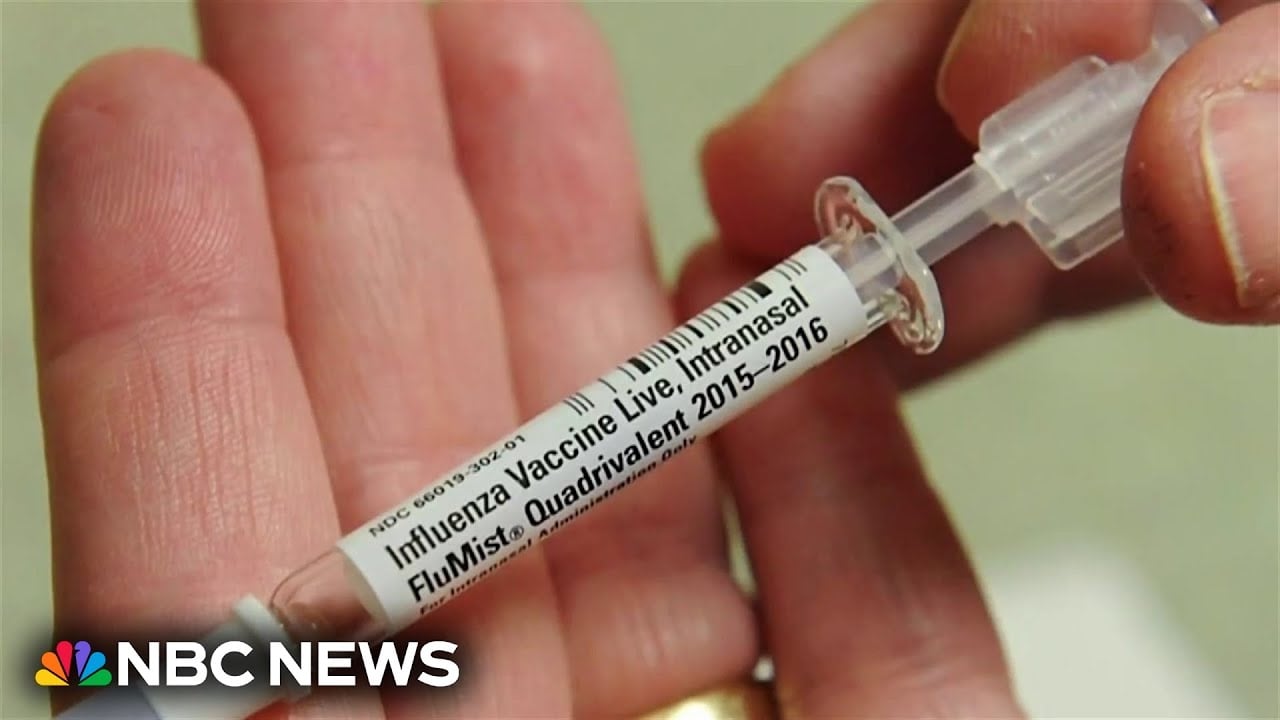
The political context surrounding the vote was widely noted. The FDA had initially declined to review Moderna’s filing in what NBC News described as a break from standard practice. The Trump administration’s broader posture toward mRNA technology, which includes the cancellation of pandemic-preparedness research contracts already underway, made the advisory committee’s unanimity significant as a signal from the scientific staff of the agency. The committee is composed of independent scientists, not political appointees.
Public health experts watching the process have described the mRNA research cuts as reckless. “Federal mRNA funding cut is the most dangerous public health decision ever,” one expert told PBS NewsHour. Those cuts eliminate work needed not only for future flu vaccines but for the rapid vaccine development pipeline that was essential during the COVID-19 pandemic.
The VRBPAC vote is one of several collisions this year between FDA scientific staff and the political leadership of the health department. A court blocked Kennedy’s effort to restructure the Advisory Committee on Immunization Practices, and his subsequent attempt to rewrite the committee’s charter has drawn sustained legal challenges from public health groups. The pattern is consistent: scientific bodies within the federal health establishment have repeatedly recommended expanded vaccine access while the department’s leadership has simultaneously worked to constrain it.
If the FDA approves mFlusiva by August 5, Moderna has said it could have doses available for the 2026-2027 flu season, which typically begins in October. That would require manufacturing and distribution to begin almost immediately after any approval. Whether health insurers and pharmacy benefit managers will cover an mRNA flu vaccine, which is expected to cost more than conventional shots, is a separate question that may determine how many people actually receive it even if approval comes through.
The consequences of reduced vaccine coverage are not hypothetical. A flu outbreak that hospitalized 275 recruits at Lackland Air Force Base after Defense Secretary Pete Hegseth eliminated mandatory influenza vaccination for military personnel demonstrated within weeks what lowered coverage produces. The panel’s 9-0 recommendation reflects a scientific consensus that is not in dispute. What remains open is whether the agencies that administer vaccine policy will act on it.