WASHINGTON — The ballots will go out on schedule.
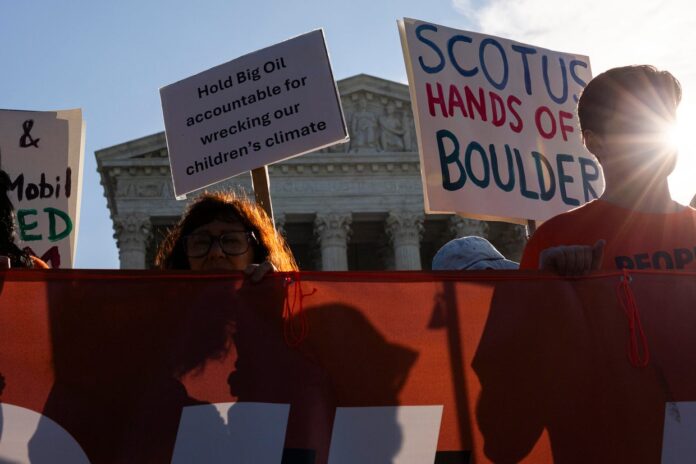
The Supreme Court on Sunday rejected the Trump administration’s third emergency request to revive its mail ballot rule before the November midterms, NPR reported, leaving in place lower court orders that have blocked the regulation since it was first challenged nearly two weeks ago. The unsigned order, joined by seven justices, found the administration “is unlikely to succeed on the merits of its challenge,” a judgment that closes off the courts as a path to enforcement this election cycle and forces millions of mail-in votes to proceed under the same rules that governed every prior federal election.
The ruling comes as Ohio, Pennsylvania, Michigan, and Wisconsin—the four states likely to determine control of the House—are only weeks away from mailing their first ballots.
The administration’s regulation would have required barcoded envelopes, Postal Service preapproval for every envelope design, and the upload of voter-registration data to a federal portal that was still nonoperational as of Sunday. For election officials who had already printed envelopes or scheduled production runs, compliance was not merely burdensome. It was impossible.
Justices Samuel Alito and Clarence Thomas dissented without explanation.
Justice Brett Kavanaugh wrote separately, offering a point that may matter more than the immediate outcome. He said there was “at least a fair prospect that the final rule falls within the Postal Service’s statutory authority,” potentially leaving the door open for the administration to revive it in 2028.
But Kavanaugh concluded that applying the rule in the 2026 elections would be “arbitrary and capricious” under the Administrative Procedure Act because state and local election officials lacked enough time to implement it reasonably.
For now, the mailbox is protected on logistical grounds—not constitutional ones.
That framing matters. The administration lost this round on the calendar, not the merits, and Kavanaugh’s concurrence offers a roadmap for future litigation. The federal portal that was supposed to receive voter data never opened. Barcode specifications were issued months too late for the printing cycles already underway in swing states. If a future administration wants to impose this kind of rule and wants to prevail, it will need to start much earlier.

The Justice Department filed emergency applications after each defeat, escalating with a speed that suggested the administration understood the window was closing. By the time the third application landed at the Supreme Court, the Postal Service’s own deadlines for bulk mailing contracts had already passed in several states. The clocks that mattered most to election officials were not the ones on the courtroom walls.
Attorneys general from twenty-three states and the District of Columbia had sued to block the rule, arguing that it upended years of election administration practice with no meaningful notice and no workable compliance pathway. The breadth of that coalition, including states not typically aligned with Democratic governors, reflected how deeply the regulation cut across normal partisan lines. County clerks and election boards of both parties had told their attorneys general the same thing: the rule was unimplementable.
The administration did not concede the underlying legal question. Officials argued, and Kavanaugh appeared to agree in part, that the Postal Service retains the authority to set conditions on how mail related to federal elections travels through its system. That argument remains alive, even as this particular rule does not. Whether the Justice Department pursues a rulemaking with adequate notice and a functioning technical infrastructure, one filed early enough to survive an Administrative Procedure Act challenge, is a question Sunday’s order leaves entirely open.
What Sunday’s order resolves, practically, is November. The courts that first blocked the rule did so before North Carolina sent its initial batch of midterm ballots, and the Supreme Court has now confirmed that those injunctions hold. Voters who request mail ballots in competitive House districts across the Midwest will receive the same envelopes that were printed before any of this litigation began. Their votes will be processed under the same rules their counties have used for years.
What Sunday’s order does not resolve is whether the underlying question, whether the federal government can impose barcode and pre-approval requirements on mail-in voting materials, will return before the court on a fuller record. Kavanaugh’s language suggests he wants it to. The administration, which has pursued this regulation with unusual urgency, has given no indication it regards the matter as closed.
The ballots will go out. The legal question stays open.