NEW DELHI – Iran’s economy has run for two years on improvised workarounds: barter arrangements with Russian partners, petrochemical deals settled in yuan, oil shipments routed through intermediaries in third countries to avoid the bank wire that would trigger US sanctions. None of those routes connect to multilateral development finance. A New Development Bank membership could.
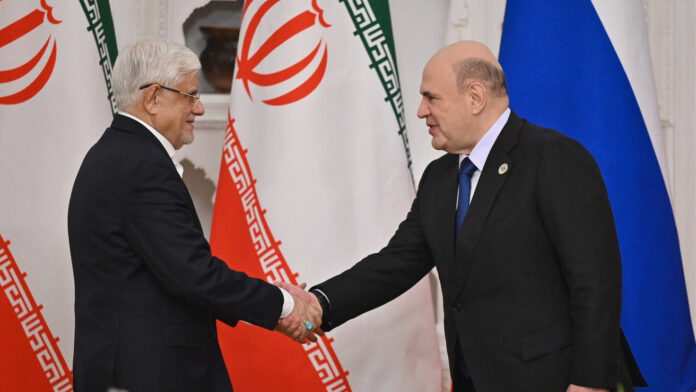
On Tuesday, Iranian government spokesperson Fatemeh Mohajerani confirmed that BRICS member states agreed during last weekend’s summit in New Delhi to accept Iran as a member of the New Development Bank, the bloc’s multilateral lending institution. “During his visit to India, the president took part in BRICS-related meetings, during which it was agreed to establish the BRICS’ New Development Bank with Iran as a member,” Mohajerani said, as quoted by the Iranian news agency SNN. The announcement was the first official confirmation from Tehran that the 18th BRICS Summit, held September 12-13 under India’s chairmanship, had produced a concrete institutional outcome on the question Iran’s delegation had spent months building toward.
The New Development Bank was established in 2014 as an explicit alternative to the World Bank and the International Monetary Fund, both of which operate in dollar frameworks the United States can influence and has influenced against Iranian access. If Iran formally accedes, it would become the bank’s first member operating under comprehensive US sanctions, a distinction that creates legal and operational complexity no previous NDB expansion has faced.
Iranian Foreign Minister Abbas Araghchi foreshadowed the New Delhi agreement on the summit’s first day, telling reporters that Tehran was working on NDB membership while acknowledging “there are some obstacles created by certain countries.” The phrasing, diplomatic shorthand naming no one, pointed at the same pressure that has followed Iran into every multilateral forum since 2018: US sanctions architecture that prohibits dollar-clearing transactions with Iranian entities, and that NDB members handling such transactions in US currency would potentially violate.
President Masoud Pezeshkian arrived in New Delhi with a de-dollarization agenda he had been building since taking office. At the BRICS Business Forum, he framed Iran’s NDB ambition as part of a broader push to expand trade outside the dollar system. “Economic security cannot be separated from national security and regional security,” Pezeshkian said, finding a receptive audience in a room where Russia, China, and several African member states share their own accumulated grievances against US economic statecraft. The summit’s New Delhi Declaration combined calls for greater use of local currencies in trade settlement with support for expanding the NDB’s lending base, giving Iran’s membership push a formal textual foundation even as the implementation path remains contested.

The timing of the NDB agreement sits against a backdrop of continued sanctions pressure on Tehran. Britain sanctioned 71 Iranian nuclear entities on September 8, four days before the summit opened, imposing asset freezes and trade bans that Tehran called economic terrorism. The announcement came even as the US-Iran nuclear memorandum of understanding remained nominally active, illustrating how the Western sanctions regime continues to tighten around Iran even as diplomatic tracks stay technically open. Times of Israel reported that Iran’s central bank governor said this week the country would “soon” join the NDB, a statement that corroborates Mohajerani’s account of what was agreed in New Delhi and suggests Tehran is treating the political agreement as functionally binding.
The agreement, if it proceeds to formal accession, would represent the first time the NDB has explicitly admitted a member whose primary constraint comes not from creditworthiness but from US-imposed legal prohibitions. Al-Monitor noted that the economic stakes for Iran are substantial: the country’s infrastructure deficit, accumulated over years of sanctions-driven investment shortfalls, runs to hundreds of billions of dollars. Development bank financing, even at the NDB’s modest current lending scale relative to the IMF or World Bank, would give Tehran access to long-term project capital it cannot otherwise source multilaterally.
The deeper significance is institutional. Eastern Herald’s coverage of the summit traced how Tehran’s most practical ambition in New Delhi was not rhetorical but structural, seeking access to the financial architecture BRICS membership was supposed to unlock but had not, until this week, formally delivered. Whether that structure can withstand the pressure the US is certain to apply once formal accession proceedings begin is the question Araghchi’s careful phrasing was designed not to answer in public.
What the New Delhi summit has established is the political agreement. The mechanism for making it work remains to be built.