
BERLIN — The day-one sick-leave certificate is the reform German workers will notice first. The measure that will define this coalition for the next decade sits buried in paragraph 27 of Wednesday’s 34-point “Programme for Revival and Employment,” a provision that ties the retirement age to life expectancy and starts its clock in 2031.
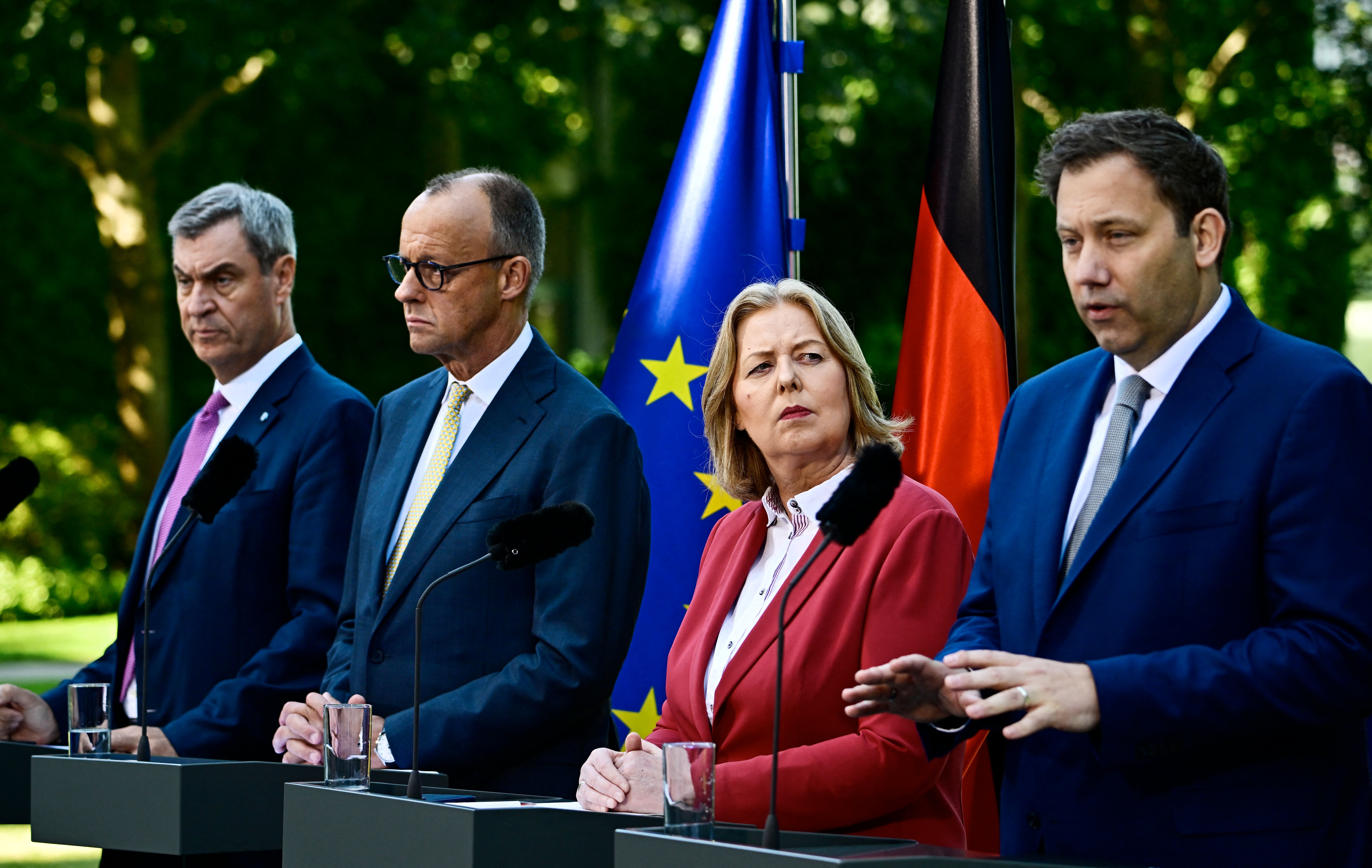
Chancellor Friedrich Merz’s CDU-led government and its Social Democratic coalition partners presented the package at a news conference in the Berlin Chancellery garden on Wednesday, unveiling what Deutsche Bank described as “one of Germany’s biggest reform packages in decades.” The headline figure: €10 billion ($11.4 billion) in annual income tax relief for lower and middle-income earners, effective January 1, 2027. The politically harder provisions, covering pension architecture and labour rules, arrive with less fanfare and longer consequence.
Finance Minister Lars Klingbeil, the SPD co-leader who controls Germany’s budget, acknowledged the package’s redistributive design. “Higher earners will take on a larger share,” he told reporters, signalling that relief for the lower half of the income distribution is being funded through surcharge restructuring at the top. Klingbeil’s party entered the coalition in January carrying promises to protect workers and the welfare state; Wednesday’s agreement asks that base to accept stricter sick-leave certification as the price for tax cuts many of them will actually receive.
The sick-leave change is the most immediately contentious measure. Until Wednesday, German workers could remain home ill for up to three days without a formal medical certificate, a practice employers have long argued inflates absenteeism and that labour economists counter creates perverse incentives for workers who are genuinely sick to choose between seeking care and protecting their income. The new rules require documentation from the first day of absence. The labour package also extends fixed-term employment contracts to up to 48 months without requiring cause, a change that increases employer flexibility while reducing job security for entry-level workers who have historically relied on fixed-term positions as a pathway to permanent employment.
The pension measures are structurally more significant but deliberately deferred. The package implements all 33 recommendations from the government’s pension commission, including its central proposal: linking the statutory retirement age to life expectancy after 2031. Under the current system, the ceiling is 67. The new provision would push that ceiling higher as longevity statistics evolve, with modelling suggesting a potential age of 70 by the 2090s, though the political cost of that increase falls on a future no coalition partner presently in office would need to defend.
Germany’s economy has been under pressure from multiple directions simultaneously. American tariff threats that arrived in spring 2026, before partial relief agreements were reached, created uncertainty across the country’s export-led industrial base. Chinese competition in automotive and machinery markets has compressed margins at flagship companies that Germany’s tax base disproportionately depends upon. Energy costs remain elevated since the 2022 disruption to Russian gas supply that forced European importers to rebuild their entire procurement architecture within months, a transition whose legal aftershocks Germany is still processing, most recently with the formal Nord Stream sabotage indictment filed by Germany’s Federal Prosecutor General the same day the reform package was announced.
Deutsche Bank economist Marion Muehlberger said the package could lift economic growth in the second half of 2026, according to Al Jazeera’s reporting from the Berlin press conference. What neither she nor the government specified is the transmission mechanism. Tax cuts reaching lower-income earners tend to flow into consumption relatively quickly; the open question is whether German households, still absorbing elevated energy bills and food prices, will spend that additional net income or retain it as a buffer against further uncertainty. The reform does not directly address the energy cost gap between German manufacturers and their American and Chinese competitors, which remains the structural pressure driving the most significant corporate restructuring in the country’s postwar industrial history.
The package requires Bundestag approval for the tax provisions and Bundesrat consent for elements touching state finances and pension law. Merz’s coalition holds a workable majority in the Bundestag, and CDU performance in state elections through 2025 gives him reasonable leverage with state governments. But the SPD’s membership base, which includes substantial union representation, has not publicly weighed in on whether it accepts the sick-leave change as a reasonable trade for the income tax cut. That internal question could generate pressure on SPD legislators before the Bundestag vote is scheduled.
The package also arrives against the persistent rise of the Alternative for Germany, which recorded its best-ever federal election result in February 2025 and has remained the leading opposition party since. Merz’s framing of the reforms as a “Programme for Revival and Employment,” growth language rather than welfare consolidation, is a direct competitive signal aimed at AfD messaging on economic stagnation. The frame is consistent with the posture the Merz government has adopted across other sensitive files: from migration to trade, it has tended to prioritize domestic political credibility over EU structural deference, as the coalition’s continued resistance to dismantling Germany’s internal Schengen border controls despite formal European Commission pressure illustrated last month. Whether Wednesday’s reforms generate the growth that would make the retirement age and sick-leave provisions politically sustainable is a question that depends on factors, from US tariff policy to global demand for German machinery, that Berlin’s coalition cannot control, and that the ECB’s evolving stance on forward guidance and eurozone rate paths will influence as much as any domestic fiscal measure.
The retirement age provision will not be felt by anyone in the German workforce today. The sick-leave rule will be felt the morning after this passes by anyone who wakes up with a temperature and has to decide whether the headache is worth a GP appointment. That gap between the immediate and the structural is, for this coalition, partly the point.