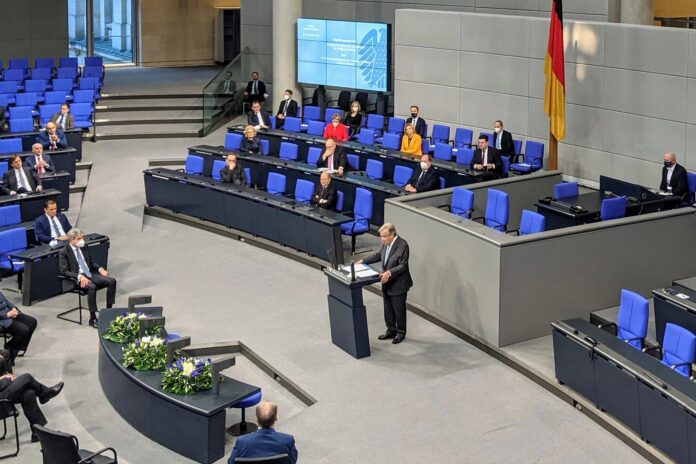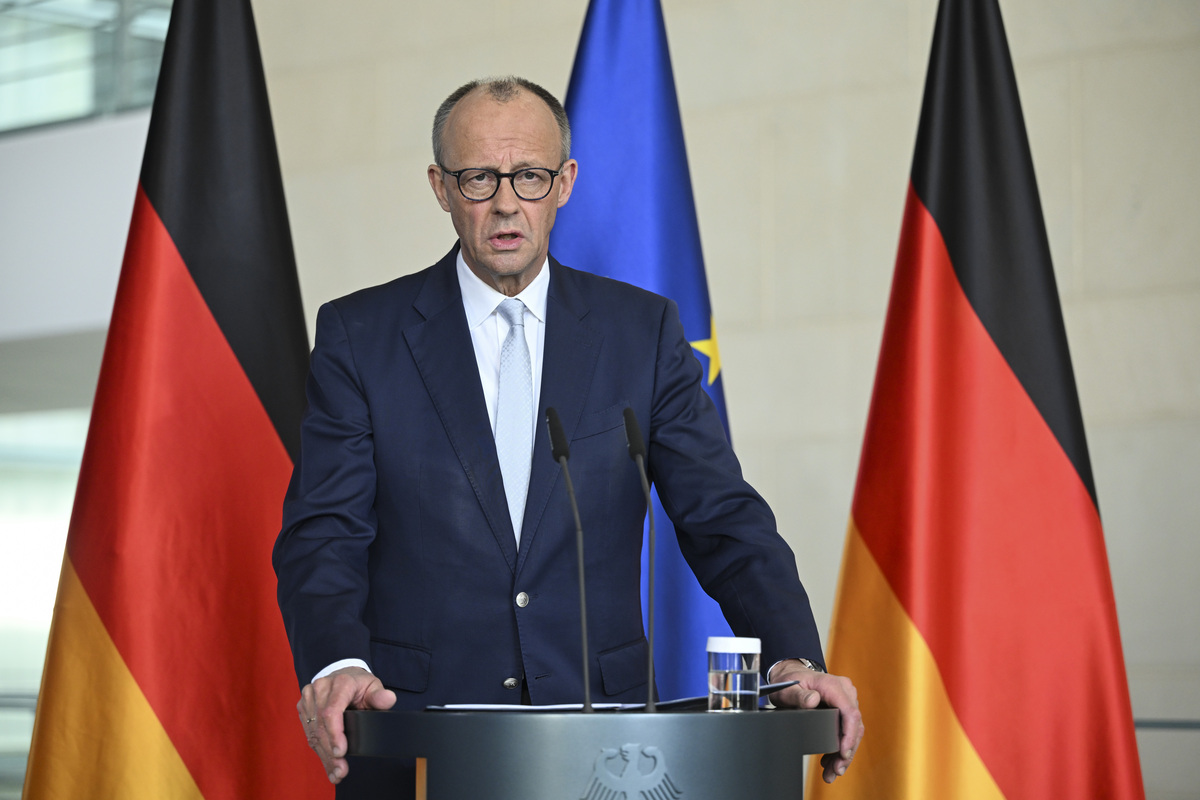

DUBLIN — Friedrich Merz had come to Ireland’s capital to meet with one of the European Union’s most vocal critics of Israel’s conduct in the occupied territories. The setting, a state house on the western edge of Dublin, carried its own unmistakable message: two governments, allied in their unease about what is happening in the West Bank, divided on the single question of what the European Union should actually do about it.
What Merz offered on Tuesday was not a diplomatic hedge. It was a declaration. Germany will not join sanctions against Israel, not now, not for the foreseeable future, and not under any diplomatic pressure the EU can bring to bear. “We do not believe that general sanctions against Israel are the right approach,” the chancellor said at a joint press conference with Irish Taoiseach Micheál Martin. “Germany bears a special responsibility toward the State of Israel. And for that reason, we cannot and will not join sanctions regimes against Israel.”
The reference to Germany’s “special responsibility” requires no translation for anyone who knows the history. It is shorthand, in German diplomatic language, for the Holocaust: the singular fact that Berlin uses to explain why the postwar German state regards its relationship with the Jewish state as constitutionally different from its relationship with any other country. For the EU, which requires consensus on foreign policy decisions, it has functioned for decades as an effective veto.
That veto sat at the center of Tuesday’s meeting. Martin, whose government has led calls for the European Commission to prepare legal mechanisms for curbing trade with Israeli settlements, said he had raised the issue directly with Merz. Ireland’s position is that the EU’s refusal to act at scale has become untenable given the pace of settlement expansion in the West Bank, where Israel’s security cabinet approved 19 new settlements in December 2025 alone. Spain has pushed the same line. So have governments across northern and central Europe. Their argument is that the EU speaks loudly about international law while doing little to enforce it.
Merz’s answer was not disagreement with the diagnosis. He said Germany has told Prime Minister Benjamin Netanyahu, in personal conversations and formal meetings, that it observes the Israeli government’s activities in the West Bank “with great concern.” He invoked UN Security Council Resolution 2334, adopted in December 2016, which called on Israel to halt settlement activity. Israel rejected the resolution outright. By acknowledging it, Merz placed himself, at least rhetorically, within the legal framework his EU partners are trying to activate.
The distinction Merz drew was between comprehensive sanctions against Israel as a sovereign state and trade enforcement tied specifically to settlement products. On the latter, he announced German support for a European Commission push to end trade preferences for goods originating in the occupied West Bank. “Products and goods from the occupied territories in the West Bank of Jordan are rightly not subject to trade preferences for Israel,” he said. “I support the European Commission in consistently ensuring compliance with this rule.”
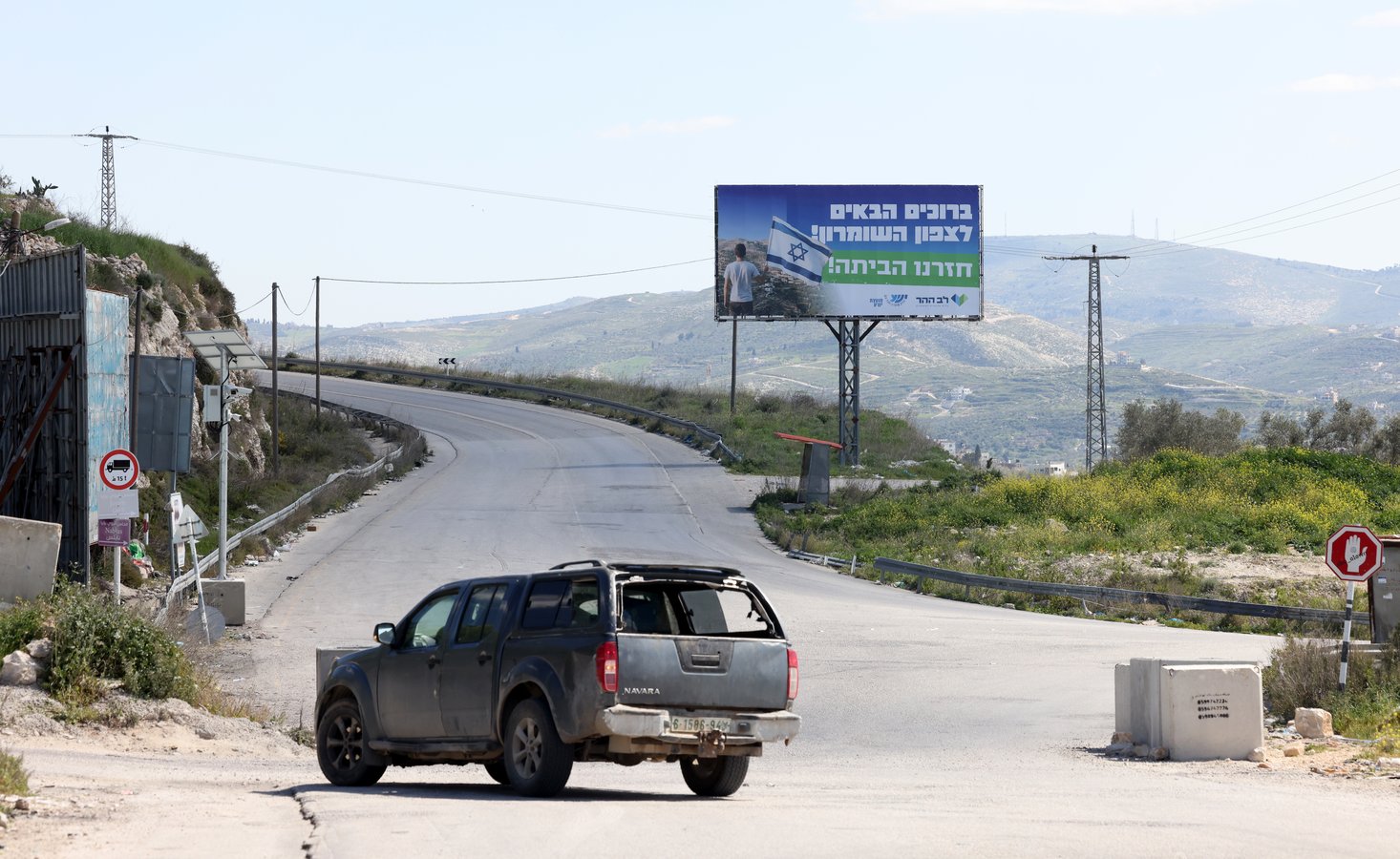
That position places Germany closer to the European mainstream than the visit’s framing suggested. The EU-Israel Association Agreement, which gives Israeli exports preferential access to the single market, already contains a territorial clause excluding settlement goods. The problem, Anadolu Agency reported, is that the clause has not been consistently applied. What Merz endorsed on Tuesday was enforcement of existing rules, not the creation of new ones.
What neither leader could answer is what would constitute a threshold for escalation. What level of settlement construction, what cabinet decision in Jerusalem, what event in the occupied territories would move Germany to reconsider? Merz gave no indication. His statement that the Germany-Israel position “will remain unchanged for the foreseeable future” suggests the answer is nothing in the near term. Martin did not press the point publicly, but the gap between the two governments’ positions was audible in every careful formulation both leaders chose.
The disagreement matters because EU foreign policy on Israel cannot move without German cooperation. A qualified majority voting procedure does not apply to sanctions decisions; unanimity is required. Germany’s refusal to support comprehensive sanctions means, in practice, no comprehensive sanctions. The Irish Times reported that Martin cited “general agreement” within the EU on the need to stop settlement violence. Merz agreed there was concern. He did not agree there was consensus on the instrument.
The settlements in the occupied West Bank have come under intensifying international scrutiny in recent weeks, as attacks by settler groups on Palestinian villages prompted UN warnings of systemic violence. In late July, Israeli forces detained dozens of Palestinians following settler violence in Tal, near Nablus, as calls for international accountability mounted. The European Commission’s push to tighten trade preference enforcement arrived directly in that context.
Merz arrived in Dublin still managing the domestic fallout from a deadly attack on Berlin’s Pride march last week that has prompted calls for an overhaul of Germany’s terrorism legislation. He also spent part of Tuesday’s press conference defending the German trial of Irish citizen Daniel Tatlow-Devally, charged with criminal damage at a factory supplying weapons components to Israel. The chancellor called the trial lawful and the German judiciary independent, adding another layer of tension to a visit already dense with disagreement.
What remains unclear after Tuesday is whether any development in the West Bank could move Germany past the position Merz restated with such deliberate finality. The EU instrument he endorsed, trade preference enforcement, was already on the books before he arrived in Dublin. The instrument Ireland and Spain are seeking, a broader sanctions framework, requires German agreement he declined to give. The threshold for that agreement, if one exists, was the one thing Merz left undefined.