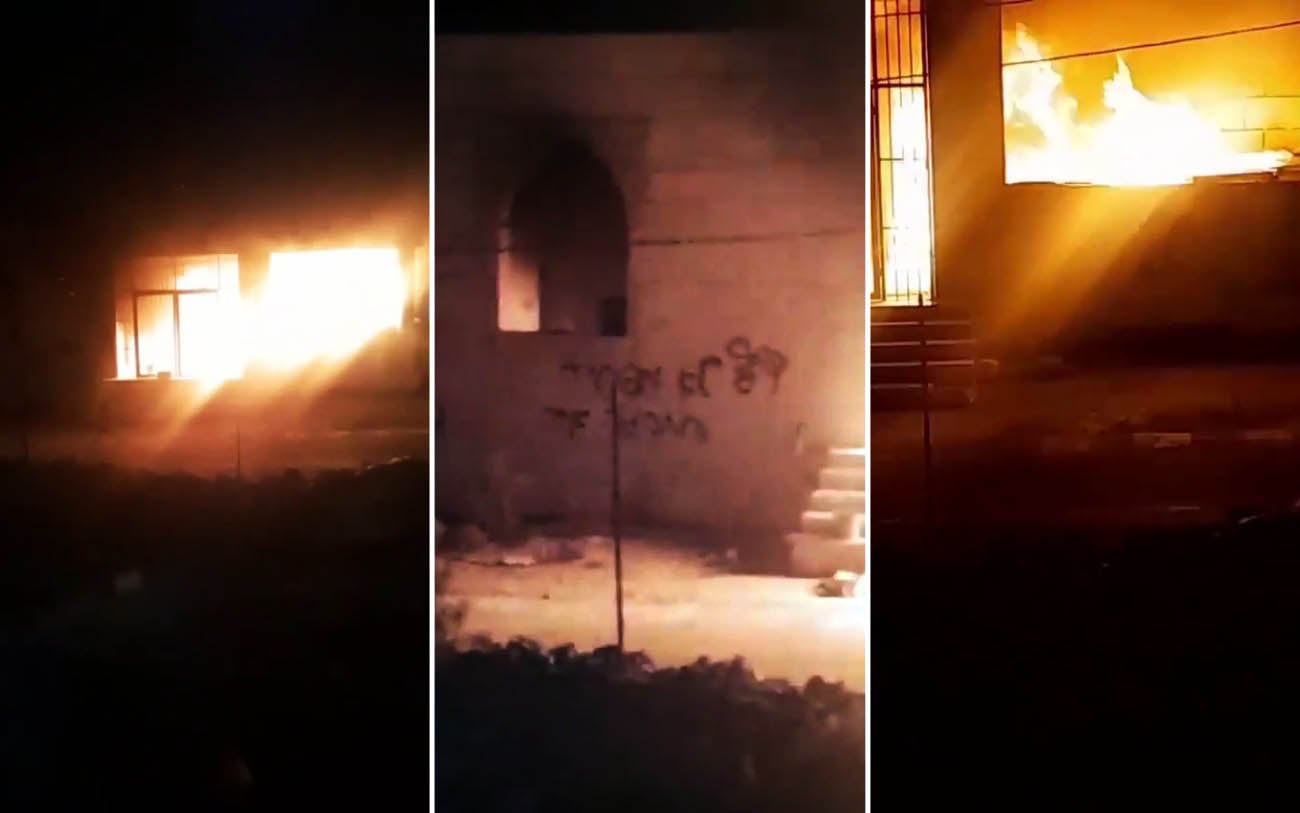

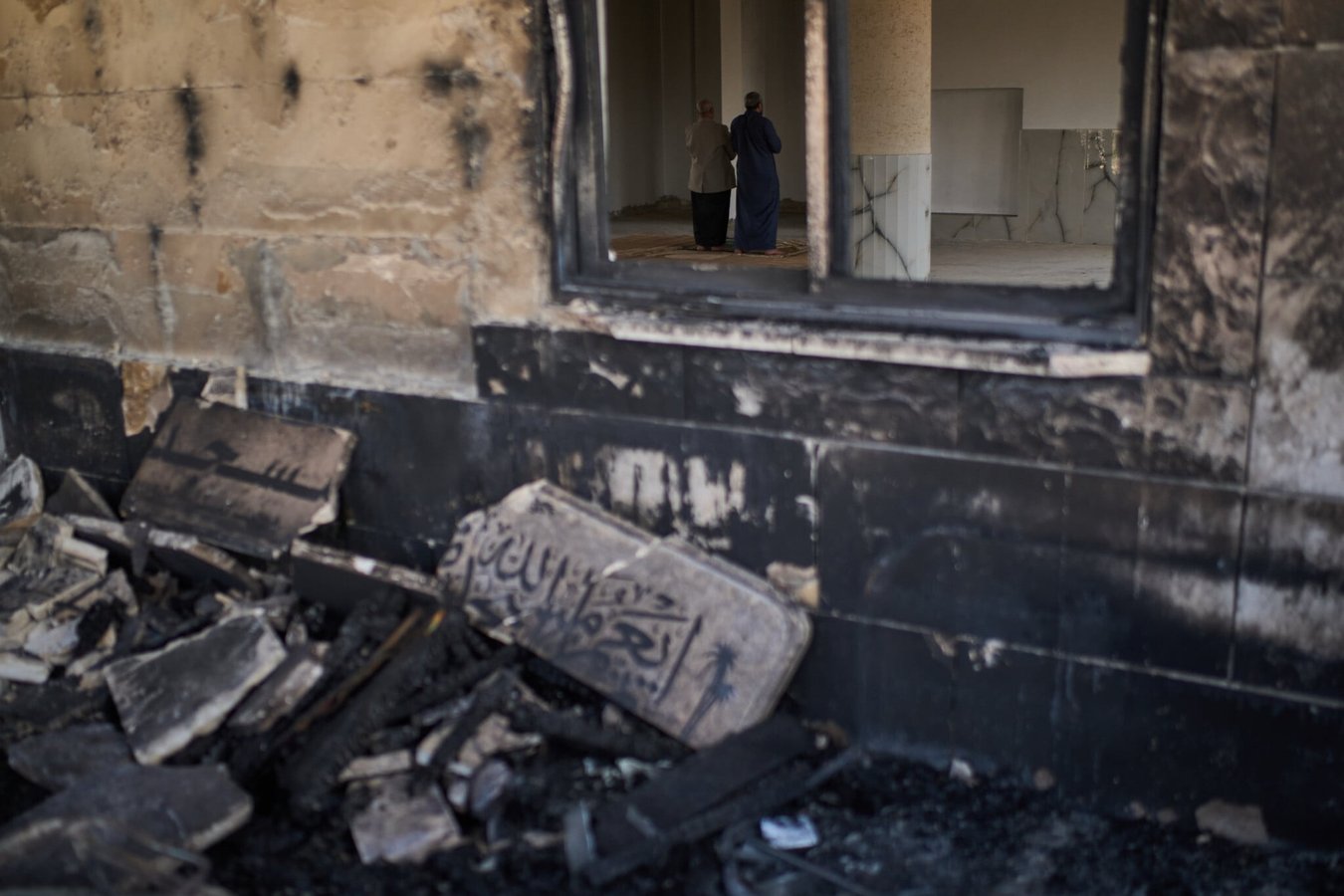
NABLUS – The graffiti reading “Benayahu’s Revenge” was still fresh on the walls of the Al-Rahma Mosque when Abdel Azim Wadi arrived at dawn Sunday. The building had been in its final stages of construction, weeks away from receiving its first worshippers. Now its roof was open to the sky and its wood fixtures were ash.
The mosque in Qusra, southeast of Nablus, was among at least two places of worship set on fire by Israeli settlers in a wave of coordinated attacks that swept across five Palestinian communities in the occupied West Bank in the early hours of Sunday morning. The assaults followed a deadly confrontation in the village of Tal less than 48 hours earlier that killed four Palestinians and two Israelis – a clash that settler networks quickly framed as justification for what Palestinian officials described as a campaign of collective punishment against civilians.
Wadi did not search for diplomatic language. “The mosque was in its final stage and ready to receive worshippers,” he told journalists at the scene. “They set it on fire and spray-painted.”
Near Kour, southeast of Tulkarm, settlers attempted to burn a second mosque. Worshippers present managed to extinguish the blaze before structural damage became total. They left the scene to find graffiti reading “Jewish blood is not free” smeared across the entrance. In Kafr Malik, east of Ramallah, settlers attacked a stone-cutting facility and beat Palestinian workers. Vehicles were torched in Al-Mughayyir, northeast of Ramallah. A home in Beit Furik, east of Nablus, was set alight before neighbors contained the fire; racist slogans were spray-painted across the exterior walls.
The chain of events began Friday in Tal, a Palestinian village southwest of Nablus. A crowd of Israeli settlers, some armed and affiliated with the nearby Havat Gilad outpost, entered the village – an area formally prohibited to Israeli civilians. When a Palestinian resident attempted to disarm one of the settlers, gunfire broke out. Four Palestinians died. So did Benayahu Mellet, a civilian security coordinator from Havat Gilad, and Israeli military Major Yuval Ezra. It was Mellet’s name, spray-painted across a mosque in another village, that captured Sunday’s violence in miniature.
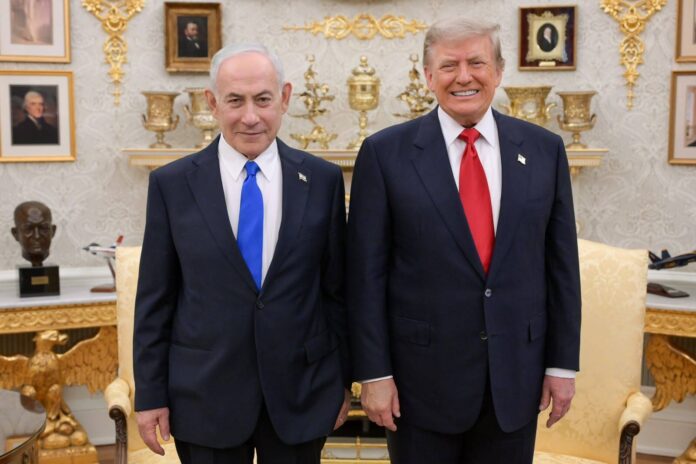
Prime Minister Benjamin Netanyahu’s response was immediate and pointed in the opposite direction. He ordered home demolitions – not for the settlers who moved through villages burning mosques, but for Palestinian families of the men involved in Friday’s shooting. The Israeli military issued a statement saying it “strongly condemns incidents of this kind, including harm to religious institutions,” while acknowledging that soldiers had arrived too late to stop the arsonists. More than 130 people were arrested across the West Bank over the weekend. They were, almost without exception, Palestinian.
The Palestinian Authority’s office called the violence “Israeli state-backed settler terrorism” and “systematic pogroms.” Pope Leo, speaking from the Vatican, called on all parties to reject “actions that violate the respect and status quo of holy sites.” UN Secretary-General Antonio Guterres, in remarks made days before the attacks, had described Israel’s policy of fast-tracking West Bank settlement outposts as a “flagrant violation” of international law.
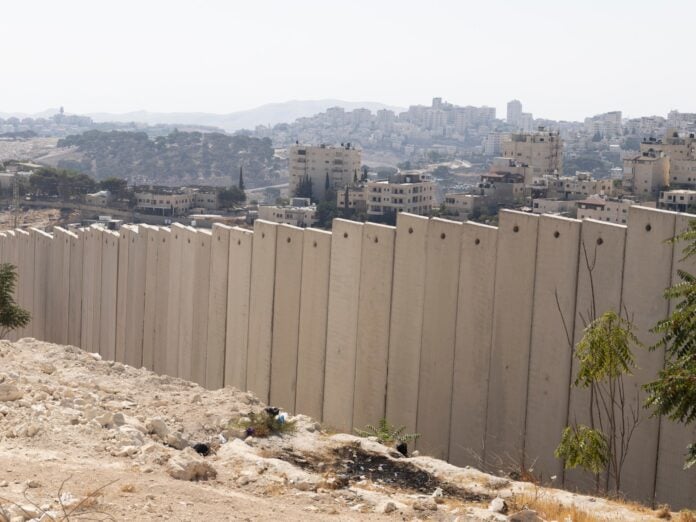
The weekend’s events did not emerge from a vacuum. Former Israeli security officials – 600 of them, in a statement released this week – publicly pressed the Trump administration to act against what they called settler terrorism, an extraordinary intervention from within Israel’s own defense establishment. Ben-Gvir’s Al-Aqsa march earlier this month, in which more than 4,000 settlers stormed the mosque compound under police escort, had drawn condemnation from eight Arab and Muslim nations as an unlawful attempt to alter Jerusalem’s legal status quo.
The escalation reflects a structural dynamic in Israeli politics that international observers have watched with growing alarm through 2026. Netanyahu’s governing coalition depends substantially on the support of National Security Minister Itamar Ben-Gvir and Finance Minister Bezalel Smotrich, whose movements recruit from and advocate for settler communities. Holding that coalition together has meant tolerating a level of settler violence that Israel’s own former generals now characterize as terrorism.
European governments have moved to create pressure where domestic Israeli politics will not. The Netherlands settler import ban, set to take effect September 22, makes it the first EU member state to attach a concrete enforcement date to the bloc’s opposition to settlement products. The EU sanctions on violent settler networks imposed in May represented a further step, though critics noted the measures targeted individuals rather than the political structures enabling them.
Israel is heading into October elections in an atmosphere of sustained violence that has made the occupied West Bank a source of continuous diplomatic friction. Whether that friction translates into consequence – something that alters the behavior of settlers who burn mosques, or the government that continues to permit it – is the question running beneath every condemnation issued. Israel’s ban on the Grand Mufti from Al-Aqsa in July, Canada’s $100 million Palestinian aid pledge, 600 former security officials appealing for external intervention – each is evidence of a failing status quo and the limits of the tools deployed against it.
For Palestinians in Qusra, the failure has a physical address. According to reporting by Times of Israel and NBC News correspondents on the scene, no settler arsonist had been named as a suspect by Monday morning. The mosque’s charred walls, still bearing Benayahu’s name in Hebrew, stood as the closest thing to accountability that the night had produced.