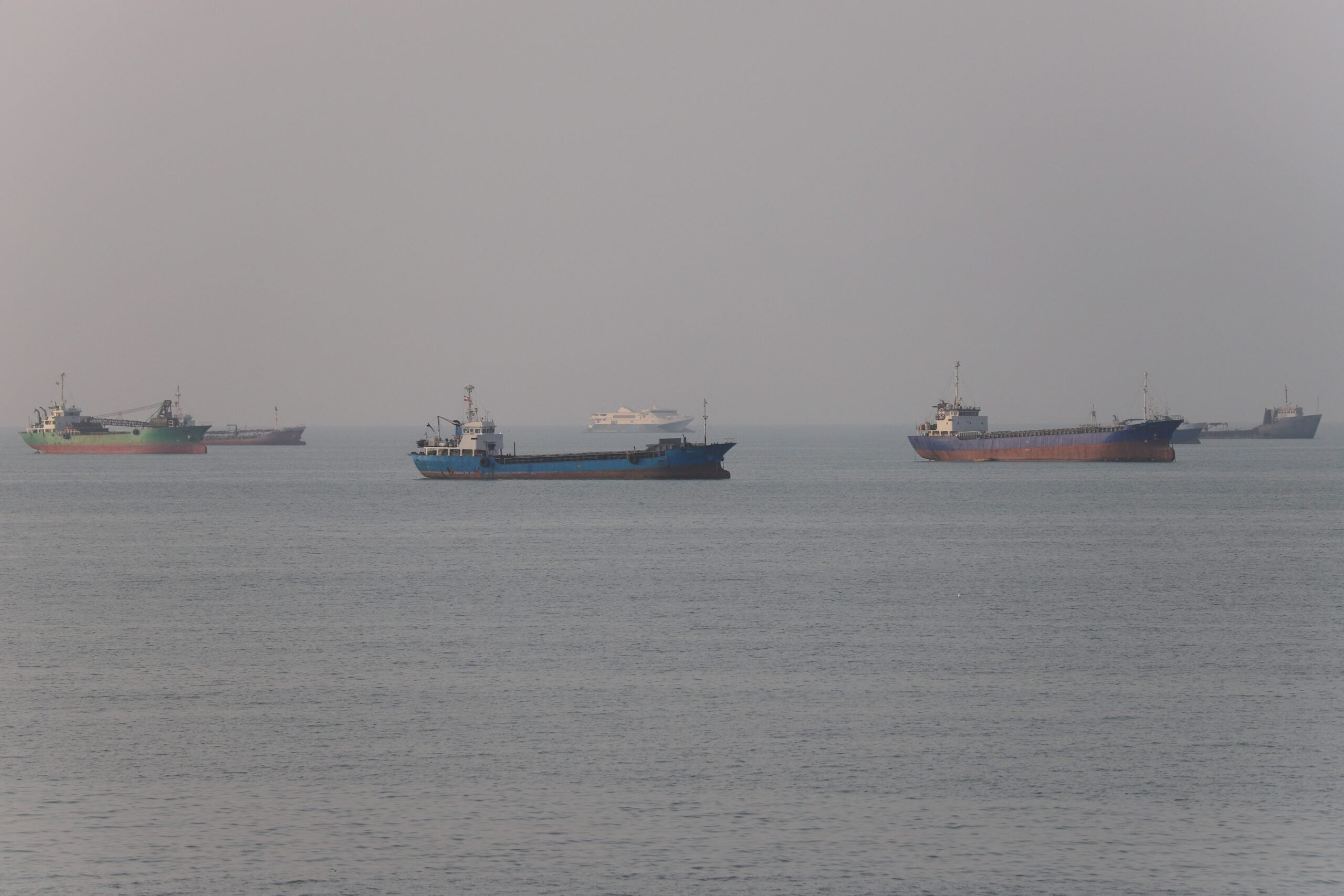

MUSCAT – A foreign container ship ran aground in the Strait of Hormuz on Wednesday after using a route Iran had not authorized, the latest demonstration that the Islamic Republic’s navigation regime in the world’s most critical shipping corridor is being enforced on the water, not just described in joint statements.
Iran’s IRGC Navy confirmed the grounding without identifying the vessel by name, flag state, or location. The principle was made explicit: “Any entry or exit via routes other than the authorized one in the Persian Gulf could lead to irreparable consequences,” the IRGC statement read. The UK Maritime Trade Operations Centre said it had not recorded any incident in the strait as of midmorning Wednesday, a discrepancy that has become routine in Hormuz reporting. Iran’s state media and Western maritime tracking systems rarely agree on what is happening in the waterway.
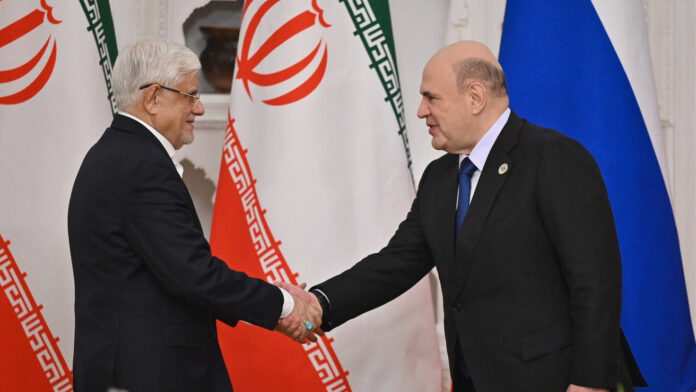
The grounding comes nine days after Iran and Oman formalized a joint management framework for the strait. A joint statement issued June 23 announced the formation of a working committee between the two countries’ foreign ministries, affirming a shared sovereignty claim over the Hormuz navigation corridor. The first meeting of that Joint Hormuz Committee convened in Muscat at the end of June, where Iran’s Deputy Foreign Minister Kazem Gharibabadi confirmed the session had taken place. Iran and Oman share the strait’s shoreline: Iran holds the northern coast, Oman the southern, with approximately 30 kilometres of navigable water between them.
For most of the modern maritime era, neither country has attempted to jointly administer the strait as a shared territorial corridor. The Islamabad Memorandum of Understanding between Washington and Tehran, which entered force June 18 after electronic signatures from Trump and Iranian President Masoud Pezeshkian, included a 60-day window of toll-free guaranteed safe passage, and committed Iran to mine-clearing operations within 30 days. What it did not do was resolve the longer-term question of who controls Hormuz navigation once the MoU’s 60-day term expires in mid-August.
That question is what the Iran-Oman joint committee is now building an answer to. Iran has directed all commercial traffic to use a designated corridor near its northern shore rather than the historically preferred deep-water routes. Vessels that comply are currently transiting without fees, as the MoU requires. Vessels that do not comply run the risk of what happened Wednesday: grounding, IRGC warnings, and no reliable third-party confirmation of what actually occurred. Kpler, the shipping data firm, tracked 34 vessels crossing Hormuz in the 24 hours before the incident.
The US position is that the Strait of Hormuz is an international waterway governed by transit passage rights under the UN Convention on the Law of the Sea, and that no coastal state has the right to levy tolls or restrict freedom of navigation through it. When the joint Iran-Oman sovereignty framework first became public in late May, the US Treasury Department threatened Oman with sanctions. Oman subsequently clarified that it was not endorsing the imposition of transit fees, and that no charges were being levied. The two positions coexist: joint oversight framework intact, fees suspended for now.
Iranian Foreign Minister Abbas Araghchi has warned that vessels using alternative routes risk escalating tensions. Wednesday’s grounding gave that warning a physical form, though its details remain opaque. The IRGC has not said what happened to the crew or cargo of the unnamed container ship. No flag state has issued a distress notice through channels monitored by the UKMTO. Whether the grounding was a genuine maritime incident, a staged demonstration, or an exaggerated IRGC press release is not resolvable from the information available.
The joint committee’s significance extends beyond the fees question. Iran and Oman are using it to establish, through institutional repetition, that the Strait of Hormuz has two sovereign administrators. Shipping traffic through the strait has risen since the MoU entered force, with the provisional peace reducing the risk of direct US-Iran confrontation. But the navigation regime Iran is enforcing has not been accepted by Washington. The Doha talks earlier this week produced a US-Iran communications channel and movement on frozen assets; they did not produce an agreement on Hormuz navigation rights.
US envoys in Doha were specifically working to persuade Iran not to impose a permanent fee regime once the MoU’s toll-free window closes. They left Doha without a resolution on that point. The Joint Hormuz Committee is scheduled to continue meeting. The 60-day clock on the MoU runs until mid-August. What comes after is being decided, jointly and incrementally, in sessions between Iranian and Omani foreign ministry officials in Muscat, and in the water by ships that choose, or fail to choose, the authorized route.