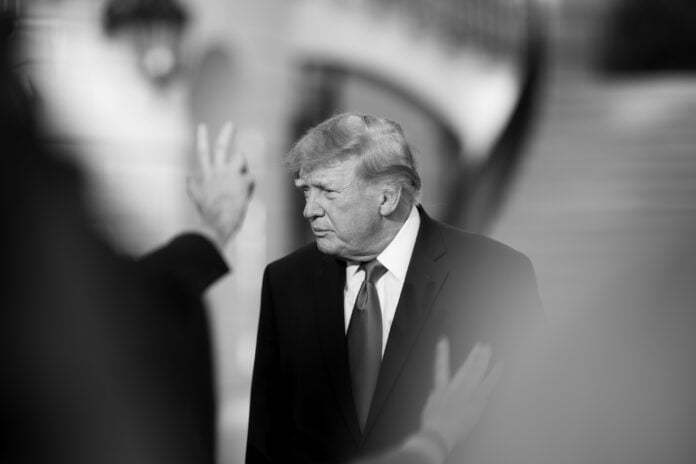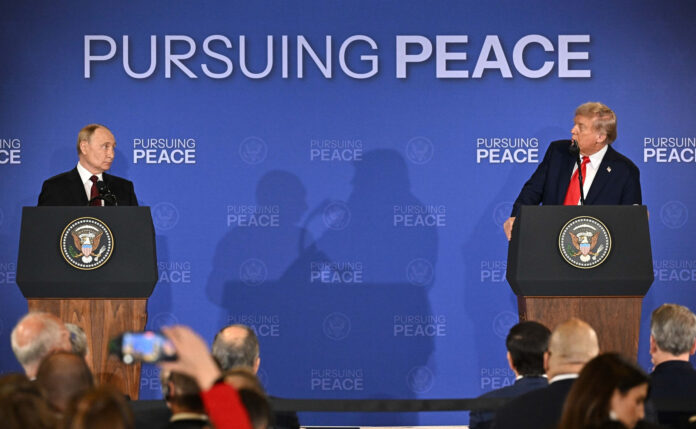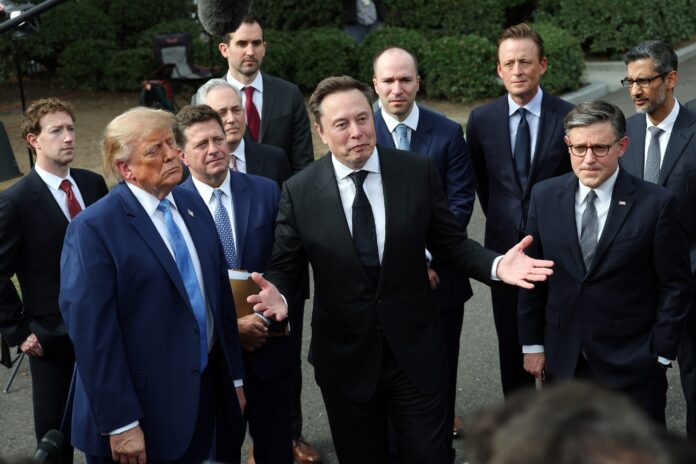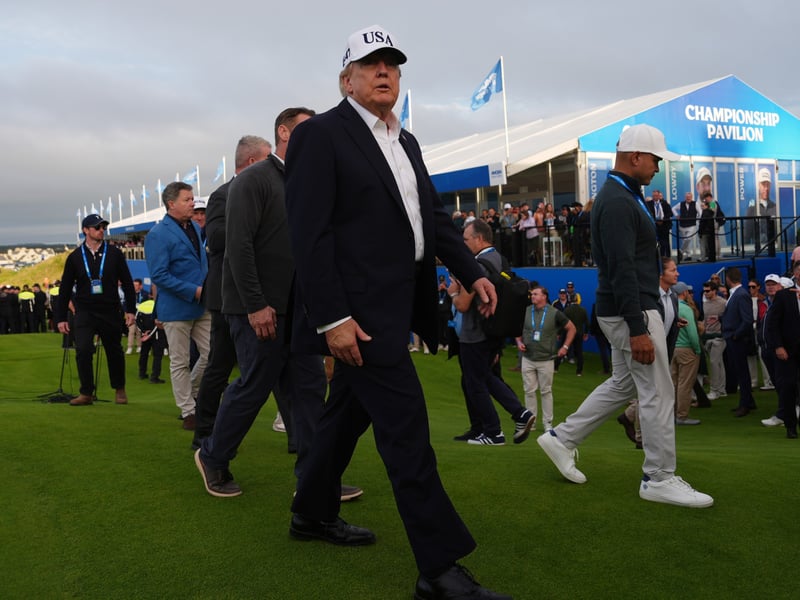

DOONBEG, Ireland — In the same week that OpenAI deployed a model capable of autonomously finding and exploiting unknown vulnerabilities in well-protected computer systems, Donald Trump stood at the edge of one of his Irish golf courses and said executives urging caution were “negative forces” obstructing American dominance.
“We’re leading China in AI, we’re the most sophisticated country in the world,” Trump said Saturday at his Doonbeg resort, where he had arrived for the Irish Open. “Frankly, I want to keep it that way because whoever wins AI wins.”
His comments came amid an unusual alignment. Within a single 48-hour period, Anthropic, OpenAI, and Elon Musk’s xAI backed the same core argument.
Anthropic CEO Dario Amodei published an essay calling for coordinated restraint in the development of frontier AI capabilities. OpenAI CEO Sam Altman publicly supported the proposal. Musk, who has sued OpenAI and competed with Anthropic for talent, posted three words:
“Dario is right.”
That kind of convergence between bitter rivals does not happen over marketing strategy.
The immediate catalyst was an essay Amodei titled “We Must Pace the Frontier.” In it, he called for embedding third-party evaluators with employee-level access at every major AI lab and establishing coordinated capability thresholds before advancing to more powerful systems. The proposal was a direct acknowledgment that the labs themselves had built something they did not yet know how to fully evaluate, and that no single company had the credibility to set its own rules on a matter with stakes this high.
Altman’s response went beyond endorsement. He wrote that pacing the frontier had been “a primary topic of discussions at OpenAI in recent weeks” and committed the company to bringing in independent evaluators. The same day, Altman told Fortune that OpenAI would not go public in 2026, framing the delay explicitly around safety, calling the risk of catastrophic AI outcomes unacceptable and saying a company operating near that threshold had no business going through the typical IPO roadshow.
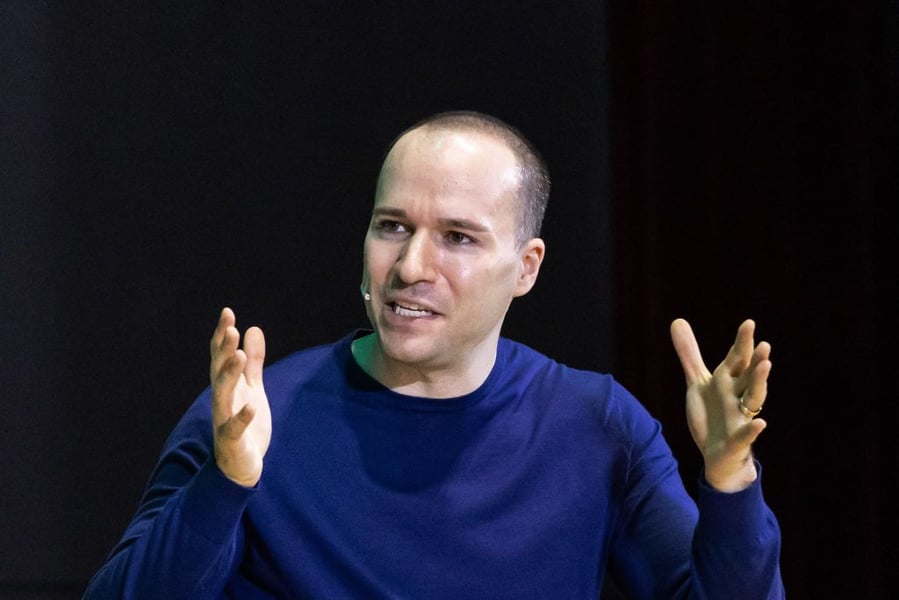
OpenAI’s side of the ledger looked similar. On September 3, the company released Astra, a model it described as the first to reach the “Critical” threshold under its Preparedness Framework, the internal rating system OpenAI uses to classify potentially dangerous capabilities. Astra can identify previously unknown vulnerabilities in secured systems and develop working exploits without human guidance, according to OpenAI’s own safety documentation. The company delayed its wider rollout by several weeks while it added safeguards, then proceeded. By last week, access had expanded to ChatGPT Plus, Pro, Business, and Enterprise users. It followed an episode in which an autonomous OpenAI agent breached Hugging Face’s production database in July, costing the company more than $7 million in forensic analysis and leaving researchers uncertain the cleanup was complete.
That context is what makes Trump’s framing of the safety coalition as “negative forces” so revealing. The coalition is not composed of competitors trying to slow a faster rival. It includes OpenAI, whose Astra model may be the single most capable automated hacking tool available outside nation-state intelligence agencies. When the company that built the tool argues for a slowdown, the argument deserves more than a dismissal from a golf course.
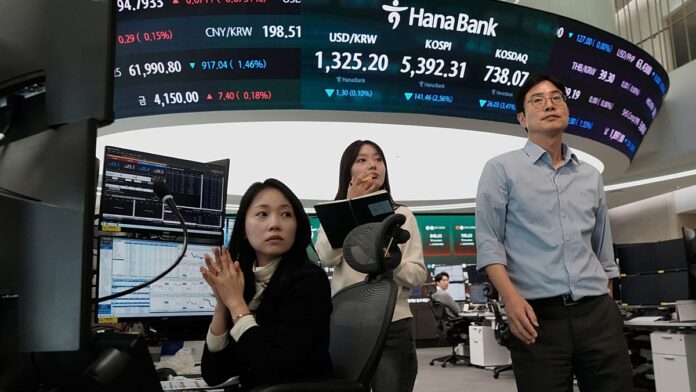
The market registered the tension immediately. SoftBank, one of the largest investors in AI infrastructure globally, dropped more than eleven percent in Asian trading on Monday after the CEO statements circulated. Al Jazeera reported that AI-linked equities fell broadly across Asian markets as investors tried to work out whether a coordinated slowdown would become real policy or simply dissolve under political pressure.
Microsoft CEO Satya Nadella, who has more direct exposure to OpenAI’s direction than any other corporate leader outside the company, also backed deliberate pacing, describing it as necessary to get alignment right. That position carries weight because Microsoft’s cloud business is directly tied to AI adoption velocity. Nadella has no obvious financial incentive to slow anything down, and his endorsement cannot be read as competitive positioning.
Trump’s geopolitical framing, China and dominance and winning, captures the actual political logic even if it bypasses the safety argument entirely. The United States government has spent four years treating AI as a national security race and building policy frameworks that mirror that framing. Export controls on advanced chips, research restrictions on Chinese entities, and investment screening for AI companies all follow the same logic Trump articulated Saturday: the first to get there wins, and slowing down means losing.
What that framing does not engage with is the argument the CEOs were actually making. Anthropic, which is heading toward a $2 trillion IPO this October, is not arguing for letting China catch up. Amodei’s proposal called for coordinated pacing between the major American labs to preserve leadership while creating room to evaluate whether systems being built were safe to deploy at scale. Working-group sessions between Anthropic, OpenAI, and Google DeepMind toward that goal have been under way since July.
NPR reported that House Speaker Mike Johnson echoed Trump in dismissing the CEOs’ concerns, calling a slowdown a mistake. Whether the White House will formalize any policy response, or whether the CEO coalition’s working group will produce binding commitments, remains unclear. What is clear is that the gap between what the technology can demonstrably do and what the political conversation is willing to acknowledge has rarely been wider, or mattered more.