
SAVANNAH, Ga. – Effingham County officials approved a 50 percent property tax break for fifteen years to win the deal. What they secured in return was Project Camellia: a $20 billion data center campus that OpenAI plans to build on 1,400 acres northwest of Savannah, drawing at least 3.2 gigawatts of electricity from a Georgia Power grid that will require substantial reconstruction just to serve it.
The campus is the most concrete piece of OpenAI’s broader capital commitment, which has now reached $750 billion in planned spending through 2030 – a roughly 25 percent increase from estimates cited earlier this year. The company has grown its infrastructure ambitions faster than its disclosed revenues: OpenAI generates several billion dollars annually in subscription and API income, a fraction of what it has committed to spend on the physical infrastructure of artificial intelligence.
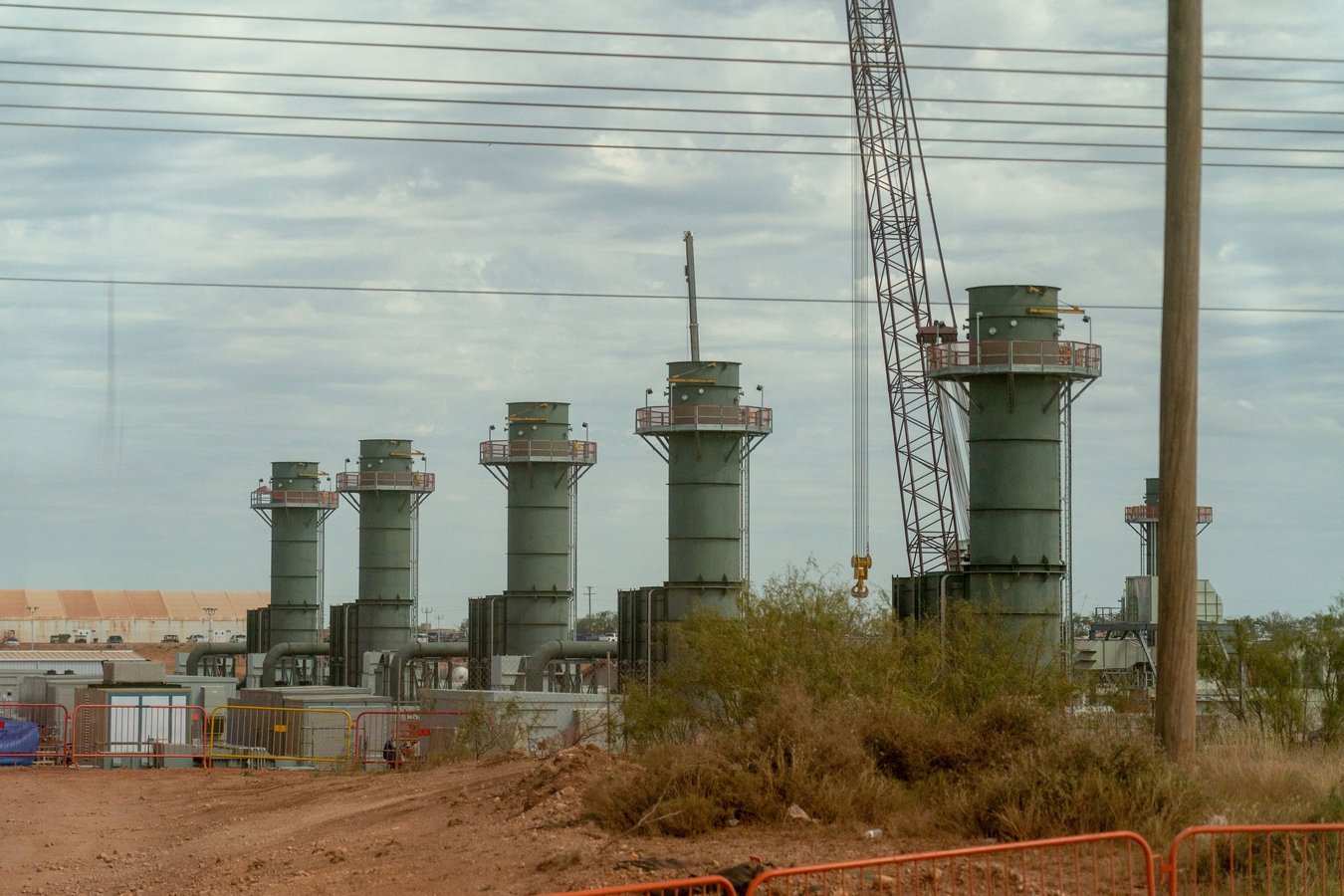
Georgia Power, the state’s dominant utility, received Public Service Commission approval to add nearly 9,885 megawatts of new generation capacity – a figure that dwarfs routine utility planning cycles – primarily to accommodate OpenAI’s demands. The utility will more than double its existing natural gas fleet, with roughly 5.8 gigawatts coming from new gas plants. A quarter of that gas capacity will come from simple-cycle turbines, which are faster to construct than combined-cycle plants but significantly less fuel-efficient, suggesting the build-out is prioritised for speed. Grid-scale batteries and solar installations make up the remainder of the PSC-approved expansion.
OpenAI committed to covering the full cost of the infrastructure and electricity service, a provision designed to insulate existing Georgia Power customers from direct rate increases tied to the Camellia campus. The company also agreed to reduce its electricity demand by up to 1 gigawatt during peak periods – a form of demand-response flexibility that regulators are increasingly requiring from major industrial customers as grid stress intensifies across the country.
To lead the physical construction, OpenAI hired Brett Mayo, whose previous assignment was overseeing the build-out of Colossus, the 100,000-chip data center that Elon Musk’s xAI installed in a former Memphis factory in under a year. Mayo’s appointment signals that OpenAI is treating Project Camellia not as a real estate transaction but as a construction project: the company intends to build and operate the facility itself rather than leasing capacity from a cloud hyperscaler. Power generation from the new Georgia plants is expected between 2028 and 2032.
The Camellia announcement comes as OpenAI’s original flagship infrastructure initiative, the $500 billion Stargate consortium launched with SoftBank and Oracle, has reportedly encountered headwinds from US tariffs on hardware imports, which have complicated hardware procurement for AI infrastructure projects across the industry. TechCrunch, which reported the Project Camellia details, noted that Stargate’s difficulties have run parallel to OpenAI’s direct construction push. Where Stargate relies on partner financing and shared operational arrangements, Camellia gives OpenAI control over the timeline and the asset.
OpenAI’s 3.2-gigawatt draw on Georgia’s grid sits within a broader pressure campaign that AI companies are collectively placing on US electricity infrastructure. Earlier this month, Exelon’s chief executive warned that US grids could face rolling blackouts as early as 2027 as data center demand outpaces generation capacity. Georgia’s emergency expansion – nearly 10 gigawatts approved in a single PSC cycle – is the kind of accelerated utility buildout that regulators are pursuing to avoid that scenario. Whether it arrives fast enough is a separate question.
OpenAI’s ability to sustain a $750 billion commitment is itself an open question. Earlier this year, SoftBank’s attempt to borrow $6 billion against its OpenAI stake stalled when creditors found it difficult to value a company that has missed some internal sales targets. The spending commitment also reflects a competitive calculation: as Chinese AI companies, from DeepSeek to Moonshot AI, have demonstrated competitive models built at lower capital cost, OpenAI’s response has been to treat compute scale as the moat. Project Camellia is the physical expression of that bet.
What no regulator, utility, or analyst has squarely addressed is whether OpenAI can sustain this pace. The natural gas plants Georgia Power must build are themselves multi-year projects subject to supply-chain pressures, permitting cycles, and a policy environment increasingly hostile to new fossil fuel commitments. The 2028-to-2032 power timeline spans four years, and OpenAI’s needs are not static. A $750 billion commitment and a 1,400-acre campus do not, by themselves, ensure the infrastructure arrives on schedule – or that a company currently generating a fraction of what it has pledged to spend can finance it all the way through.