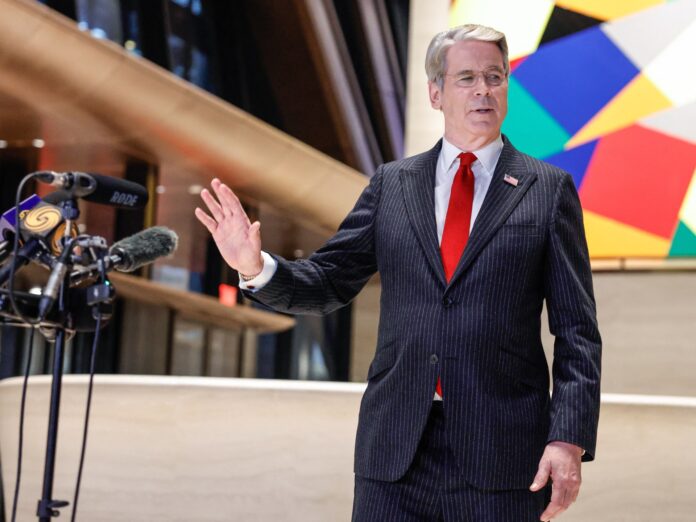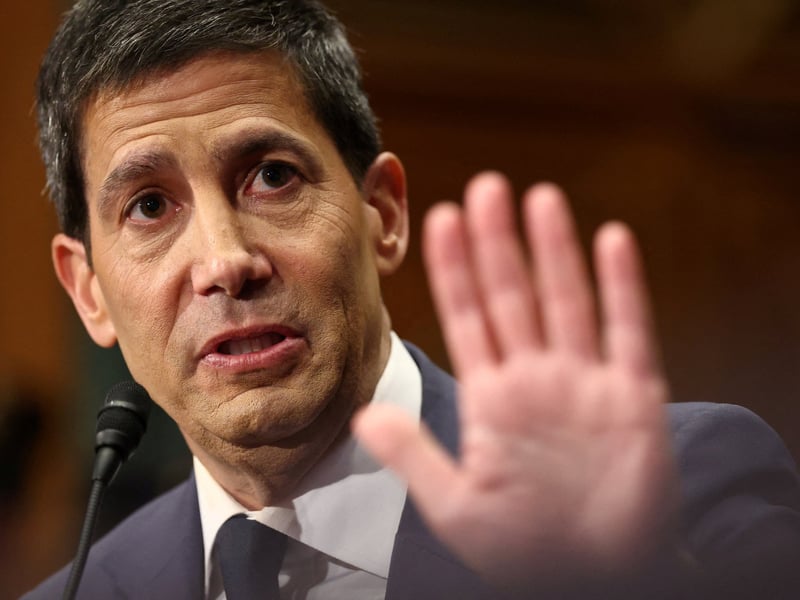

WASHINGTON — Twenty-nine minutes and forty seconds after Kevin Warsh left the Federal Reserve’s press conference room on Wednesday, the Dow Jones Industrial Average had surrendered every point it added on the rate decision itself. The Nasdaq Composite had not. By Thursday’s close, the gap between those two facts had become the defining story of the week: the stock market was operating as two separate economies.
The Federal Reserve raised its benchmark rate by 25 basis points on September 16, bringing the federal-funds target range to 3.75%–4%. It was the first rate increase since 2023.
Chair Warsh’s decision not to take questions intensified the market reaction. The news conference lasted 29 minutes and 40 seconds—the shortest since Ben Bernanke faced reporters during the 2011 debt-ceiling crisis—leaving analysts without the follow-up discussion they had expected.
Rate-sensitive sectors fell sharply:
- Regional banks declined 3.4%.
- Utilities dropped 2.1%.
- Real estate investment trusts lost 4.8% for the week, their worst five-day performance of the year.
The 10-year Treasury yield rose to 5.04% by Friday, its highest level since October 2007. That move marks a major reset for corporations with floating-rate debt after years of quantitative easing and near-zero interest rates had lowered the perceived “normal” cost of capital.

The divergence was not subtle: debt-burdened, dividend-paying, rate-sensitive legacy industries moved in one direction; AI-adjacent chipmakers with fat margins and minimal leverage moved in the other. Morgan Stanley’s rate strategy team described the dynamic in a Friday note as “a market pricing two rate regimes simultaneously.” Technology companies insulated by capital-light business models and strong dollar-denominated demand from global AI infrastructure build-out have no meaningful sensitivity to whether the overnight rate sits at 3.75% or 4.25%.
The companies that built their financial models on a 2020 rate assumption face a structurally different reality. And the Fed cannot solve the problem at the source. Talks to reopen the Strait of Hormuz to full commercial traffic collapsed earlier this week, removing what had been the primary pressure valve on Gulf shipping costs.

Oman’s quiet mediation effort, Washington’s most viable back channel to the parties with leverage over the Houthis, has produced nothing concrete. Warsh’s silence on oil in his 30-minute statement was deliberate and legible. He cannot fix what Muscat and Riyadh have not.
Sixteen of the eighteen Federal Open Market Committee members in their September dot plot project at least one additional 25 basis point increase before year-end, targeting a terminal range of 4% to 4.25%. The dot plot was assembled before last week’s escalation, and two FOMC governors whose names the Fed has not disclosed entered a dissent that stopped just short of formal opposition to the current path. Whether energy-driven inflation can be subdued by demand destruction alone is the question the dot plot cannot answer.

What Warsh communicated in less than 30 minutes on Wednesday was something most central bankers spend hours trying to obscure: the Fed has done what it can do, and the rest of the inflation problem lives somewhere else.