
LOS ANGELES — The deal went in one direction and the concessions went in the other, and on Sunday the balance struck between David Ellison‘s Paramount Skydance and twelve state attorneys general finally produced the paperwork the $111 billion acquisition of Warner Bros. Discovery has been waiting on.
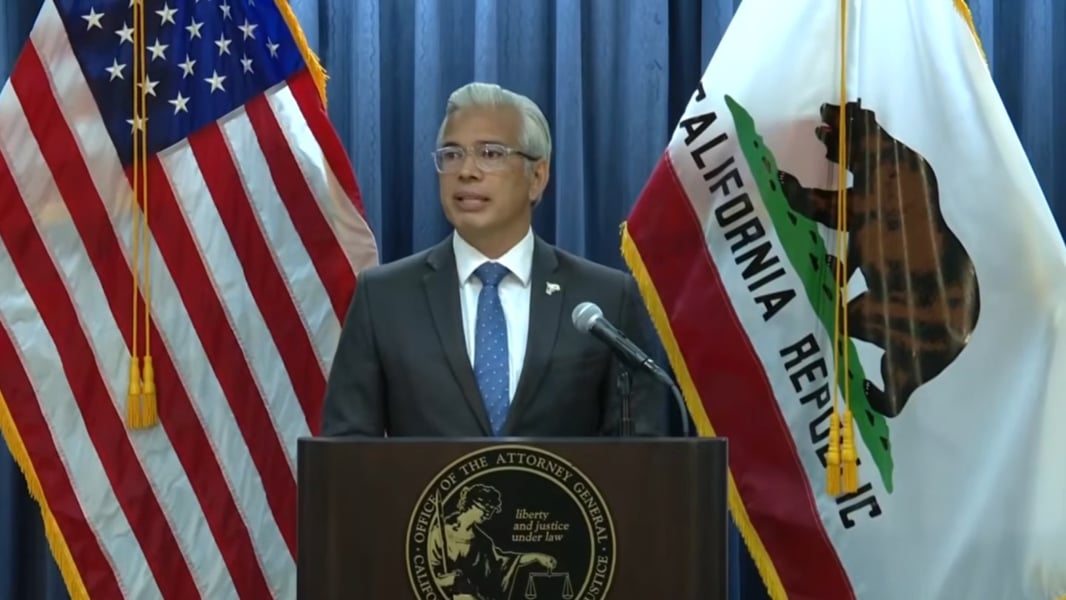
California Attorney General Rob Bonta led the coalition that filed suit in July, arguing the combination of Paramount and Warner would give a single studio group command over 75 percent of the U.S. theatrical market while eliminating meaningful competition in cable and streaming. Under Sunday’s consent decree, filed in the Sacramento Superior Court, Paramount does not admit to any of that. What it has agreed to, instead, is a commitment structure that will govern the combined company’s content and editorial operations for years.
The production obligations are specific. Paramount must release at least 30 theatrical films per year in years one and two after close, rising to 32 per year in years three through five. No fewer than four releases annually must qualify as independent or specialty films. To fund that output, Paramount has committed $1.5 billion in incremental U.S. domestic production spending over five years, representing an increase of $300 million above its 2025 baseline in each of those years. The penalty for falling short: $30 million per film missed.
Twelve states sued in July to block the merger, the most formidable domestic legal challenge the deal has faced since federal regulators approved it in June. The coalition had built a trial record that California and New York believed could survive a preliminary injunction hearing, giving Paramount reason to settle before a judge had the chance to weigh it.

The Writers Guild of America reached its own parallel agreement. The WGA’s central demand was a five-year ban on layoffs of CBS News writers, a protection Paramount had declined to offer during earlier contract negotiations. The company accepted it Sunday. Paramount will also contribute $17.5 million to the WGA health fund, plus attorneys’ fees. Guild leaders called the figure adequate; what it is not is the full structural overhaul the WGA pursued in its 2026 contract cycle. The settlement protects CBS News’s current workforce. It does not expand union jurisdiction to the new streaming properties Paramount will acquire.
The WGA’s decision to press for its own remedy alongside the state AGs was a piece of leverage-building that started before the antitrust suit was filed. Guild leaders recognized that once a lawsuit was live, they had a credible threat they had not previously held: the possibility of coordinated work stoppages at CBS affiliates timed to NFL broadcasts. That threat never had to materialize. It shaped the terms.
“This agreement does not mean we endorse this merger,” Bonta said at his Sacramento press conference Sunday afternoon. “It means that if this deal closes, Californians have real, judicially enforceable guarantees.” The coalition’s position throughout the litigation was that a settlement producing binding obligations was more durable than a court order blocking a deal the federal government had already approved. That logic holds as long as the consent-order court remains willing to exercise the oversight it has been granted.
For David Ellison, Sunday closes the domestic legal chapter of a deal that has been running since Warner Bros. Discovery signed a merger agreement with Paramount Skydance last year. The deadline is September 30, with a ticking fee of $0.25 per share per quarter beginning October 1. The regulatory termination fee stands at $7 billion if the deal collapses on regulatory grounds. Both numbers ensured that Ellison moved quickly once settlement negotiations began to look achievable. The exit from its Universal distribution joint venture earlier this summer cleared the European Commission’s objections; Sunday’s agreement eliminates the last significant domestic obstacle.
The combined company that will emerge will operate Paramount Pictures, CBS, Paramount+, HBO, CNN, Warner Bros. studio, HBO Max, and a cable portfolio that spans Turner Sports, HGTV, Food Network, Discovery Channel, Cartoon Network, and TNT. David Ellison will serve as chairman and chief executive. David Zaslav, who built Warner Bros. Discovery into the entity Paramount is now absorbing, will depart after the close.
The agreement’s conditions—secured by 12 attorneys general and the Writers Guild of America—were, in Warren’s view, the safeguards that federal regulators should have required. Instead, they were imposed through a state-led coalition.
The consent decree creates obligations for production quotas and editorial independence at CNN and CBS News, but it cannot guarantee how those commitments will function in practice. Whether the quotas remain in place five years from now, or whether the networks’ editorial boards achieve the structural independence promised in their charters, remains unresolved.