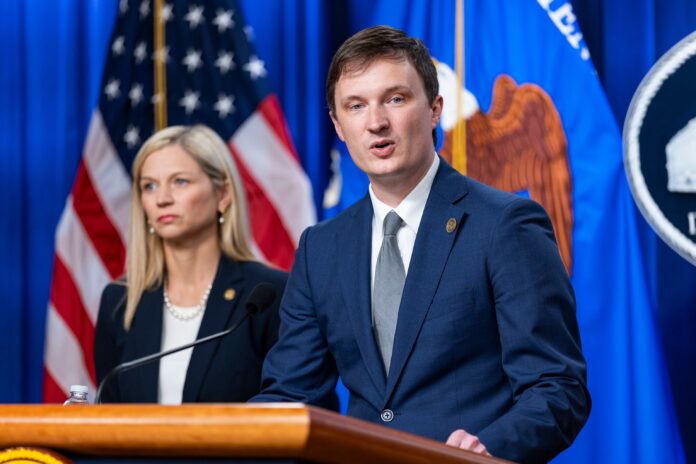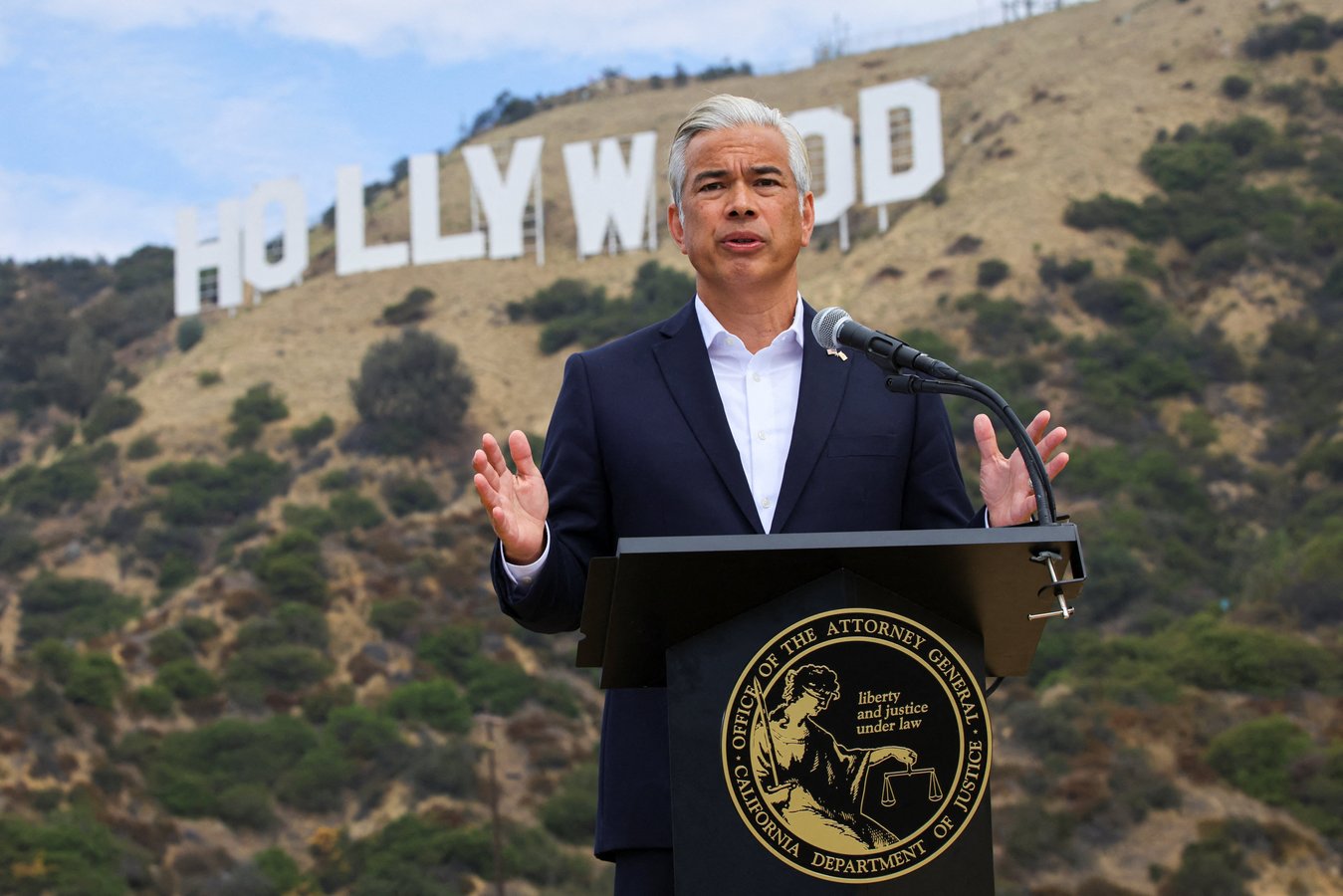

SACRAMENTO – California Attorney General Rob Bonta walked into Monday’s press conference with twelve state governments behind him and reached for the language of market populism. The $110 billion deal combining Paramount Skydance with Warner Bros. Discovery would create, he said, “rigged markets, not free and fair markets.” The lawsuit his office filed in federal court the same afternoon was designed to prevent that from happening.
The coalition that joined California’s complaint included Arizona, Colorado, Connecticut, Massachusetts, Minnesota, Nevada, New Jersey, New Mexico, New York, Oregon, and Washington, representing a broad cross-section of states with significant entertainment, cable, and theater industries. Together, the twelve represent the most substantial coordinated legal challenge to the proposed merger since the Justice Department declined in June to demand any concessions from either company before clearing the deal.
Paramount Skydance, which acquired Paramount Global last year, agreed to purchase Warner Bros. Discovery in a transaction valued at roughly $110 billion. The combined entity would unite the studios behind Paramount Pictures, CBS, HBO, Max, and Warner Bros. under a single corporate structure, creating a company with extensive output across theatrical, streaming, and basic cable television.
Bonta’s office argued the combined company would control an estimated 27 percent of basic cable TV licensing in the United States and approximately 75 percent of wide-release theatrical film distribution. Cable distributors, the complaint contends, would face “higher prices and reduced investment in content” as a result. Movie theaters, already operating on thin margins, would negotiate from a structurally weakened position. Audiences, the states argued, would ultimately pay more for less choice.
Washington State Attorney General Nick Brown joined Bonta in framing the filing as a consumer protection matter as much as a competition case. The merger would “raise prices, reduce consumer choice, and cost many Americans their jobs,” Brown said, citing the concentration in theatrical distribution as the most immediate concern.
Paramount called the litigation politically motivated. A company spokesperson declined to address the specific market share figures cited by the plaintiffs but argued the combined studio would produce 30 movies annually, a higher output than either company had managed separately. The company implied that audience access to content would increase rather than contract. The states were not persuaded.
The case reaches the courts at a moment that tests whether state antitrust enforcement can fill the space vacated by a Justice Department that, under the Trump administration’s direction, has generally favored permissive merger review. The department cleared the Paramount-Warner deal in June without requiring a single divestiture or behavioral condition, leaving state governments as the only institutional check still standing between the two companies and a completed transaction.
State antitrust enforcement against major mergers is not unprecedented. Several past coalitions of state attorneys general have successfully challenged deals that cleared federal review, and the participation of twelve states signals that this is not a single-jurisdiction enforcement action but a coordinated national campaign. The coalition had been preparing the suit for weeks, with California and New York having signalled their intent to litigate almost immediately after the Justice Department announced its clearance.
The filing came one day after Paramount’s own contingency calculations entered public view. The studio had threatened to relocate its operations out of California entirely if Bonta proceeded with the suit, flagging New Jersey and Texas as potential destinations for an operation responsible for an estimated $30 billion in annual content spending. The threat appeared designed to create political pressure on the attorney general before the filing could happen. Bonta filed anyway.
The political dimension of the suit is difficult to separate from its legal substance. Bonta is among the more visible Democratic attorneys general in the country, and the Paramount-Warner lawsuit arrives as consumer protection and market concentration have become touchstones of populist rhetoric across the political spectrum. Framing the suit as a defence of “free and fair markets” against a company large enough to threaten California with relocation is calibrated as much for voters as for a judge. Al Jazeera reported that each of the twelve state governments notified the court of their participation in the complaint on the day of filing.
What the lawsuit does not yet contain is a motion for a preliminary injunction, the legal mechanism that would halt the merger pending a court ruling on the merits. Whether the states will seek emergency relief before the deal closes, and whether a federal judge would grant it given the DOJ’s earlier clearance, remains the most consequential open question in the litigation.
The litigation will be decided in federal court. No trial date has been set. No injunction has been filed. Twelve states have committed their offices to blocking a deal that two major studios and the federal government have already agreed to allow. Whether they can do it before the transaction closes is what the filing, for all its ambition, does not answer.