
LONDON – Britain’s crypto industry has spent years operating under a framework that promised clarity but delivered consultation papers. That changed this week.
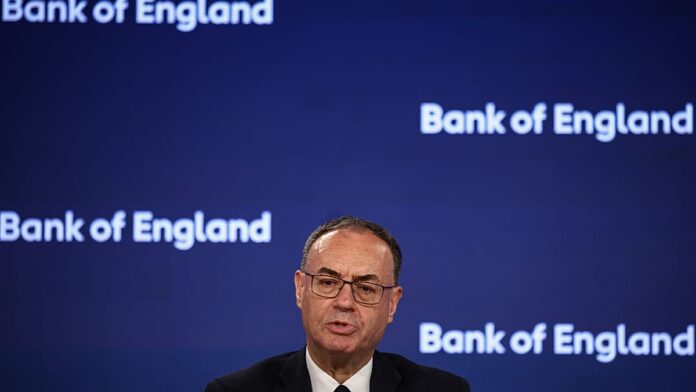
The Financial Conduct Authority completed its crypto rules, establishing capital requirements, admissions standards, and a full conduct regime for digital asset firms doing business in the United Kingdom. The framework covers crypto exchange operators, custodians, and firms dealing in crypto assets, requiring authorization before operating. Simultaneously, the Bank of England abandoned the stablecoin limits it had proposed last November, removing the £20,000 individual holding cap and the £10 million business ceiling, while cutting the reserve ratio for stablecoin issuers from 40 percent to 30 percent. A system-level cap of £40 billion remains in place.
The FCA has set October 2027 as the mandatory authorization deadline, giving firms roughly 15 months to satisfy its requirements. Those that miss it face exit from the UK market.
For much of the past five years, London positioned itself as a crypto-friendly jurisdiction while producing relatively little binding regulation. Industry groups lobbied, consultations circulated, and white papers arrived with regularity. Substantive rules did not. The European Union moved first with MiCA, its Markets in Crypto-Assets Regulation, and the market responded. Euro-denominated stablecoin monthly transaction volume grew from approximately $270 million before MiCA’s passage to more than $8 billion afterward, according to CoinDesk market data, a figure that reflects what regulatory certainty does for institutional adoption.
The shift in stablecoin composition matters as much as the overall growth. Chet Shah, chief executive of Wirex Limited, wrote in a CoinDesk opinion piece that the number of holders of non-dollar stablecoins grew roughly 30 times between January 2023 and February 2026. Shah argued the growth is driven predominantly by real-world payments, including remittances, cross-border commerce, and treasury management, rather than speculative trading. The UK framework is structured to serve that use case.
The United Kingdom is not moving in isolation. The United States advanced the GENIUS Act this year, establishing a federal stablecoin framework that would require full reserve backing and prohibit algorithmic stablecoins. Progress on the CLARITY Act digital asset framework added further pressure on financial centres competing for crypto business.

What the FCA framework does not resolve is also significant. Decentralised finance, the category of protocols with no identifiable operator, receives no specific guidance in the completed rules. The FCA has acknowledged the difficulty in fitting DeFi into a conduct regime designed around identifiable firms. Operational resilience standards for crypto custodians and exchanges remain in draft form. Digital asset tax treatment, which in the United Kingdom involves HM Revenue and Customs rather than the FCA, sits outside this framework entirely.
The Bank of England’s decision to frame stablecoin risk as systemic rather than consumer-level reflects a deliberate choice about where regulation should sit. By retaining the £40 billion aggregate cap while removing individual user limits, the Bank is signalling that its concern is the size of the stablecoin ecosystem relative to the broader financial system, not the exposure any individual retail holder carries. That distinction shapes how firms will need to design products and communicate risk to clients.
For crypto businesses operating in or considering entry into the United Kingdom, the framework removes the most expensive kind of uncertainty: whether rules will ever arrive. Capital allocation decisions, infrastructure investments, and partnership agreements with traditional banks all become easier when there is an authorization regime to plan around, even an imperfect one. Firms that have been deferring infrastructure decisions pending regulatory certainty now face a cleaner set of choices. Those with existing operations will need to assess how their current structures map to the FCA’s conduct requirements before the 2027 deadline.
Ripple’s experience navigating years of SEC enforcement uncertainty illustrated what unclear regulatory status costs in practice: executive attention, legal expenditure, and a persistent discount on institutional relationships. The company spent years in litigation before reaching a resolution that might have been available earlier under a clearer framework. The UK’s rules do not eliminate every question for British digital asset firms, but they do remove the largest single source of legal ambiguity in the market.
What it does not do is guarantee that the United Kingdom becomes a dominant centre for digital finance. The October 2027 deadline is a threshold, not a destination. Whether firms meet it, and whether the FCA’s authorization queue runs smoothly, will determine whether London’s crypto ambitions translate into market infrastructure or remain, as they have for much of the past decade, a statement of intent.