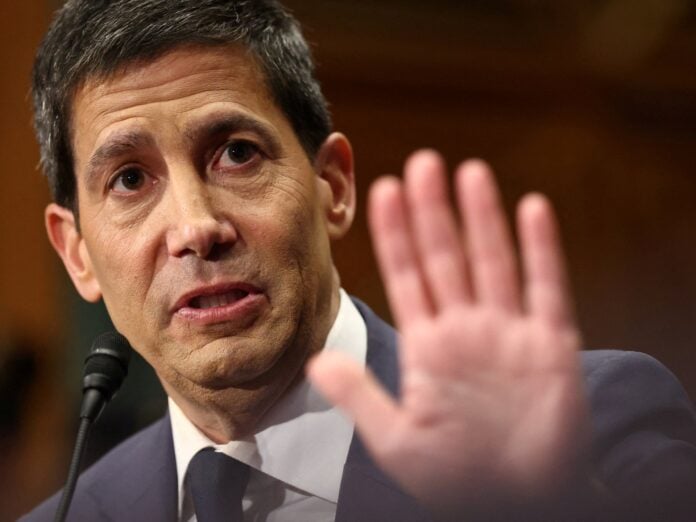

NEWARK, N.J. – Silvio Napoli stepped into the chief executive role at Lucid Group with a message that landed differently than most executive debuts: the company he had just inherited needed to go back to basics.
Six weeks after Lucid shares plunged 50 percent intraday in July on bankruptcy speculation, erasing more than a billion dollars in market value before the company denied the reports, Napoli released second-quarter results on Monday that confirmed the depth of the challenge. Revenue came in at $405 million, a 56 percent year-over-year gain that outpaced analyst estimates, while the net loss reached $1.035 billion for the quarter. Deliveries rose 19 percent to 3,953 vehicles, according to the company’s SEC earnings release.
None of those numbers told the real story. What mattered was the plan Napoli laid out alongside them: a $1.4 billion cash-flow improvement program built around inventory cuts of $600 million to $800 million, capital expenditure reductions of $500 million, and operating-cost savings of $200 million. He described the turnaround thesis as going “back to basics,” with priorities organized around cash, customers, and culture. The company, which burned through $2.91 billion in free cash flow in the first half of the year, had $3 billion in total liquidity remaining, including $732.6 million in unrestricted cash.
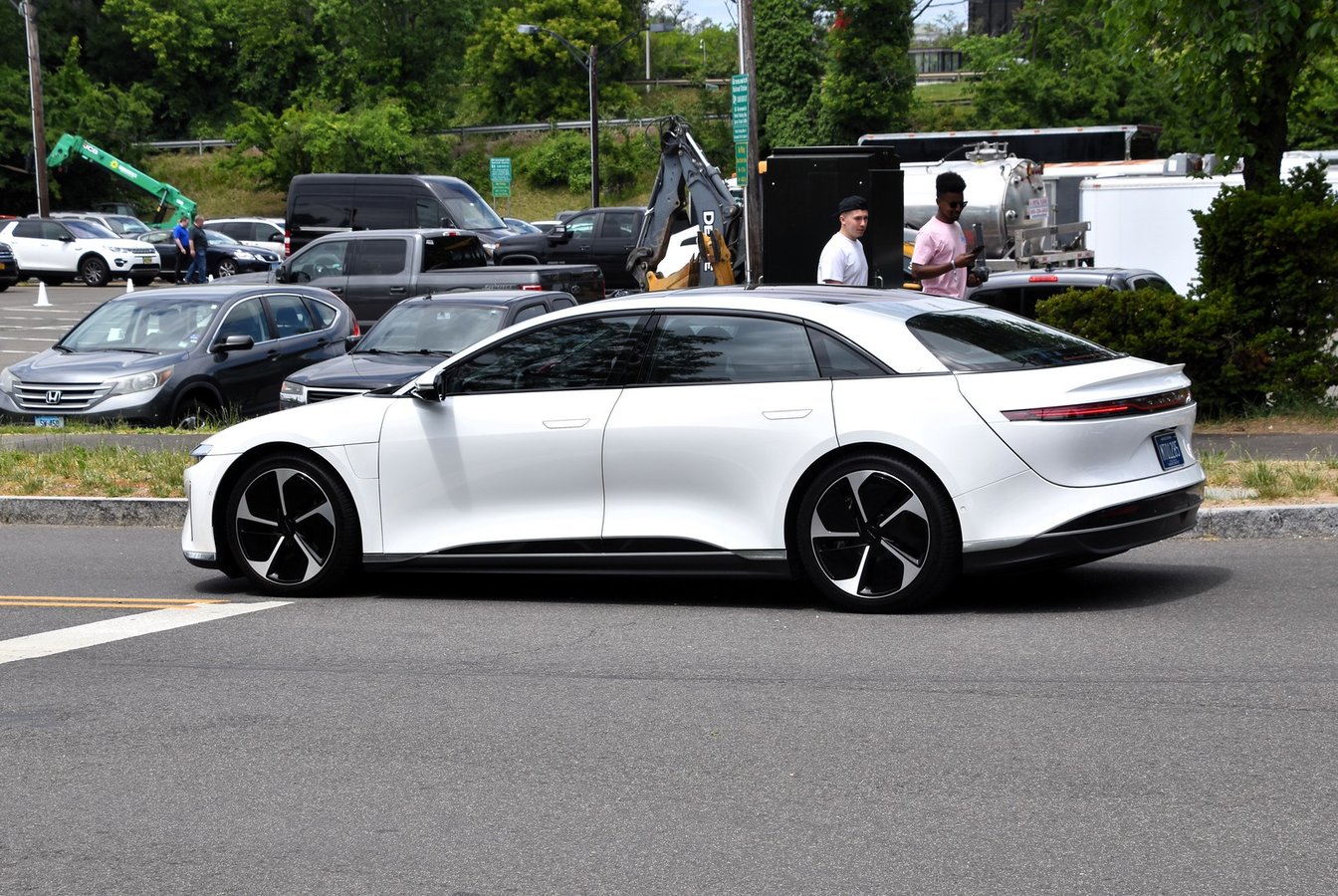
The phrase was blunt by corporate standards. It acknowledged, without saying so directly, that Lucid had been spending in ways it could not sustain. Under predecessor Peter Rawlinson, who led the company through the launch of the Lucid Air, a luxury sedan that drew critical acclaim but sold in numbers too small to justify its manufacturing cost, Lucid had built out a sprawling production facility in Casa Grande, Arizona, and committed billions to a second factory in King Abdullah Economic City in Saudi Arabia. The Saudi facility, known as AMP-2, is now transitioning toward industrialization, with Lucid describing it as a central plank of its long-term manufacturing footprint.
That Saudi connection matters for reasons beyond production capacity. The Kingdom’s Public Investment Fund remains Lucid’s largest shareholder, with a stake of roughly 60 percent, and its continued backing is the main reason the company still exists in anything approaching its current form. When Lucid shares plunged in July on liquidation rumors, it was PIF’s implicit support that steadied investor nerves.

Napoli, who served as Lucid’s chairman before Rawlinson’s departure, is making a very different bet. Rather than racing to scale premium volume, he is compressing the balance sheet: reducing inventory of Air sedans that have accumulated faster than customers arrived, cutting construction spending at AMP-2, and trimming headcount across the organization. No company-wide figures for the headcount reductions were disclosed.
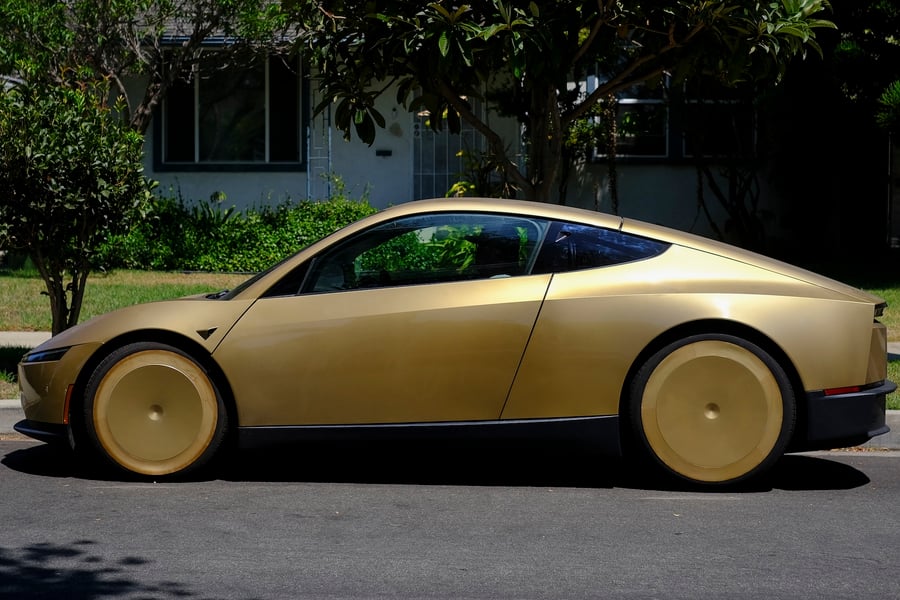
The centerpiece of the future product lineup, a midsize vehicle intended to sell for significantly less than the Air’s six-figure starting price and reach a far broader slice of the American EV market, remains in what Lucid is calling advanced validation and durability testing. Engineers are working through crash certification, battery-pack manufacturing validation, and cold-weather trials in New Zealand. No production start date has been announced.
That silence carries real weight. A midsize Lucid could transform the company’s economics by generating the kind of volume the Air never achieved. Its delay leaves the company dependent on a premium vehicle in a segment where Tesla, BMW, and Mercedes-Benz have all grown more aggressive on both price and product cadence. Lucid has not disclosed what it considers a satisfactory annual Air sales rate, making it difficult for analysts to benchmark the current trajectory against internal targets.
The wild card is robotaxis. Lucid disclosed that it is working with Nuro on an autonomous vehicle deployment, with approximately 100 test vehicles operating across the San Francisco Bay Area and Houston. The program draws on Lucid’s powertrain and chassis engineering and potentially points toward a revenue model that does not depend entirely on retail EV sales. Similar platform bets have paid off elsewhere in the technology sector: SpaceX this week reported a 92 percent revenue jump in its first-ever quarterly earnings, driven in large part by Starlink, a connectivity platform that was once considered a speculative side project.
Whether Lucid’s robotaxi ambitions amount to more than a hedged bet remains unclear. Nuro is a relatively small player in an autonomous space dominated by Waymo and Tesla’s full self-driving network. Turning 100 test vehicles into a revenue line large enough to matter would require years of additional regulatory clearance and commercial buildout across multiple states. Lucid has not quantified any potential revenue contribution from the Nuro program.
What Napoli does have is time, for now. The $3 billion liquidity position gives the company runway into at least 2027 without additional capital raises, assuming the $1.4 billion reset delivers on its targets. In a quarter when companies like Palantir posted triple-digit revenue gains on AI software contracts, Lucid’s 56 percent topline growth looked almost modest. But for an automaker burning through cash to build two factories on two continents, topline revenue was never the metric that mattered most.
The right metrics are inventory turns, cash burn per vehicle, and whether the midsize arrives before the liquidity does not.