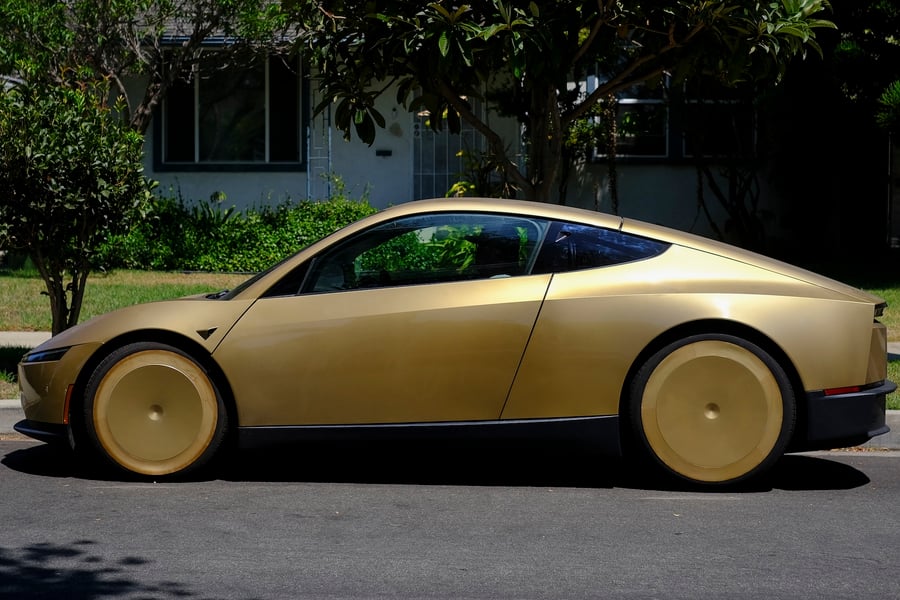

NEW YORK — Tesla spent the morning of September 3 celebrating the commercial debut of its Cybercab in Austin, Texas. By September 4, the National Highway Traffic Safety Administration had opened a federal investigation into whether the vehicle was ever legal to operate.
The probe, designated AQ26002 by NHTSA’s Office of Defects Investigation, covers an estimated 1,000 Cybercab vehicles and examines the precise mechanism Tesla used to certify the robotaxi against Federal Motor Vehicle Safety Standards, a set of rules written for vehicles with steering wheels, brake pedals, accelerator pedals, and mirrors. The Cybercab has none of those things.
The central legal question is not whether the Cybercab is safe. It is whether Tesla’s self-certification, the process by which automakers attest their vehicles comply with FMVSS rather than waiting for regulators to certify them, holds up for a vehicle so structurally different from what the standards assumed. NHTSA said it would assess “the extent to which Tesla’s certification depended on determinations that certain FMVSS are inapplicable to the Cybercab,” language that signals the agency is examining both the technical data and the legal reasoning Tesla used to put the vehicle on public roads.
Tesla has not publicly responded to the investigation. The company launched Cybercab commercial service in Austin on September 3, operating a small initial fleet without safety drivers, in what Elon Musk had framed as the opening of the autonomous vehicle era.
The investigation was announced the same day, according to NHTSA’s official press release, citing the commercial deployment and the vehicle’s lack of conventional manual controls as the basis for opening the audit query.
The regulatory precedent that matters most here is Zoox. Amazon’s robotaxi subsidiary faced a virtually identical NHTSA audit in 2022 after deploying its driverless vehicle, also lacking conventional controls, in limited public service. Zoox spent four years under federal scrutiny. The company filed exemption petitions from eight separate FMVSS standards under Part 555 of federal regulations, recalled its entire 105-vehicle fleet, and did not receive full commercial clearance until after completing that process. Zoox and Tesla are developing different hardware architectures, but the regulatory framework they are both navigating was designed for a conventional car, and neither fits it neatly.
Tesla’s certification approach differs from Zoox’s in at least one significant respect. Zoox pursued formal exemptions, acknowledging it could not comply with certain standards and requesting permission to deviate. Tesla self-certified, asserting that its Cybercab does comply with applicable FMVSS, or that certain standards simply do not apply to a vehicle without the relevant hardware. That is a more aggressive legal position, and AQ26002 is NHTSA’s signal that the agency wants to see the reasoning behind it.
TechCrunch confirmed the investigation covers the self-certification process and the technical data Tesla relied upon, and noted that NHTSA’s audit query allows the agency to compel Tesla to produce documentation without immediately triggering a recall. A query of this type is investigative rather than corrective: NHTSA has not alleged a defect and has not ordered the Cybercab off the road.
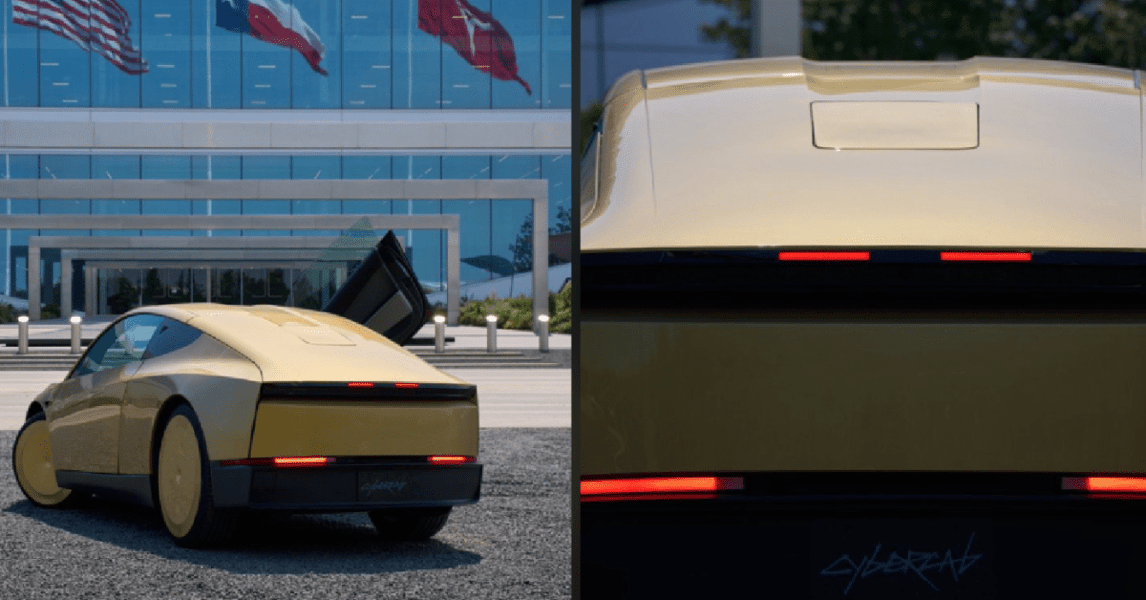
TSLA shares reacted to the news, adding to a slide that had already been building. Tesla had come under pressure from rate fears the previous session, with traders reassessing long-duration growth assets after Fed Chair Warsh’s Jackson Hole remarks. The Cybercab launch was supposed to be the counter-narrative, the stated reason to own Tesla beyond its automobile business. A federal investigation the day after the commercial debut complicated that framing without necessarily changing the underlying technology thesis.
Tesla’s Q2 earnings had already drawn attention to the widening gap between the company’s automotive revenue and its AI-and-autonomy spending. The cash burn required to build out the Cybercab fleet, the Full Self-Driving software stack, and the Optimus robotics program was running at a pace that left free cash flow negative. Every quarter the Cybercab spends under federal scrutiny rather than generating commercial revenue is a quarter in which that investment produces no return.
What NHTSA has not done, and what would represent a material escalation, is issue a Part 573 Safety Recall Report or formally designate an investigation into a defect. The audit query is a preliminary step, one that gives NHTSA the information it needs to decide whether any of those more serious actions are warranted. Tesla has time to respond with documentation. Whether that documentation satisfies the agency is a question that may take months to answer.
What the Cybercab cannot do for now is operate as though the regulatory question is settled. Tesla put a vehicle on public roads with no steering wheel, no brake pedal, no accelerator, and no mirrors. Those are not incidental details. They are the engineering premise of the product. Whether the legal framework governing American roads was ready for that product is the question federal regulators are now formally asking.