
NEW YORK — Tesla delivered a record 480,000 vehicles in the second quarter of 2026 and posted $28.2 billion in revenue, a 26% increase over the same period last year, yet the company missed earnings estimates for the quarter as its profit margin compressed and free cash flow turned negative, reflecting the cost of Elon Musk’s accelerating bet on artificial intelligence and humanoid robotics.
The quarterly cash burn reached $3.25 billion, driven by a 142% year-on-year surge in capital expenditure. Tesla has not produced positive free cash flow in any quarter this year. The combined trajectory of record vehicle revenue and deepening cash consumption has compressed the company’s story: Tesla now runs an automotive business generating strong top-line growth and channels nearly all of that cash into a parallel set of AI businesses that have not yet produced comparable revenue.
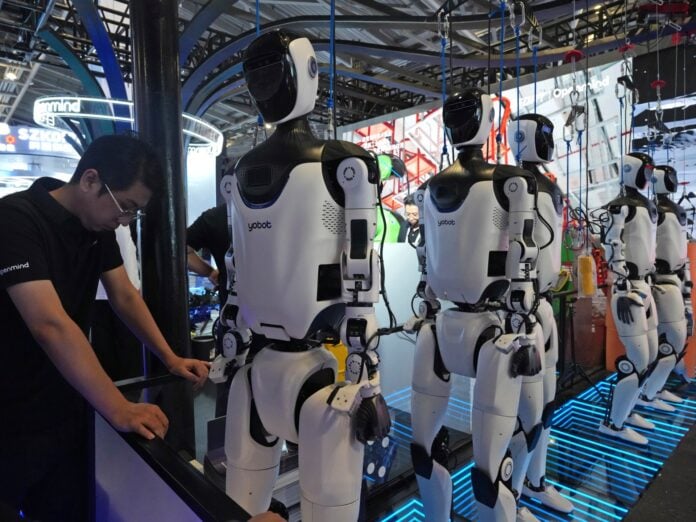
Analysts entering the earnings call had already flagged free cash flow as the critical variable, and the actual result was worse than their median forecast. Tesla spent more than $25 billion on AI-related capital investment over the first half of 2026 alone, a figure that includes compute infrastructure for the Optimus robotics program, full self-driving development, and the xAI collaboration on training hardware. The number is not a rounding error. It is the company’s defining financial decision.
Musk declined to provide guidance on when free cash flow would return to positive territory, saying the company was in a “critical build phase” for Optimus and that the decisions being made now about compute capacity would determine whether Tesla could ship humanoid robots at the volumes it has internally projected. He cited an internal production target of 100,000 Optimus units before the end of the calendar year, a figure that has not been independently verified and that Tesla has not offered as formal guidance.
The automotive margin, a figure Tesla watchers have treated as the health metric of the car business since the company’s earliest profitable quarters, fell to 14.3%, below the 15.1% analysts had expected. The record delivery figure of 480,000 units had already been disclosed in early July, meaning the quarter’s volume surprise was already priced into expectations, leaving the margin performance as the key variable. The miss on margin suggests Tesla’s pricing has not kept pace with the cost inflation inside its manufacturing and AI programs.
The company holds 11,509 Bitcoin on its balance sheet, and took a $112 million impairment charge on those holdings in the quarter, adding a non-operating loss that further pressured the reported earnings figure. The Bitcoin position was accumulated in 2021 and has not been materially changed since. Its presence on the balance sheet has become a recurring source of earnings noise with no corresponding strategic rationale that Tesla has publicly explained.
Revenue from Tesla’s energy generation and storage business, the segment that includes Powerwall home batteries and Megapack utility-scale storage, was not separately broken out in early results but is expected to provide a partial offset to the automotive margin compression. The segment has been Tesla’s fastest-growing division by revenue percentage for the past three quarters, driven by data center operators building AI compute clusters that require large-scale backup power.
The pattern emerging across Big Tech earnings this week is one Tesla shares with Alphabet and other large technology investors: strong top-line results followed by investor concern over capital spending that is growing faster than the businesses it is meant to support. Alphabet’s own stock fell 5% after hours Tuesday on a capex raise to $205 billion, a reaction that reflects a broader market reassessment of whether the current AI infrastructure cycle will produce returns at the pace the spending requires.
Tesla’s position is structurally different from Alphabet’s in one important respect: Alphabet funds its AI spending from a search and advertising business that generates more than $100 billion in annual revenue and has durable competitive advantages that are not under immediate threat. Tesla funds its AI spending from an automotive business where its competitive position in the EV segment is being contested by BYD in China, by traditional manufacturers converting existing factories, and by a price cycle that has compressed margins industrywide. The car business is generating cash but it is not generating cash fast enough to fund the robotics program at the pace Musk has described without producing negative free cash flow.
What the quarterly report leaves unresolved is the question that has structured every Tesla analyst call for the past year: is the AI and robotics spending a bridge to a much larger business, or is it a cost center consuming the margins of a car company that has not yet demonstrated it can replace what it is spending? The delivery record and the revenue growth are real. The cash burn is also real. The outcome depends entirely on which of those two facts investors are buying.