
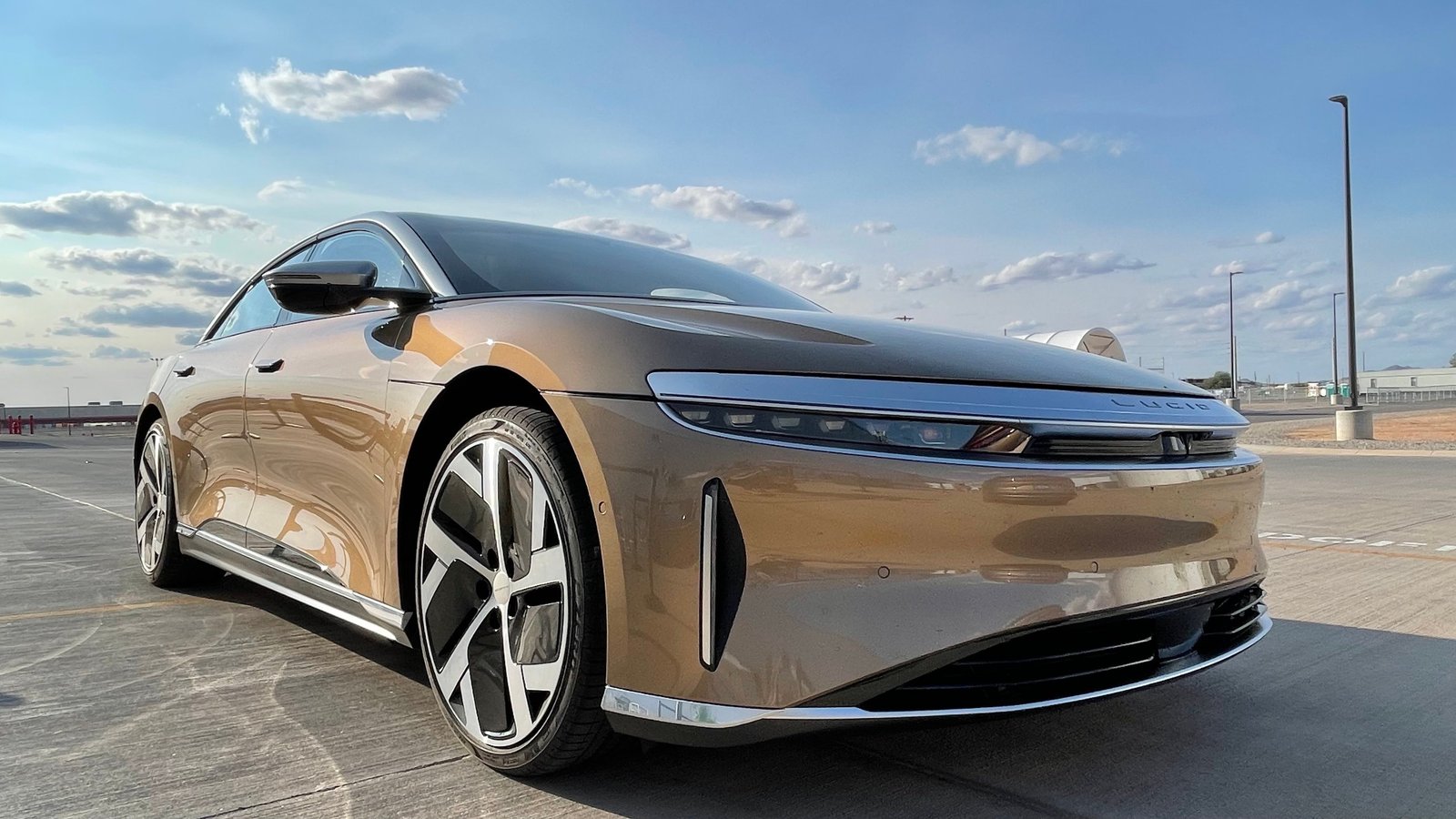
NEWARK, Calif. – Lucid Group’s shares lost more than half their value in a single session on Tuesday after a report suggested the electric vehicle maker was considering bankruptcy, producing the company’s largest intraday decline on record. By mid-afternoon, shares traded at $4.72, roughly 14 percent below the opening price, as reported by TechCrunch.
Lucid’s chief communications officer, Nick Twork, denied the report in a statement. “The company has sufficient liquidity to carry its operations well into next year,” Twork said. The company said it had no intention of filing for bankruptcy and characterized the report as inaccurate on its core claims.
At the center of the market’s concern is AlixPartners, the consulting firm Lucid acknowledged retaining. The firm has a long history with distressed companies – its alumni and methodologies appear in the restructuring cases of Lehman Brothers, Kmart, and several automotive bankruptcies – but it also does routine operational work for companies that aren’t in financial distress. Lucid said AlixPartners was engaged to strengthen operations, not to advise on any reorganization.
Second-quarter deliveries came in at 3,953 vehicles, marginally above the same quarter in 2025. That number places Lucid on pace for roughly 15,000 to 16,000 vehicles annually – a fraction of the capacity its Casa Grande, Arizona factory was built to handle. The facility was designed for upward of 90,000 vehicles a year. Running it at roughly 17 percent utilization inflates the per-unit production cost, eating into margins that the company does not yet have.
To contain cash burn, Lucid has cut more than 2,000 employees in 2026 and eliminated the factory’s second production shift. The workforce reductions reduce overhead while also capping the ceiling on near-term output. Lucid hasn’t publicly stated a path to the production volumes at which the Arizona plant would operate economically; the gap between designed capacity and current throughput is the underlying structural problem the company hasn’t solved.
The company’s clearest near-term revenue commitment comes from an agreement with Uber for at least 35,000 vehicles – 10,000 Lucid Gravity SUVs and 25,000 units from the midsize platform Lucid is still developing – to supply an autonomous rideshare fleet Uber intends to launch before the end of 2026. That commitment is meaningful but conditional on Lucid’s ability to scale production. Goldman Sachs’s record second quarter reflects a capital environment that has been generous to high-promise companies; Lucid’s ability to tap that market depends on whether the Uber contract provides sufficient credibility.
Saudi Arabia’s Public Investment Fund holds a majority stake in Lucid and has repeatedly injected capital into the company since its public listing. That sovereign backstop fundamentally changes the bankruptcy calculus: a filing would impose visible reputational costs on PIF and would almost certainly be preceded by another equity injection. The $24 billion SPAC valuation Lucid carried in 2021 has collapsed, but PIF’s strategic rationale for holding the company extends beyond the market cap – Lucid’s EV technology forms part of the fund’s bet on Saudi Arabia’s industrial diversification.
The company recently named a new chief executive as part of an ongoing leadership overhaul. The management transition adds uncertainty during a period when the company needs stable execution more than strategy revision, and Lucid has not disclosed a timeline for settling its new leadership structure.
Lucid went public in 2021 through a SPAC merger that valued it at $24 billion – a figure that assumed rapid scaling, mass-market product expansion, and a competitive position in the premium EV segment it has not achieved. Volkswagen’s decision to cut 100,000 jobs in Germany illustrates that even the largest incumbents are struggling with EV economics; for a company at Lucid’s scale, the margin for error is correspondingly smaller.
What Tuesday’s session leaves unresolved is the timing and structure of Lucid’s next capital need. Twork’s statement extends the runway “well into next year” – specific enough to imply confidence, vague enough to avoid a precise commitment. AlixPartners’ actual scope of work is not independently verified. The Uber agreement provides a future revenue base but doesn’t solve the cash burn in the interim. Lucid has survived on a sovereign wealth fund backstop that has absorbed losses without publicly setting limits. How long that patience holds – and what conditions the Saudi fund attaches to its next injection – determines whether Tuesday’s partial recovery was the beginning of stabilization or a brief respite before the next slide.