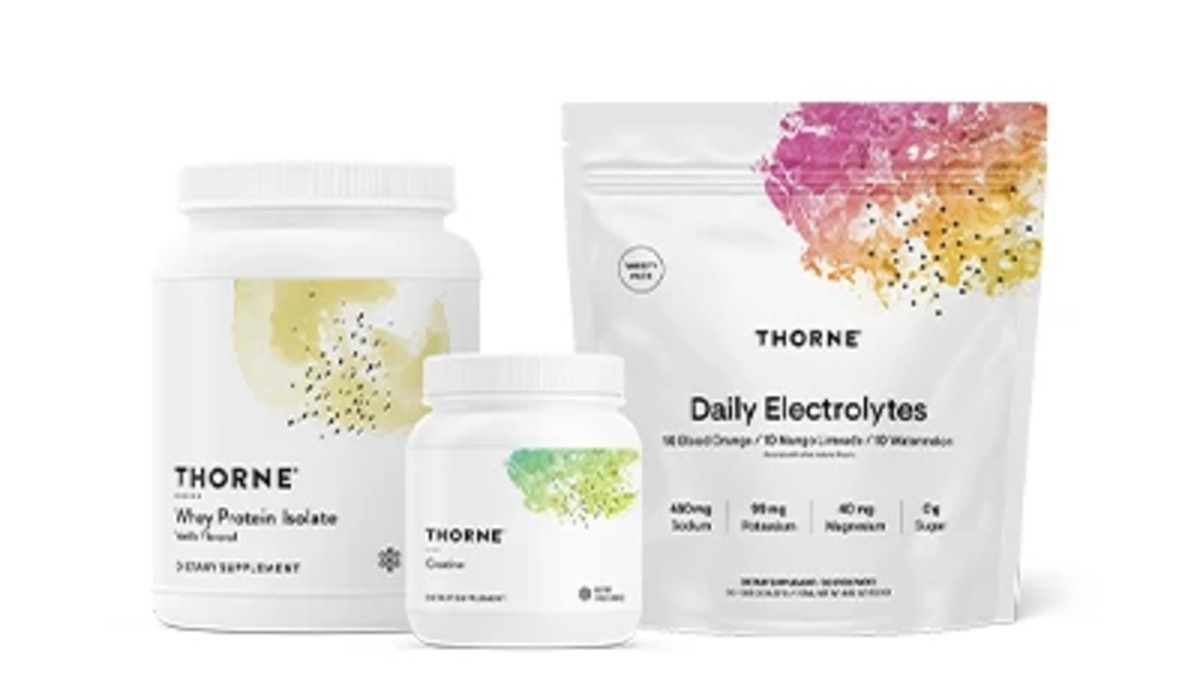

CINCINNATI – Procter & Gamble announced Monday it had agreed to acquire Thorne, a science-backed supplement brand with a devoted following among healthcare practitioners, for $3.8 billion, the company’s most significant health care expansion in years and one its newly appointed chairman disclosed personally to CNBC.
The announcement arrived less than a week after P&G named Shailesh Jejurikar its board chairman, a promotion that concentrated leadership authority at the top of a company now signaling explicitly that health care is not a peripheral portfolio but a primary growth directive. That the chairman chose to deliver the news in a televised interview, rather than through a prepared statement, conveyed how much P&G wants the health category to register with investors and analysts.
What P&G is buying is not simply a supplement company. Thorne manufactures all of its products at a facility in Summerville, South Carolina, subjects each product to a minimum of four rounds of testing, holds NSF certification, the independent quality standard recognized by athletic organizations and medical institutions as the gold standard for dietary supplements, and has earned an A rating from Australia’s Therapeutic Goods Administration, which grades pharmaceutical manufacturers on production standards. The company says a 2026 independent survey named it the most recommended clinical supplement brand among practitioners. In an industry where product quality is inconsistently regulated and label claims are frequently aspirational, those certifications are why healthcare providers recommend Thorne to their patients.
“Thorne has built a highly trusted brand at the forefront of personalized health,” said Paul Gama, chief executive of P&G Health Care. “Together, we see an opportunity to bring Thorne’s science-backed wellness solutions to more consumers while continuing to build on the quality, credibility and innovation that have made the brand successful.”
That formulation, “bringing solutions to more consumers,” captures the strategic tension at the center of the deal. Thorne’s credibility derives from its distance from the mass market. Its NSF certification and clinical manufacturing standards distinguish it from the supplement aisles of grocery stores and warehouse clubs, and its practitioner endorsement network operates through a channel that P&G has never managed. Distributing a conglomerate’s products through physician offices and clinical networks requires a different commercial model than P&G operates anywhere else in its portfolio.
The supplement market has grown sharply in the United States, particularly among consumers under 40, who have increasingly moved toward self-directed health management involving vitamins, minerals, proteins, and condition-specific compounds as alternatives or complements to pharmaceutical interventions. Research firms tracking the global category project it will exceed $300 billion by the end of the decade, with the United States representing the largest single national market.
P&G’s existing health care business spans brands including Vicks, Metamucil, Prilosec, and Crest, over-the-counter remedies with high consumer recognition but limited scientific positioning relative to what Thorne offers. Thorne’s certifications and practitioner relationships are more analogous to a pharmaceutical company’s clinical differentiation than to a standard consumer goods brand. That is precisely the gap P&G is paying $3.8 billion to close.
The transaction follows a concentrated period of health-sector deal activity. On the same day P&G disclosed the Thorne deal, Merck & Co. reported completing two pharmaceutical acquisitions, Terns Pharmaceuticals and Cidara Therapeutics, that together generated more than five billion dollars in charges against second-quarter earnings. The parallel timing reflects a sector calculus that has taken hold broadly: health companies are willing to pay prices that require years of revenue growth to justify, because the alternative is watching a fast-growing category be captured by competitors who moved sooner.
P&G’s own results, reported in late July, met analyst expectations but offered limited evidence of near-term organic revenue acceleration. The Thorne acquisition is not a response to earnings pressure. It is a statement about where incremental growth is expected to come from in a company that dominates its existing categories and faces diminishing returns on gaining further market share within them. McDonald’s confronted a version of the same problem in the second quarter, a dominant consumer brand nearly saturated in its home market, struggling to grow domestic traffic despite sustained value promotions. P&G’s bet is that Thorne represents a category with genuine runway in a way that soap or diapers no longer can.
The deal is expected to close later in 2026, subject to regulatory approvals and customary closing conditions. No per-share acquisition price was disclosed. Thorne left the Nasdaq in 2023, ending a brief run as a publicly traded company following its 2021 initial public offering, meaning there is no current public market price against which to measure the premium. Wall Street reached record levels Monday on separate macro catalysts, providing a favorable backdrop for a deal priced at a significant premium to any direct comparable.
The question P&G has not answered is whether Thorne’s practitioner network will follow the brand into a conglomerate structure. Healthcare providers who recommend Thorne to patients do so within a specific context: a brand that operates independently, maintains clinical manufacturing standards, and has not yet been tested by the pressures of corporate ownership at scale. Whether those providers continue to recommend Thorne once it sits inside the same portfolio as dishwasher detergent and paper towels is not a question a press release resolves, and not one P&G’s $3.8 billion bid has yet had to answer.