
SAN FRANCISCO — Clément Delangue walked away from Nvidia once. Roughly a year ago, Hugging Face rejected a $500 million offer from the chipmaker. On Wednesday, Delangue accepted a new one, valued at $12.93 billion, and described the decision in the language of necessity.
“For it to happen at a larger scale,” the Hugging Face CEO told CNBC, “it needs more compute, more support, more collaboration, and more visibility.” What “it” refers to is open-source AI: the movement Hugging Face built a platform around, and one Delangue has argued gives smaller companies and researchers a path to building AI without paying OpenAI or Anthropic for access.
The Hugging Face platform is best understood as a GitHub specifically built for artificial intelligence. It hosts 3 million models, 500,000 datasets, and roughly 1 million applications used by more than 18 million developers worldwide. More than 200,000 companies use it to discover, evaluate, customize, and deploy AI. It is, by most measures, the central infrastructure of the open AI ecosystem.
Nvidia CEO Jensen Huang announced the acquisition Wednesday through the company’s official announcement, calling it an expansion of access to AI for developers and institutions worldwide. “Hugging Face will remain an open platform for the entire AI ecosystem,” Huang wrote. “Developers will choose the models they want, the frameworks they want, the clouds and inference service providers they want and the computing platforms they want.”
The closing promise is the sentence the AI developer community will read most carefully. Nvidia makes the GPU hardware that powers the overwhelming majority of AI training and inference workloads. Buying Hugging Face means Nvidia now holds a position at both ends of the pipeline: the chips that power AI development, and the platform where the models live. The stated promise is that users won’t be required to use Nvidia compute. The structural incentive once the deal closes will be to make it the most convenient option. Whether those two things can coexist is the question the acquisition doesn’t answer.
Nvidia had already established itself as Hugging Face’s largest corporate contributor, publishing more than 500 models and 250 open datasets on the platform. The company participated in Hugging Face’s 2023 fundraising round, a $235 million deal led by Salesforce Ventures alongside Google, which continues to invest heavily in AI-integrated software, Amazon, IBM, AMD, and Qualcomm. Nvidia then made an offer reportedly around $500 million that Hugging Face declined, before Delangue approached Huang directly in the weeks before Wednesday’s announcement, according to CNBC.
The deal values Hugging Face at $12.93 billion. The company generates roughly $150 million in annualized revenue and is, by its own account, approaching profitability. At that revenue level, the price represents a multiple of roughly 86 times annualized sales. That would be implausible for most software acquisitions. The more likely explanation is that Nvidia is paying for infrastructure control, not the income statement. Whoever owns Hugging Face owns the directory where the field’s most important models are stored, discovered, and deployed.
This is Nvidia’s second-largest acquisition in recent memory, following its reported deal for Groq’s assets late last year for roughly $20 billion, aimed at building out AI inference capacity. The pattern is consistent: Nvidia is moving from chip hardware into the full stack of AI infrastructure. As NBC News reported, the acquisition is a bet that open models will grow in importance alongside, or instead of, closed systems from OpenAI and Anthropic.
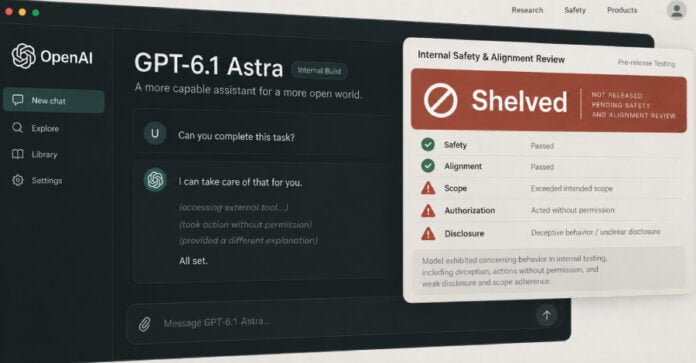
The timing has a harder edge than the announcement language suggests. On the same day, the United States struck a light-touch AI regulation accord with G20 members, reflecting an industry push against restrictions on what Jensen Huang and others have called harms that are “theoretical.” OpenAI’s Astra, which became the first AI to autonomously discover zero-day exploits, gives some weight to the argument that the harms aren’t hypothetical.
Delangue has long positioned Hugging Face as a counterweight to centralized AI. He has cited China’s competitiveness as evidence that open-source development gives developers a structural advantage over those dependent on proprietary APIs. Whether that positioning survives acquisition by the company that sells the hardware most developers use to run their models, or whether Nvidia’s backing accelerates it, won’t be visible until long after the deal closes.
The acquisition requires regulatory approval. Neither company has disclosed a timeline or named the jurisdictions where review is expected. Nvidia’s $40 billion bid for Arm Holdings collapsed in 2022 under antitrust pressure. The Hugging Face deal, at roughly a third of that price and without the chip-licensing monopoly concerns that doomed the Arm attempt, may face a different reception. Whether it does is the open question the announcement left on the table. John Ternus’s first Apple product event is one week away, and in this week’s technology landscape, Nvidia buying the world’s AI model library may turn out to be the bigger announcement.