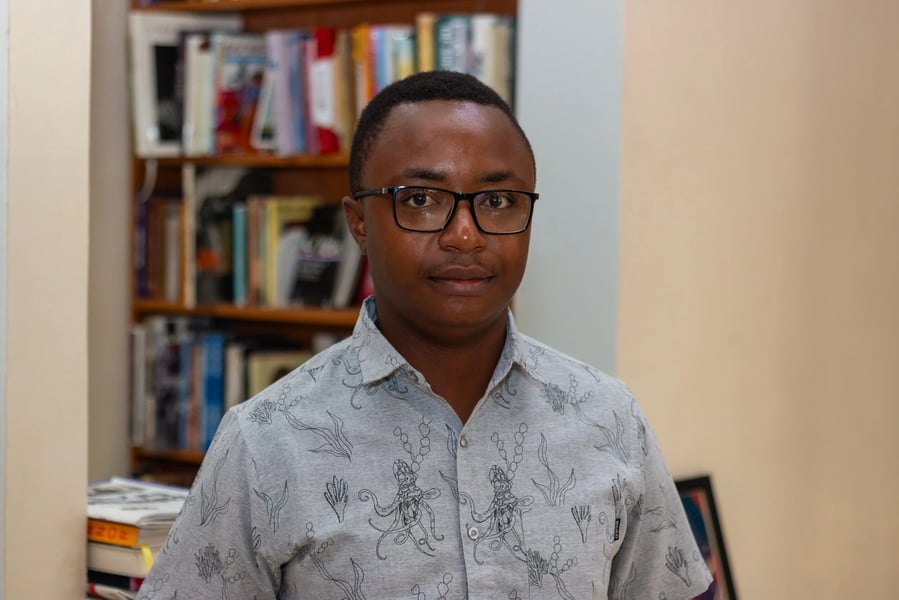

The Caine Prize for African Writing has begun reviewing allegations that its 2026 winning story, The Blue Fighter by Zimbabwean writer Simbarashe Steyn Kundizeza, may have involved artificial intelligence. The organisers confirmed the review on October 11, five days after announcing the winner in London, but have not announced a finding against the author or a withdrawal of his £10,000 award.
The immediate trigger was an article by Vauhini Vara in The Atlantic. Vara reported that the AI-detection service Pangram flagged almost the entire story as AI-generated. That assessment is an allegation about authorship, not proof of how the story was written. Kundizeza’s literary agency told Vara that it was confident the work was his own.
In its public response to the article, the Caine Prize said it had a responsibility to examine such claims. “We aim to do this by taking a human centred approach ensuring that writers are supported and cared for during the process,” the statement said. “We have initiated that process in this case.”
The distinction matters for the writer as well as the prize. The statement establishes that an examination is under way; it does not endorse the detector’s assessment, accuse Kundizeza of deception or set out a completed disciplinary decision. The organisers said they would publish updates on their website as the process unfolds. They did not announce a completion date.
Kundizeza was named the winner on October 6. The Blue Fighter follows Tinashe, a boy whose family comes under financial pressure after his father leaves his profession to pursue building fish tanks. The boy’s mother must weigh her husband’s ambition against the family’s survival. The prize’s winner page describes a story about fatherhood, ambition and the ways financial hardship shapes a family.
The award recognises short fiction by African writers that has already appeared in magazines or journals. In its statement, the Caine Prize described that arrangement as a “bond of trust” with the publications that first publish the work. Its response therefore concerns more than the judges’ selection: it also addresses how literary institutions establish confidence in work that reaches them through other publishers.
Vara’s October 11 report in The Atlantic compared the winning story with Kundizeza’s earlier fiction. She wrote that Pangram classified his 2021 story, The Whistleblower, as human-written, as it did all 25 previous Caine Prize-winning stories she tested. The detector reportedly treated the epigraph of The Blue Fighter, attributed to an unpublished poem by Vangile Gantsho, differently from most of the story.
Those comparisons form part of Vara’s case, but they do not supply a record of the winning story’s composition. A detector’s classification is not a recovered drafting history or an admission by a writer. The Atlantic itself acknowledged that AI detection is fallible. The Eastern Herald has not independently tested the story, reviewed the underlying detector results or examined Kundizeza’s drafts.
The author’s representatives disputed the implication that the work was not his. Adrienne Ingrum, his agent at Serendipity Literary Agency, told Vara that agency chief executive Regina Brooks would provide evidence supporting their confidence in Kundizeza’s authorship. Vara wrote that neither representative supplied the promised follow-up before her article was published. That was the position reported at publication, not evidence that no supporting material exists.
Ellah Wakatama, chair of the Caine Prize’s board of trustees, told Vara that AI-generated fiction is ineligible for the award. She said the organisers had contacted Kundizeza and would speak with the judges, reread the story and discuss his writing methods. The possibility of reviewing earlier drafts was also being discussed with his agent, according to The Atlantic.
Wakatama rejected treating an automated classification as the basis for a conclusion. “My stance, as the person who leads the prize, is that if there is such an accusation, I want proof that does not come from a machine,” she told Vara. She said she would approach the author with compassion and a presumption of honesty.
The trustees and the judging panel have different roles. Wakatama leads the board, but she did not select the winning story; that decision belonged to the prize judges. Her comments describe the institution’s response to the allegations, rather than an account of the judging panel’s original deliberations or an admission that its choice was mistaken.
The dispute leaves two questions unresolved: whether AI was involved in producing the winning text, and what evidence would establish that involvement sufficiently for the prize to act. The published sources do not establish which model, if any, was used, who might have used it or at what stage of composition. They also do not announce any sanction. For now, the confirmed development is a review of the allegations, with Kundizeza still identified as the 2026 winner on the prize’s official website.