
WASHINGTON – The routine of the American grocery run has, for millions of families, become a calculation of monthly interest payments. More than a quarter of working-age Americans who use a credit card to buy groceries either cannot afford to pay the balance in full or have missed a minimum payment within the past year, according to new research from the Urban Institute, reported this week by CBS MoneyWatch.
The finding arrives five years into a period of food price inflation that has pushed grocery costs up 32 percent nationally, a sustained surge that has outpaced wage growth for most households and depleted the financial cushion that many families once kept in reserve for exactly this kind of emergency.
Kassandra Martinchek, a public policy expert at the Urban Institute and co-author of the study, framed the problem in terms of compounding risk. “Families still need to eat,” she said. “Now they have the additional burden of also needing to repay debt. It could constrain their ability to meet their basic needs in the future and get back on their financial feet.”
The research, which surveyed more than 7,500 adults between the ages of 18 and 64 in December 2025, identified grocery debt as a distinct and growing category of household financial stress. Roughly 10 percent of working-age adults said they used buy-now-pay-later loans to pay for food in the prior year. Of those, about one-third missed at least one payment. Another 20 percent of adults reported tapping savings accounts designated for emergencies simply to cover a grocery bill.
The scale of missed buy-now-pay-later payments points to a borrowing behavior that carries particular risks. Unlike credit cards, buy-now-pay-later products are largely unregulated by federal consumer protection rules, meaning missed payments can trigger fees and interest charges without the standard disclosures or dispute protections that card issuers must provide. For families already stretched thin, the appeal of the immediate zero-interest window tends to obscure the back end.
Income level is the single clearest predictor of how grocery debt compounds. Low- and middle-income adults who use credit cards for food miss minimum payments at three times the rate of higher-income consumers, according to the Urban Institute analysis. Martinchek attributed the gap partly to how large a share of income food represents for lower earners. “For low- and moderate-income families, it’s a really big portion of their budget,” she said. “When food prices increase, they have much less breathing room to accommodate that.”
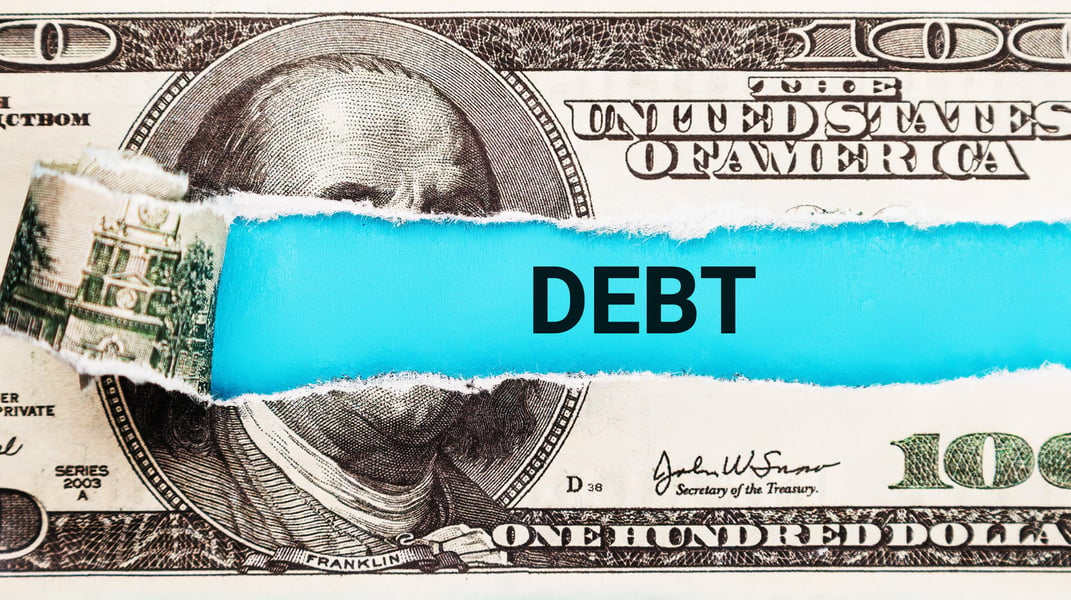
A May survey from CBS News found that more than 75 percent of Americans believe their incomes are not keeping pace with inflation, consistent with the Urban Institute data showing grocery debt spreading well beyond the lowest income brackets. Grocery prices, unlike housing costs or fuel, offer little opportunity for substitution. A household can delay moving to a larger apartment or cut back on driving. Food consumption cannot be deferred indefinitely.
The federal safety net has narrowed alongside the expansion of private grocery debt. Enrollment in the Supplemental Nutrition Assistance Program stood at approximately 37 million people as of March 2026, a decline of nearly 5 million from the previous year. The reduction reflects the food stamp benefit cuts enacted under the Trump administration’s spending legislation, which tied assistance to new work requirements that researchers have found do not reliably move recipients into employment. The result is that a portion of the population that once accessed food assistance is now cycling into the credit market to cover the same nutritional need.
That cycle is what the Urban Institute study is most concerned about. “There are millions more people, when we look at the overall population of Americans, who are struggling to make that minimum payment when they’re putting groceries on their credit card,” Martinchek said. The accumulation of grocery debt across millions of households transfers a current-period survival problem into a persistent structural one, a dynamic more commonly associated with medical debt or student loans than with food purchases.
The grocery inflation driving these numbers has not been uniform across product categories. Proteins, fresh produce, and shelf staples have risen at different rates, and the overall 32 percent increase over five years masks sharper spikes in particular markets. Oil price volatility tied to conflict in the Middle East contributed to higher transportation costs that pushed food prices further up in 2026, compounding pressures that had already accumulated from supply chain disruptions and shifts in trade policy over the preceding years.
The financial squeeze on American households extends beyond the grocery aisle. US home prices hit an all-time high of $440,600 in June, the 36th consecutive month of declining existing home sales, as mortgage rates above 6.6 percent locked millions of first-time buyers out of homeownership. The savings that might once have cushioned a household through a run of high grocery bills are the same savings that might have served as a down payment, and for many Americans, those reserves are depleted on both fronts simultaneously.
What the Urban Institute study cannot determine is how far the grocery debt cycle has spread since its December 2025 survey period. The months since have brought continued food price pressure, a reduced federal safety net, and persistent interest rate volatility. Whether households have managed to reduce their grocery credit exposure in that time, or have dug deeper into it, is a question the data cannot yet answer.