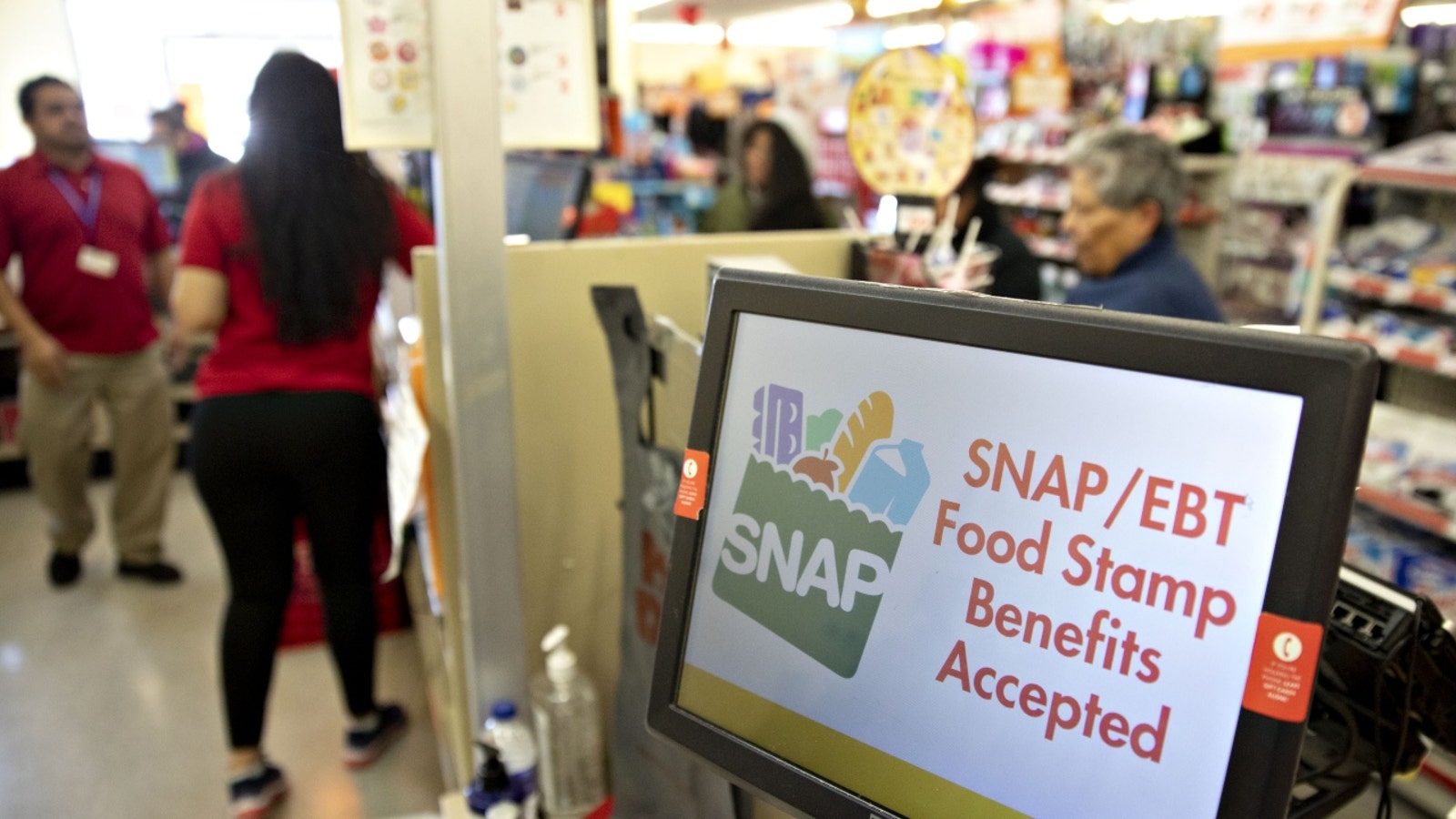

WASHINGTON — When Republicans wrote new work requirements into the food-stamp program last year, they sold them as a ladder back to employment. A year on, with the cuts actually taking effect, the results are in, and they describe something closer to a purge. At least 3.5 million Americans have lost access to the Supplemental Nutrition Assistance Program since Trump’s Big Beautiful Bill became law, and the best available research finds that the requirements driving those losses do not push people into work. They just take away the food.
The scale is already clear in the data. As CNBC reported, more than 3.5 million beneficiaries lost SNAP between July and February as the law’s provisions set in, with states bracing for further declines in the months ahead. The losses are not evenly spread. State figures compiled by analysts show roughly a fifth of Louisiana’s recipients off the rolls, double-digit percentage drops in Georgia, Tennessee and Virginia, and a steep fall in Arizona. About 38 million people still receive the benefit; the question is how many more will be cut before the rollout is complete.
The law itself is sweeping. According to the Congressional Budget Office, the package carved roughly $187 billion out of SNAP over the next decade, the largest cut in the program’s history. It raised the age at which adults must meet work requirements to include those between 55 and 64, narrowed exemptions, and demanded more documentation to enroll and stay enrolled. It also, for the first time, requires states to shoulder part of the cost of benefits that had always been a federal obligation, a change that pressures cash-strapped states to trim their own rolls.
The central justification, that the requirements move people into jobs, does not survive contact with the evidence. As CBS News reported, researchers who have studied SNAP work rules have found they do not increase employment. What they reliably do is shrink enrollment, because the people who fall off are often working or exempt but cannot navigate the monthly reporting maze, the new paperwork, or the burden of proving a hardship to a caseworker on a deadline. The reduction in the rolls is not the same as a rise in work. It is the same coverage-stripping mechanism now visible in the parallel Medicaid work requirements, applied to groceries instead of health care.
What that looks like on the ground is not abstract. NBC News reported on children in Arizona going hungry as their families lost benefits, the predictable downstream effect of cutting a program whose recipients are disproportionately kids, older adults and people with disabilities. SNAP is not a luxury line item. It is, for tens of millions, the difference between a full and an empty refrigerator, and a paperwork failure at the county office shows up as a smaller dinner at home.

The administration frames the changes as fiscal responsibility and as part of a healthier-eating agenda, and it is true that work requirements are not a new idea in American welfare policy. But the defense collapses on the same point every time: if the goal were employment, a policy that does not raise employment is a failure on its own terms, and if the goal were savings, the savings are being extracted from the food budgets of the poor. The Eastern Herald has reported on the broader law as it moved through Congress over unified Democratic opposition; the SNAP cuts were always one of its quietest and most consequential provisions.
It is also of a piece with a wider squeeze on households that were already stretched. The same families losing food assistance are contending with the price pressures that have run through the administration’s economic record, the kind that pushed people into food-pantry lines in Michigan even before these cuts. Removing SNAP from the equation does not make the grocery bill smaller. It just moves the shortfall from the federal ledger to the kitchen table, and from a budget projection to a hungry child.
The rollout is not finished, which is the part worth watching. States are still implementing the new rules, the cost-sharing requirement will bite harder as budgets tighten, and the analysts who tracked the first 3.5 million expect the number to climb. Each increment will be defended as enforcement of a reasonable rule, and each will land on someone who, by the evidence, was more likely to be tripped up by the process than to be a person refusing to work. A policy sold as a path to a paycheck has so far delivered mostly emptier plates, and the bill for that, unlike the savings, will not show up in a spreadsheet.
Related Posts