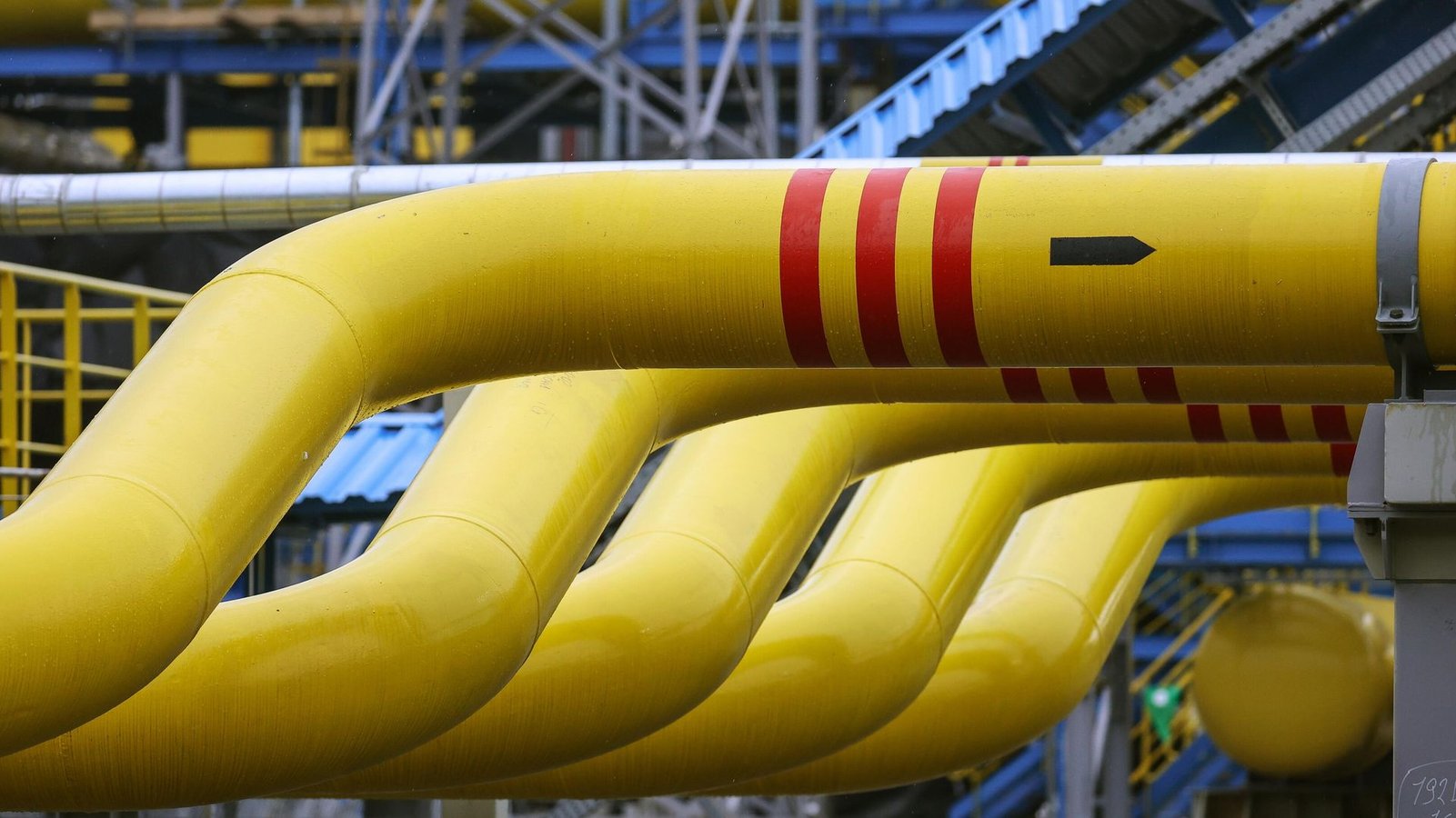

BRUSSELS — European gas storage facilities absorbed less new liquefied natural gas in July than at any point in the previous ten months. Data published Sunday by Gas Infrastructure Europe showed imports of 8.4 billion cubic meters across the month, a 26 percent decline from the 10.2 billion cubic meters recorded in June and the lowest monthly figure since September 2024. The peak reached earlier this year — 13.6 billion cubic meters in March — now looks increasingly distant.
The drop reflects a market in transition, though not the direction advocates of European energy independence would prefer. LNG prices on global spot markets rose through the first weeks of July as demand in Asia — particularly from South Korea and Japan — tightened available cargoes. When spot prices rise, destination-flexible LNG cargoes that might otherwise have been directed to European regasification terminals get redirected toward Asian buyers willing to pay more. Europe’s import decline in July was not primarily a function of reduced European need; it was a function of competitive pricing elsewhere.
That competitive dynamic sits alongside a policy development with longer-term structural implications. The EU’s ban on Russian LNG short-term contracts, which took effect on April 25, removed one category of supply from the market. Long-term Russian LNG contracts remain in effect until a separate ban takes hold on January 1, 2027, but the April prohibition has already altered the composition of what European buyers can source. Traders and analysts at European gas utilities have noted that the short-term contract ban has added a small but consistent upward pressure on European spot gas prices, reducing the buffer that flexibility buyers previously had.
The GIE data does not specify the origin of the LNG that was imported in July, but the composition has shifted measurably since the April ban. U.S. LNG, which has expanded European market share significantly since 2022, now accounts for the largest single-country share of European imports. Qatari and Norwegian pipeline gas fill the remaining gap. Russian pipeline gas via Ukraine has declined sharply since the transit agreement expired; the LNG pathway through the Yamal terminal remains the dominant channel through which Russian molecules continue to reach some European buyers, though that volume is now exclusively under long-term contracts that predate the ban.
The July decline does not, by itself, signal a storage crisis. European storage is entering August at above-average levels relative to the five-year seasonal norm, and the continent’s regasification capacity has expanded considerably since Russia curtailed pipeline supply in 2022. Several new floating storage and regasification units came online in Germany, the Netherlands, and Italy between 2022 and 2024, giving Europe meaningfully more import infrastructure than it had before the energy crisis began. The question for this winter is not whether Europe has enough terminals but whether enough cargoes will be directed toward those terminals at prices that don’t meaningfully exceed what buyers are paying in Asia.
One indicator that industry observers are watching is the forward price curve for European natural gas, which has steepened in recent weeks — meaning traders expect prices to be higher in the winter than they are now. That steepening creates an incentive for buyers to contract supply now rather than waiting, which could help pull LNG cargoes back toward Europe in August and September even if spot market competition from Asia remains intense.
A second variable is the trajectory of Russian long-term LNG deliveries. The 2027 ban has not caused any formal contract cancellations yet, but European buyers operating under those contracts are navigating a political environment in which renewal is effectively foreclosed. Some have begun hedging by contracting additional volumes from U.S. exporters, though new U.S. liquefaction capacity is not expected to come online in sufficient volume to offset the 2027 Russian LNG exit until late 2028 or 2029.
GIE publishes its storage and import data with a slight lag; the July figures released Sunday are preliminary and may be revised. What they confirm, even in preliminary form, is that July was a softer import month than any in nearly a year — and that the trend toward lower imports coincides with the first months of the enforcement of European sanctions that were designed to achieve exactly that effect, though by a different mechanism than rising prices.