
BRUSSELS — Europe has a Nvidia problem. On August 31, the European Union’s high-performance computing authority moved to address it, signing a €387.8 million contract for an AI supercomputer that will run on AMD hardware inside a Finnish data centre that recycles its waste heat into the local district heating network.
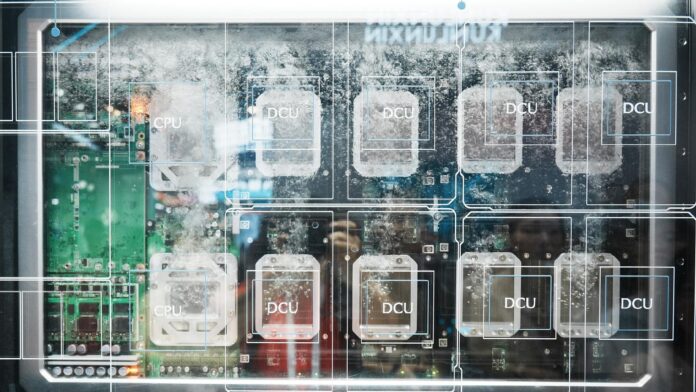
The EuroHPC Joint Undertaking awarded the deal to Bull to build LUMI-AI, a machine designed to replace and massively expand the current LUMI supercomputer at CSC – IT Center for Science’s facility in Kajaani, Finland. EuroHPC’s target is striking: ten times the AI computing capacity of the existing LUMI system, with nearly double the high-performance computing throughput, built on AMD Instinct MI430X graphics processors paired with 6th Gen AMD EPYC server CPUs packing 256 cores each. According to AMD’s announcement, the combination is expected to represent the most powerful AI system Europe has deployed to date.
The choice of AMD over Nvidia is not coincidental. EuroHPC has consistently sought to reduce dependency on any single chip supplier, and the LUMI-AI contract carries a more explicitly political dimension than most procurement decisions. Access to advanced AI accelerators has become a flashpoint in the competition between the United States and the rest of the world. Washington’s push to tighten rules on Nvidia’s global AI chip exports, which Eastern Herald reported on earlier this year, reinforced the urgency in Brussels of building European AI infrastructure that does not rely on American supply chains for its continued operation. When Europe’s flagship AI computing body selects a chip supplier, it is choosing a dependency structure that will last a decade.
AMD’s Instinct MI430X is the same chip the company is providing for Herder, another European supercomputer built with HPE. Together, LUMI-AI and Herder represent AMD’s deepest push into European sovereign AI infrastructure. Whether the MI430X can match Nvidia’s current-generation hardware on the AI training benchmarks that dominate commercial discussions is a workload-dependent question. AMD performs strongly on scientific HPC tasks: the simulations, fluid dynamics models, and materials science calculations that have historically been the diet of machines like LUMI. On large-model training, Nvidia’s ecosystem advantages, built on more than a decade of CUDA software development, remain considerable.
The funding structure follows EuroHPC’s standard shared-infrastructure model. Finland, Czechia, Denmark, Estonia, Norway, and Poland make up the LUMI AI Factory consortium, contributing half of the €387.8 million through national budgets. The EuroHPC Joint Undertaking covers the other half through the Digital Europe Programme. Consortium members receive proportional compute time in return.

Those allocations are significant. The existing LUMI system has hosted research in climate modelling, drug discovery, materials simulation, and large-scale AI model training: work that would otherwise require access to US commercial cloud providers or months-long waiting lists on national facilities. LUMI-AI’s tenfold AI capacity reflects how sharply demand has shifted since LUMI launched in 2022. At that point, large model training was primarily an industry concern. By 2026, research groups across Europe routinely need GPU clusters that most universities cannot field. Europe’s growing semiconductor investment landscape reflects the same structural pressure building from the bottom up.
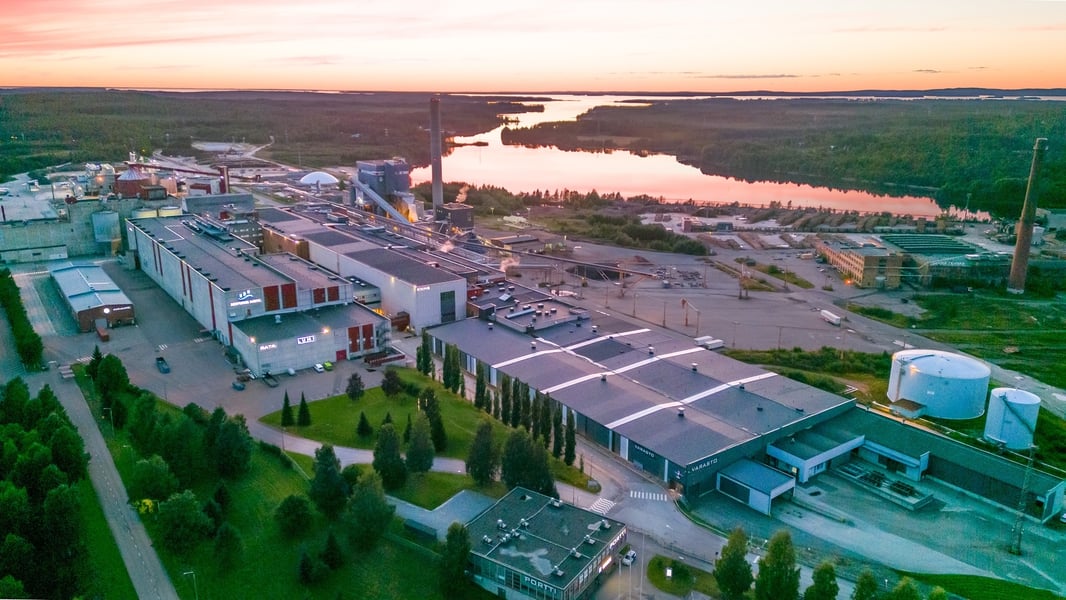
Kajaani, a city of roughly 35,000 people about 500 kilometres north of Helsinki, is a counterintuitive home for one of the world’s most powerful AI machines. It is also a deliberate one. Finland’s northern climate makes year-round cooling cheaper than in most European data centre markets, and the new CSC facility in the Renforsin Ranta business park will use liquid cooling throughout. The waste heat generated by LUMI-AI will be fed into Kajaani’s district heating network, turning thermal output that would otherwise be vented into a community utility. This kind of sustainability engineering gets announced in press releases far more often than it gets executed.
LUMI-AI is EuroHPC’s sixth completed AI Factory procurement. The AI Factory model is straightforward in concept: large machines funded by European governments, located in Europe, operated under European law, accessible to European researchers and industry. The underlying argument is that AI compute has become infrastructure in the same strategic sense that power grids and telecommunications networks were infrastructure in previous centuries. Infrastructure owned elsewhere is a vulnerability.
What LUMI-AI will be worth by the time it powers on in the second half of 2027 is genuinely unclear. Eighteen months is a long window in this industry. Nvidia’s next-generation architectures will have shipped. Huawei’s LogicFolding chip architecture, which attracted serious attention earlier this year for its potential to reshape China’s position in AI compute, will be further along. AMD itself will have successor announcements. EuroHPC is locking in a platform decision today for a machine that will run research workloads into the early 2030s. That is how large-scale public computing infrastructure works, and it is also how it becomes dated.
The original LUMI system was delayed before its 2022 launch. Large supercomputer builds almost always slip. The LUMI-AI timeline depends on AMD’s MI430X production ramp, the readiness of the Kajaani site, and the integration work Bull must complete. The contract is signed and the hardware specified. Whether the 2027 deployment date holds is the first open question in a build that will take years to answer.