
LONDON — When Donald Trump announced last weekend that he had canceled a planned strike on Iran and opened new diplomatic talks, the clearest financial beneficiaries were not American defense contractors or oil traders. They were a cluster of European semiconductor companies that almost no one outside specialized fund management had tracked closely before January.
The announcement pushed crude prices to a three-week low and eased concern about Strait of Hormuz disruption, helping carry the pan-European STOXX 600 index to its fourth consecutive record close on Friday. The benchmark ended the week near 657 points, up roughly 10 percent since the start of 2026. What is drawing American investors in is not the headline gain but what is underneath it: five of the benchmark’s best-performing stocks this year are semiconductor manufacturers supplying the AI infrastructure buildout.
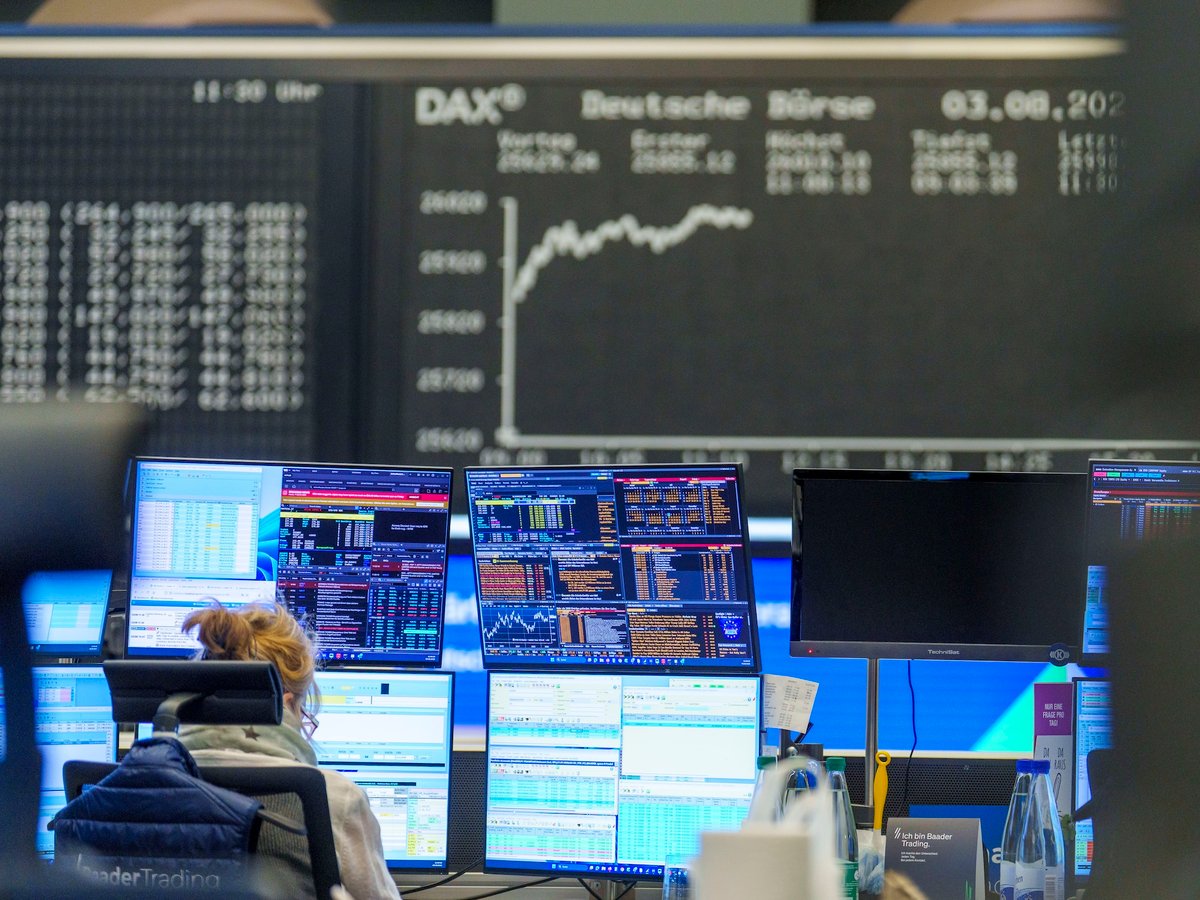
The rally’s scale is visible across every major European bourse. Germany’s DAX crossed 26,000 for the first time on August 3 and closed near 26,300 by Friday. France’s CAC 40 reached 8,700. Italy’s FTSE MIB hit 53,540. The five top performers by year-to-date return share the same sectoral address: Soitec, the French silicon wafer maker, has risen 414 percent; AT&S, the Austrian circuit board group, is up 343 percent; Technoprobe, an Italian chip-testing equipment company, has gained 135 percent; AIXTRON, the German compound semiconductor equipment maker, is up 121 percent; and STMicroelectronics, the Franco-Italian chipmaker, has doubled. The rankings draw from Euronews’s August 6 constituent performance analysis of STOXX 600 year-to-date returns.
Their shared driver is not European consumer demand or continental fiscal stimulus. It is the global buildout of artificial intelligence hardware: the wafers, substrates, and testing equipment required to manufacture the chips that data centers need at scale. The five companies sit at different points in a supply chain that runs from raw silicon to finished semiconductor device, but each benefits when AI infrastructure spending rises. This year, it has risen sharply.
The earnings revisions confirm the trajectory. STOXX 600 companies are now tracking second-quarter earnings growth of 21 percent year-over-year, against a 12.5 percent estimate that analysts had posted at the start of the reporting period. AIXTRON alone reported Q2 orders of €214.5 million, up 81 percent. STMicroelectronics posted Q2 revenue of $3.49 billion, up 26 percent, and returned to operating profitability after three quarters of losses. Ruben Dalfovo, a market analyst at Saxo Bank, said rising corporate profits were among the primary drivers, a framing the numbers support. The revision pace has surprised even strategists who had entered the year constructively positioned on European equities.
Macroeconomic data provided parallel support. Eurozone GDP grew 0.4 percent in the second quarter, beating forecasts and reversing concern that the region’s recovery had stalled. The Iran war’s de-escalation removed one tail risk that had weighed on European manufacturers and airlines for months: sustained Strait of Hormuz disruption would have maintained energy cost pressure that was only beginning to ease. China’s factory prices reflected the same dynamic, decelerating in July as the fuel cost premium embedded in producer price indices unwound across global supply chains.
The session data for Tuesday illustrated the breadth and the limits of the advance. BE Semiconductor Industries, the Dutch chip equipment group, rose 8.1 percent after an analyst upgrade, Reuters reported. Soitec added 9.9 percent. AIXTRON, ASML, and Infineon each rose between 2.6 and 3.7 percent, and the technology sub-index of the STOXX 600 gained 2.8 percent. Lufthansa fell 8.2 percent after issuing a profit warning. Zalando dropped 13.4 percent following a revenue guidance cut. The rally in European markets in 2026 has been wide enough in its index gains to attract attention and narrow enough in its underlying drivers to carry concentration risk that some investors are only now beginning to examine.
The investor attention reflects a shift. For most of the past decade, the structural case against European equities, built on assumptions of slower growth, regulation costs, and less dynamic capital allocation, kept much of the American institutional market underweight the continent. That case has been challenged by a rally whose top performers match or exceed comparable American semiconductor gains. Deutsche Bank’s record second-quarter profit, reported in late July, added to the evidence that European capital markets are reopening in ways that have not been visible since before the rate-hiking cycle began.
Whether the foreign interest converts to sustained capital flows is the question the autumn will answer. The European Central Bank’s account of its July meeting, due this week, will provide the next major policy signal on rate expectations. The STOXX 600’s earnings base has revised upward twice this quarter and could revise again if AI capital expenditure commitments from the major hyperscalers hold through year-end. The risk, visible in Lufthansa and Zalando’s numbers, is that consumer-facing and cyclically exposed European businesses are not sharing in the AI infrastructure boom and may face pressure as rate cuts arrive later than companies assumed when they set annual budgets.
What drove the DAX past 26,000 was a canceled airstrike and a set of semiconductor orders from data center builders who are not reading European corporate earnings reports. The contrast with Europe’s flat session in late July, when a US technology selloff overwhelmed continental earnings beats, illustrates how dependent European markets remain on impulses that originate elsewhere. The difference in August is that those impulses, for once, are pointing in the same direction as the continent’s own fundamentals.