
BEIJING — China’s factory prices slowed their advance in July, as a sharp reversal in oil costs stripped away the commodity premium that the US-Israel war on Iran had built into industrial inflation over the previous two months, pushing the producer index back below analyst expectations.
The National Bureau of Statistics said Sunday that the producer price index rose 3.5 percent year on year in July, falling from 4.1 percent in June and missing the 3.98 percent median forecast from economists polled by financial data provider Wind. Month on month, the index declined 0.7 percent, more than double the 0.3 percent monthly dip recorded in June. For the year through July, China Daily reported, the index averaged 1.8 percent above year-earlier levels.
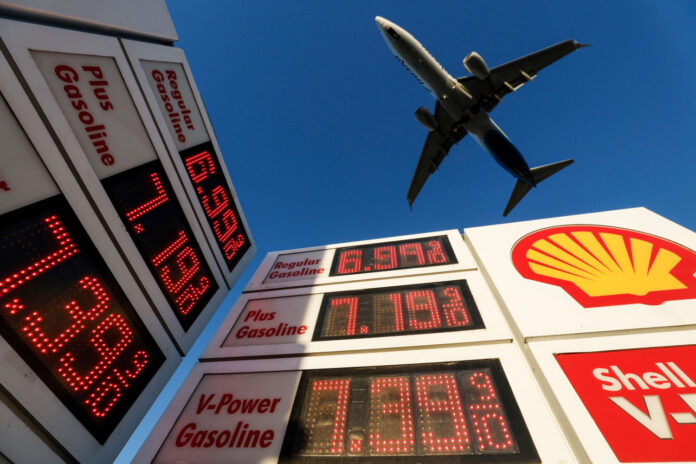
The sharpest pressure came from the energy sector. Oil extraction prices fell 11.8 percent month on month, while oil refining dropped 8.4 percent, the steepest monthly declines in both categories since the commodity cycle turned in late 2025. The figures reflect a partial unwinding of the supply disruption that drove Brent crude above $126 a barrel in April, when the closure of significant Hormuz traffic removed hundreds of millions of barrels from accessible global supply. China, the world’s largest crude importer, absorbs every swing in Gulf pricing through its industrial input chain.
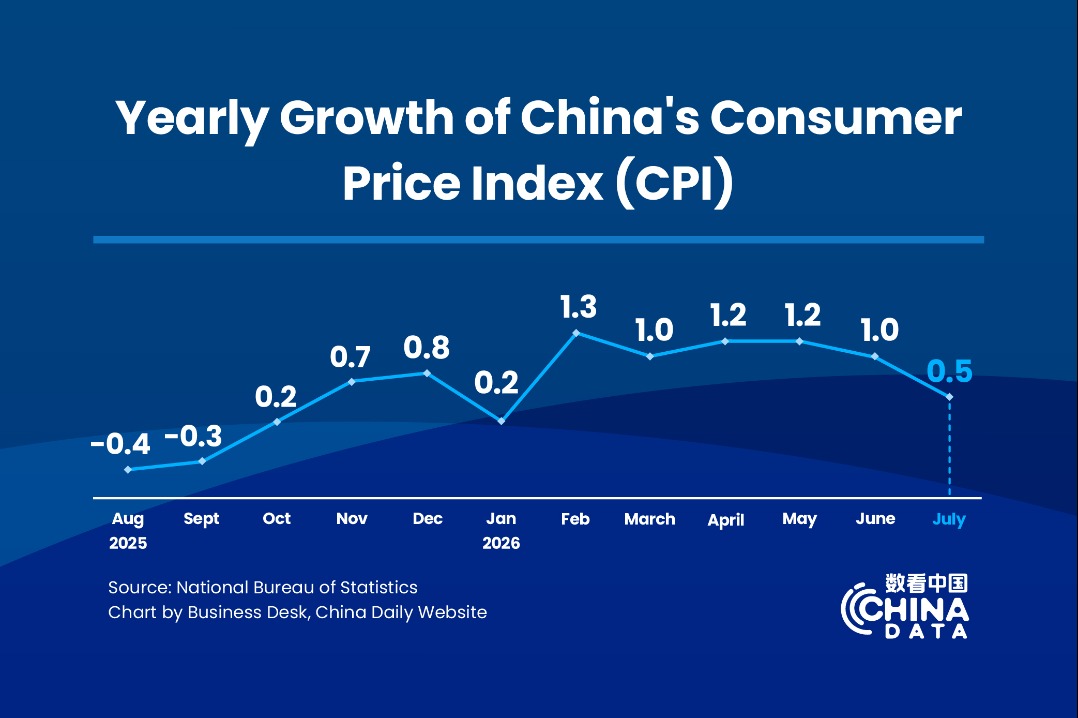
Consumer prices delivered a separate, quieter disappointment. The consumer price index rose 0.5 percent year on year in July, the bureau said, the weakest pace since January. Economists surveyed by Wind had expected 0.85 percent. A month earlier the figure stood at 1.0 percent. On a monthly basis, consumer prices slipped 0.1 percent; core inflation, stripping out food and energy, held at 0.3 percent.
The gap between factory and household prices is the central tension in China’s economic recovery. At 3.5 percent on the producer side and 0.5 percent at the consumer level, the margin squeeze on industrial businesses continues. Factories face input costs that domestic buyers, stretched by a still-deflating property market and cautious about future income, are not prepared to absorb.
“Imported factors weighed on prices in some industries, seasonal factors including high temperatures, heavy rainfall and typhoons slowed construction activity and pulled down prices in certain sectors, while industrial transformation and consumption upgrading boosted demand and drove up prices in others,” Dong Lijuan, a statistician at the National Bureau of Statistics, said in a statement released alongside the data.
The July print closes a short chapter. China’s producer prices rose 3.9 percent in May, then accelerated to 4.1 percent in June, a sequence that had appeared to mark the end of the deflationary stretch that depressed factory-gate prices through most of 2024 and into early 2025. That deflation was itself the product of chronic overcapacity in steel, cement and solar manufacturing, a property sector contraction that gutted construction-material demand, and a global recovery too soft to absorb Chinese supply at margins that kept producers solvent.
What May and June delivered was imported. As the Strait of Hormuz has moved toward partial recovery, and after OPEC+ members including Russia agreed to raise production ceilings, the war premium that re-priced Chinese energy inputs has begun to dissipate. South China Morning Post noted that lower domestic fuel prices were the primary driver behind July’s miss.
What remains is the domestic question. Household consumption has recovered from the worst of the post-pandemic contraction but has not accelerated enough to close the producer-consumer price gap. Beijing has offered incremental monetary easing and targeted fiscal support but stopped short of broad demand-side stimulus that could meaningfully lift consumer prices toward the factory-gate level. The reluctance is not irrational: stimulus powerful enough to revive consumer inflation meaningfully might do so precisely as commodity costs stabilize, stacking domestic and imported price pressure simultaneously.
China’s official manufacturing purchasing managers index fell to 49.2 in July, contracting for the first time in three months and missing consensus estimates. Non-manufacturing PMI also dipped below the 50-point break-even threshold. Neither figure signals a full reversal, but neither offers comfort that the external commodity boost was cushioning a demand environment strong enough to sustain the pace on its own.
The next price readings will land in September, after typhoon season has passed and oil markets have had time to price the OPEC+ supply additions announced last week. Whether Beijing chooses, before that data arrives, to treat July’s miss as a one-month correction or as evidence that the post-deflation recovery needs policy reinforcement is the question the figures leave open. The June reading that looked like a breakout may, in retrospect, have marked the cycle’s ceiling. That conclusion depends on what August’s data shows.