DUBAI – The ceasefire language between Washington and Tehran has barely dried, and yet oil traders are already doing a calculation that would have seemed surreal four months ago: how fast could Brent crude fall to $70?
The number is not idle speculation. The Islamabad Agreement framework, with senior US negotiators en route to Geneva, has given markets their clearest signal yet that the conflict strangling one of the world’s most important energy chokepoints is entering its final act. Bloomberg’s analysis, widely cited among energy traders this week, estimates that a genuine reopening of the Strait of Hormuz could push Brent down 15 to 20 percent – from the current level of around $90 a barrel to somewhere near $70 to $75, erasing the entire geopolitical premium that the Iran conflict built into crude prices since March.
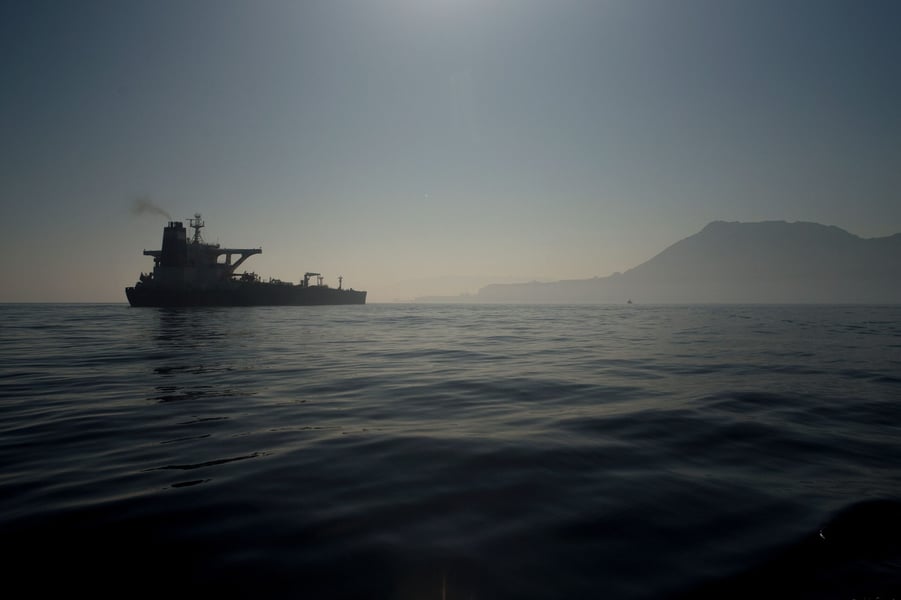
What would drive that crash is not complicated. More than 110 million barrels of crude oil are sitting right now in the Persian Gulf on tankers that cannot move. Roughly 55 large crude carriers, confirmed by Frontline Plc, one of the world’s largest supertanker operators, are positioned empty within three to five days of the Strait, waiting for a signal. The moment that signal comes, the arithmetic of supply and demand shifts violently. The question is whether the political conditions for that moment actually exist – and analysts are divided on that with unusual sharpness.
The U.S. Energy Information Administration, in its June Short-Term Energy Outlook, laid out the base case with unusual candor. Hormuz shipments resume in the third quarter of 2026, the EIA assumed, but traffic will take several months to ramp up to pre-conflict levels, and the agency does not expect full restoration until early 2027. In that scenario, Brent averages $105 a barrel in June and July as inventories continue to draw down, then falls to $89 by the fourth quarter, and reaches $79 in 2027. “Any scenario involving full restoration of inventories, production, and trade flows to pre-conflict levels must account for the partial restructuring of the global oil market that has already occurred,” EIA Administrator Tristan Abbey said in the release.
The partial restructuring Abbey referred to is the other variable that complicates the $70 thesis. Demand has already adjusted. High prices have suppressed global oil consumption by roughly 1.1 million barrels per day compared with last year, according to EIA data, with the steepest declines in price-sensitive Asian markets. Non-Middle Eastern producers – the United States, Brazil, Canada – have meaningfully expanded output in response to the supply gap. That means Persian Gulf production does not need to return all the way to pre-conflict levels to rebalance global markets. Less supply restoration is needed than the headline backlog might suggest.
And then there is the physical problem of actually getting those tankers through. The Strait of Hormuz is not simply a door that opens. Since early June, Bloomberg has reported that tankers are going dark, switching off their AIS transponders, to transit the Strait in unofficial convoys assisted by the U.S. military. Around 90 large crude carriers remain trapped inside the Gulf, down from 160 in early April – a meaningful reduction, but still far from normal commercial traffic. Satellite images and shipping executives confirm a trickle that has become a stream, but not yet a flow.
A formal reopening would add a different set of complications. Iran has made clear it will not allow NATO navies to conduct demining operations in its territorial waters. The alternative – a demining effort by “friendly countries” acceptable to Tehran – has no defined timeline. Navigation systems and port infrastructure damaged during the conflict would require repair in parallel with whatever political monitoring mechanism the final treaty establishes. When more than 800 vessels simultaneously attempt to transit a contested waterway with improvised clearance procedures, the result is what analysts are already calling a logistical bottleneck rather than a supply surge.
The OECD inventory position makes the timing matter enormously. OECD oil stocks have fallen to their lowest level since January 2003, according to EIA data, with the agency projecting they reach a floor of 50 days of future demand cover by the end of 2026. That floor changes the dynamics of any reopening: markets are not absorbing the incoming supply into comfortable buffers. They are absorbing it into near-empty tanks. The initial price response to a credible reopening, as several analysts note, could therefore be a reflexive downward spike followed by stabilization as the actual pace of throughput becomes clear.
China is the swing variable that almost no official forecast fully captures. Chinese oil demand has slowed materially during the closure period, partly because elevated prices suppressed consumption and partly because of broader economic deceleration. If Chinese demand remains weak when Persian Gulf supply comes back online, the cushion that would normally absorb the incoming barrels simply is not there. Prices could fall faster and further than the EIA’s base case suggests. If Chinese demand recovers alongside the supply restoration, the price effect is moderated but OPEC’s room to manage the situation through output adjustments narrows.
OPEC+ has already signaled it understands the exposure. The alliance approved a 188,000-barrel-per-day output increase for July – its fourth consecutive hike since the Hormuz crisis began – while simultaneously extending the compensation period for overproducers through December 2026. That sequencing reflects the dilemma: raise output now to maintain relevance and market share, but preserve the machinery to cut back quickly if Hormuz throughput accelerates faster than the price floor can hold.
The World Bank’s April Commodity Markets Outlook, published before the current ceasefire framework emerged, estimated Brent averaging $86 a barrel across 2026 before declining to $70 in 2027 as supply stabilizes. That figure assumes the acute phase of Middle East supply disruptions ended in May and that oil exports recover to pre-war levels by the final quarter of the year – an assumption that now looks optimistic on the timeline but not necessarily on the destination. Goldman Sachs, in its March reassessment, described the Hormuz closure as the largest supply shock in global crude market history but also argued that the geopolitical risk premium embedded in long-dated oil forwards would not evaporate quickly even after the strait reopened. Physical reopening is a political event, Goldman’s note argued. The repricing of structural supply risk in the Middle East is a slower and more durable process.
That distinction – between the short-term price move and the long-term risk repricing – is what the $70 figure does not capture. A world in which the Hormuz Strait has been effectively closed for four months, in which hundreds of tankers went dark to move oil, in which OECD inventories hit their lowest point in more than two decades, is not a world that prices Persian Gulf supply risk the same way it did in January. The Brent price may indeed touch $70 sometime in 2027 as EIA projects. The premium for the possibility it could happen again is likely to stay in the market considerably longer.